


Here are our favourite five sets of articles for the Lenten period.
The Importance of Lent
(WM Round-Up) – Pope Benedict XIV wrote in 1741:
“The observance of Lent is the very badge of the Christian warfare. By it we prove ourselves not to be enemies of the cross of Christ. By it we avert the scourges of divine justice. By it we gain strength against the princes of darkness, for it shields us with heavenly help.
“Should mankind grow remiss in their observance of Lent, it would be a detriment to God’s glory, a disgrace to the Catholic religion, and a danger to Christian souls.
“Neither can it be doubted that such negligence would become the source of misery to the world, of public calamity, and of private woe.”
Enc. Non Ambigimus May 30, 1741.
In order to assist our readers in observing this holy season well, here is a curated selection of our favourite articles on Lent.
As usual with these Top Five posts, “five” was optimistic. All of the below are actually sets of articles. You’re not going to get through everything here – at least not in one sitting.
Bookmark this page to come back to as Lent progresses!
Update: The WM Review’s Little Lenten Effort

See here for a very simple programme based on the “Little Way” of St Thérèse of Lisieux:
Top Five Lent Articles
1. What is the season of Lent?

For several years, we have been slowing working our way through a series titled The Roman Liturgy.
This series presents the meaning behind key seasons and feasts as found in the liturgical texts themselves – combined with some of the most interesting commentators and Catholic writers.
In every aspect of life, there is a danger of familiarity breeding contempt. There are certain clichés and stock ideas about each point of the annual liturgical cycle, and Lent is no different.
For instance, we presume that Lent is a season focused on the Blessed Passion of Our Lord – but it is hardly mentioned in the liturgical texts prior to Passiontide.
This series has prioritised the more startling or under-appreciated texts, in an attempt to look at each season with fresh eyes – whilst remaining always within the venerable tradition of the Church.
Here are our articles on Lent:
You can find all the articles in this series here:
2. Fasting – What is it, when should it be observed, and why?
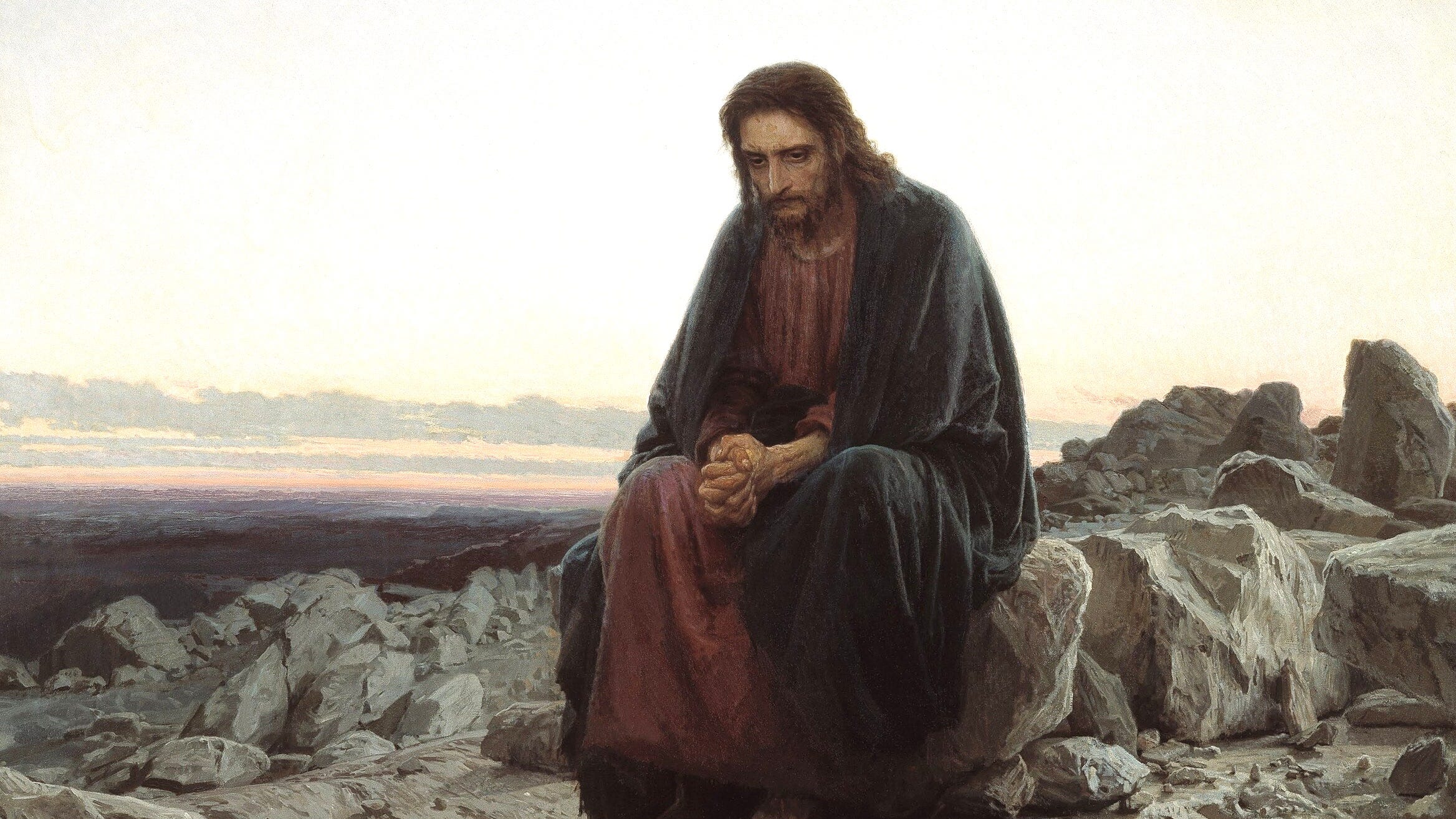
Fasting is central to Lent.
One can open the Missal to any day of Lent, and one will find references to fasting: the liturgy – the great teacher of the faithful (cf. Pope Pius XI, Quas Primas, n. 21) presumes that everyone is observing a communal fast.
Other mortifications and sacrifices, made out of supernatural love for God, are meritorious and worthy. They can and should be taken up as additional to the Lenten fast, and they can be legitimate substitutes for those who cannot fast, and may even be more meritorious in themselves – but they are not simply interchangeable with fasting.
But why is this? And how can we observe it today?
What does the law of fast and abstinence actually require? (Fr Henry Davis SJ)
What is the current law of fasting and abstinence? (Fr Francesco Ricossa IMBC)
Did the Church intend to abolish fasting—or modify it? Cardinal Newman Explains
3. Fr Henry James Coleridge SJ on fasting and the forty days
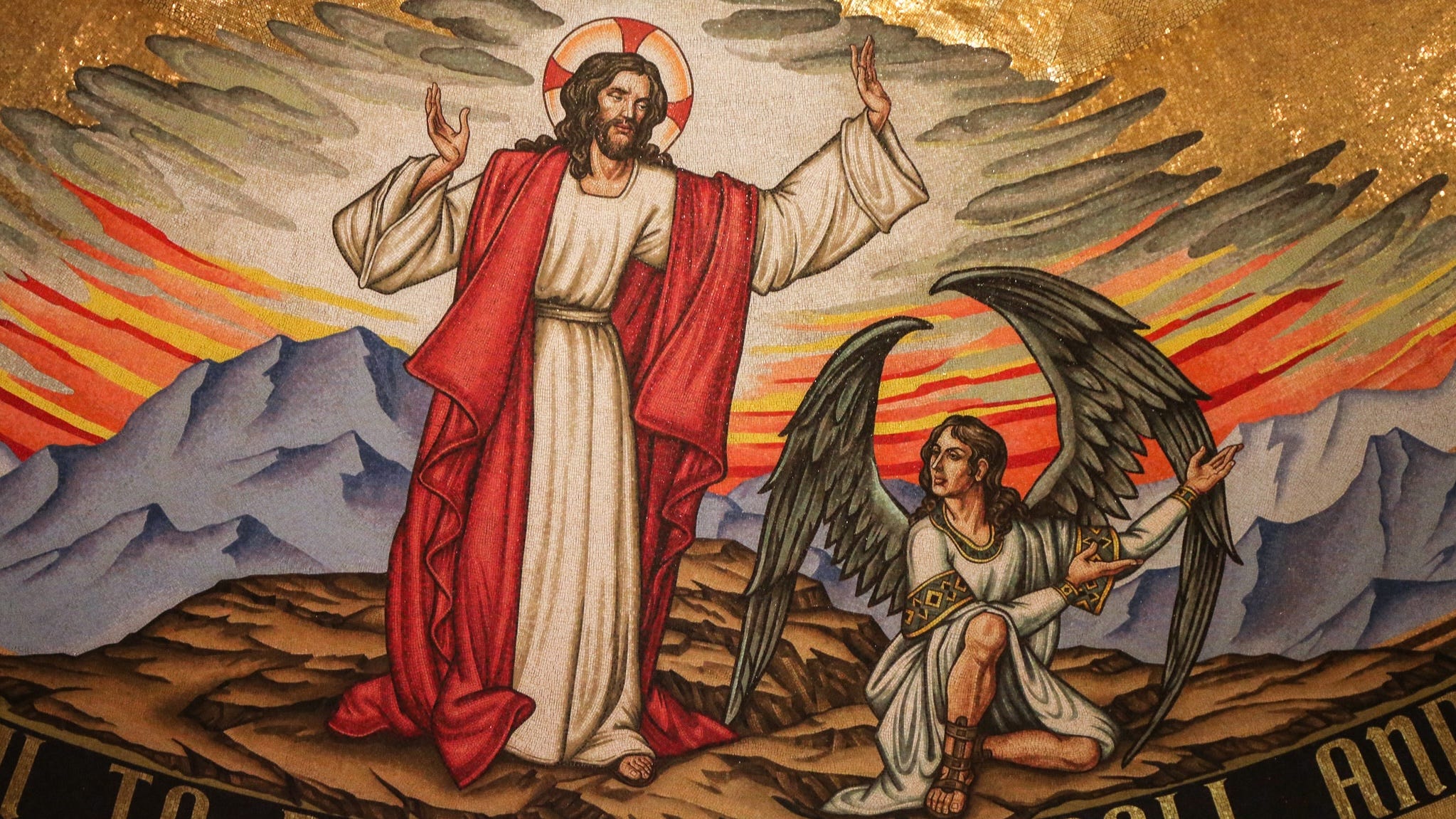
The WM Review runs a project called Father Coleridge Reader, which serialises the works of the great nineteenth century English Jesuit, Fr Henry James Coleridge SJ.
In addition to the articles in the previous section, here is part of his commentary on the Sermon on the Mount, on Our Lord’s teaching about fasting.
He explains not only why we must fast, but also how fasting is a necessary cure for the evils of the modern world.
In addition, here is his treatment of the forty days themselves – answering every conceivable question you could have about this mystery of Our Lord’s life.
Fasting of Our Lord (complete)
Temptations of Our Lord (ongoing)
The Ministering Angels (complete)
If anyone is in search of good spiritual reading for Lent, we highly recommend the works of Fr Coleridge. You can find them for sale online, and serialised at:
4. Lent and the reform of oneself
As the articles above indicate, fasting is about the expiation of sin and the reform of oneself.
The Popes have made clear that St Ignatius’ Spiritual Exercises are a “providential weapon” to aid in this lifelong endeavour.
Towards the end of December 2025, in response to the Vatican’s attempted suppression of two of Our Lady’s most beloved titles, The WM Review published a 34-part text/podcast series synthesising key meditations from the Exercises with St Louis de Montfort’s Total Consecration to the Blessed Virgin Mary.
Here are the episodes from the first two sections of that series on knowledge of the world and knowledge of ourselves (‘Week 0’ and ‘Week 1’) – which are particularly relevant for this season of the Church’s year:
Week 0 – Knowledge of the Spirit of the World
Day 1: Why did God make you?
Principle and FoundationDay 2: Why did God make everything else?
Principle and FoundationDay 3: Sin and the spirit of the world
The Three SinsDay 4: What is ‘the spirit of the world’?
The Triple ColloquyDay 5: Liberalism – apotheosis of the spirit of the world
From Liberalism is a SinDay 6: Satan’s battle plan to ensnare souls – and Christ’s battle plan to save them
The Two StandardsDay 7: Catholics and the spirit of liberalism
From Liberalism is a SinDay 8: Are you a weakling, a self-seeker... or something better?
The Three Classes of MenDay 9: Do we actually want what humility entails?
The Three Ranks of HumilityDay 10: Ten ways YOU may be complicit with Liberalism – plus an uncomfortable ‘Portrait of a Liberal Catholic’
From Liberalism is a SinDay 11: How will YOU answer the Call of the King?
The Call of the King (Part I)Day 12: Why Christians become liberals – and how to avoid it happening to YOU
From Liberalism is a Sin
Week 1: Knowledge of ourselves and of sin
Day 13: Have you ever tried to count all the sins of your life?
Our Own SinsDay 14: Are YOU on your way to Hell?
HellDay 15: Does venial sin actually matter?
Venial SinDay 16: Why lukewarmness towards God can be worse than actual coldness
TepidityDay 17: Every minute brings us closer to death – and judgement
Death and JudgementDay 18: Why you can and should return to God TODAY
The Prodigal SonDay 19: Will you be a close companion of Christ the King?
The Call of the King (Part II)
Here is an introduction to the series:
And a playlist of the full series on YouTube:
(This series was only possible thanks to the help of our friends including Kevin Davis, Theo Howard from The Two Cities Podcast, Peter Bevan from The Corner Cabinet, and – especially – David from Catholic Hub.)
5. Prayer and Almsgiving



Fasting is not the only practice associated with Lent. The Church also commends the practices of prayer and almsgiving at this time.
All three of these practises should be features of the Christian life throughout the whole year – and while fasting and almsgiving may not be daily occurrences, prayer certainly should be.
But meditation and mental prayer can be daunting for some Catholics, and perhaps they have never been taught how to “do” them.
Here are some of our articles on this subject:
Why can mental prayer be so difficult? Review of Boylan’s ‘Difficulties in Mental Prayer’
Meditation and mental prayer—Pope St Pius X explains their importance
As for almsgiving: Almsgiving is properly given to the poor and those in need, with those closest to us (family, countrymen, etc.) having a greater “title” on our alms than those further afield. You can read a little about this concept of the “ordo amoris” here:
St John Chrysostom says the following on this duty:
“Do you want to honor Christ’s body? Then do not scorn him in his nakedness, nor honor him here in the Church with silken garments while neglecting him outside where he is cold and naked…
“Once again, I am not forbidding you to supply these adornments; I am urging you to provide these other things as well, and indeed to provide them first. No one has ever been accused for not providing ornaments, but for those who neglect their neighbor a hell awaits with an inextinguishable fire and torment in the company of the demons.
“Do not, therefore, adorn the Church and ignore your afflicted brother, for he is the most precious temple of all.”
The twentieth century Dominican moralists McHugh and Callan explain almsgiving in detail here (nn. 1216-1257).
Fr Dave Nix (Padre Peregrino) also explained recently why the duty of tithing is distinct from that of almsgiving – but that nonetheless, almsgiving is not limited to help given to the laity:
Finally, we are not going to claim that supporting The WM Review qualifies as almsgiving – especially over the needs of the clergy and the destitute, and those closest to you.
But we certainly are in need of your help, if you wish to see this work continue.
You can read about what we accomplished in 2025 in our two-part Annual Report here:
If you appreciate The WM Review’s content, please remember that it costs us a great deal to produce it – and the best way of ensuring it continues is taking out an annual or a monthly subscription to WM+.
You can also give a one-time donation here:
Thank you, and have a very blessed Lent!
PS: Don’t forget to bookmark this page to come back to as Lent progresses!
HELP KEEP THE WM REVIEW ONLINE WITH WM+!
As we expand The WM Review we would like to keep providing free articles for everyone.
Our work takes a lot of time and effort to produce. If you have benefitted from it please do consider supporting us financially.
A subscription gets you access to our exclusive WM+ material, and helps ensure that we can keep writing and sharing free material for all.
You can see what readers are saying over at our Testimonials page.
And you can visit The WM Review Shop for our ‘Lovely Mugs’ and more.
(We make our WM+ material freely available to clergy, priests and seminarians upon request. Please subscribe and reply to the email if this applies to you.)
Subscribe to WM+ now to make sure you always receive our material. Thank you!
Follow on Twitter, YouTube and Telegram:
Twitter (The WM Review)
Thank you for providing this valuable resource!
Blessings and appreciation from Sydney Australia.