

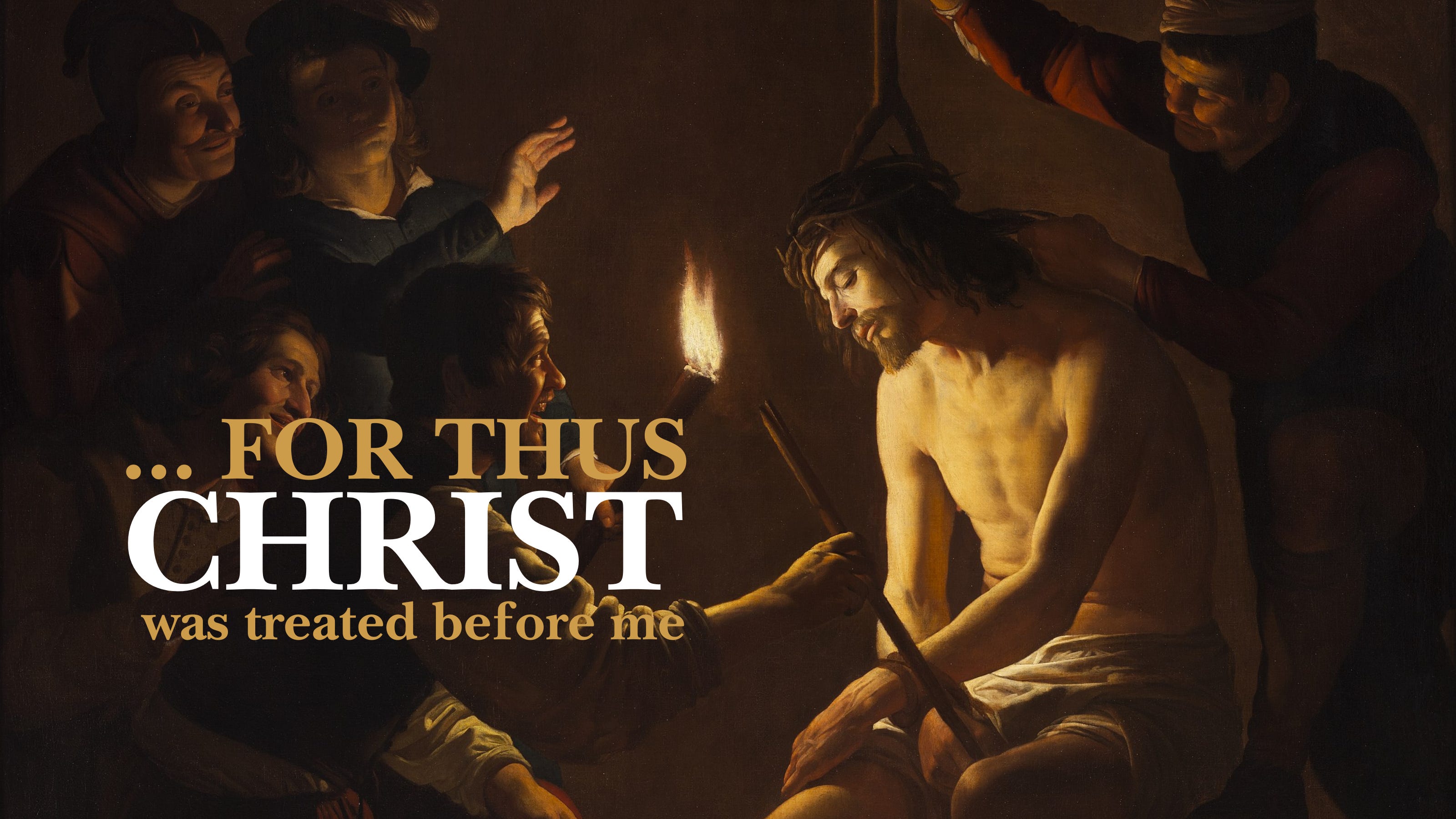
The spirit of the world is opposed to humility. But to attain to this virtue, we have to want to join Christ in what he suffered. (Day 9 of Total Consecration)
Editor’s Notes
The first period of the preparation for St Louis de Montfort’s Total Consecration to the Blessed Virgin is focused on gaining a greater awareness of the spirit of the world, and emptying ourselves of it.
Today, we are reading Fr Aloysius Ambruzzi’s explanation of St Ignatius’ Three Degrees of Humility.
Of all the virtues, humility is one of the most opposed to the spirit of the world – and St Ignatius sets out three degrees or kinds of humility to which we must aspire, if we hope to divest ourselves of this worldy spirit.
As with the Three Classes of Men, St Ignatius adds a very important “note.” We cannot emphasise enough this note’s importance and beauty. It provides a lot of material for meditation in itself. Do not miss it.
We are approaching this meditation earlier than St Ignatius would have us do it in the Exercises, because of its focus on how a little worldliness derails the whole spiritual organism of man.
This text is intended to provide fuel for a more fruitful meditation on the points, which follow the text below. As we read or listen to the conference, and later make the meditation, let us specifically call to mind the Blessed Virgin. We should consider how she lived in regard to the points discussed, and implore her to obtain for us the light to see the truth about ourselves, and the resolve to act accordingly.
David from Catholic Hub has again kindly agreed to read this text for us. You can find out about his work below:
The themes, as well as vocal prayers and readings associated with this ‘Week 0’, can be found here. You can find the book here.
Although this is part of the Total Consecration preparation, it also stands alone as a great text in its own right.
CONTENTS:
READING: The text consists of Fr Aloysius Ambruzzi’s commentary on The Three Classes of Men, from St Ignatius’s Spiritual Exercises.
MEDITATION: Fr Ambruzzi’s text is intended to provide material for St Ignatius’ meditation, which appears in point-form following it. A guide on how to use these points in meditation can be found here.
Reading: The Three Modes of Humility
Ranks in Christ’s Army
A Companion to the Spiritual Exercises of Saint Ignatius
Fr Aloysius Ambruzzi SJ
Before entering on the work of the Election, or, as is more often the case, on the work of self-reform, St Ignatius wants us, in order that we may be well affected towards the true doctrine of Christ our Lord, to consider three Modes of Humility, i.e., three attitudes concerning the service of God and the use of created things, one more perfect than the other. It must be remembered that an attitude, such as a Mode of Humility is, is not an act but an habitual purpose:
“A Standing Order, as it were, framed, glazed, and hung up in the council chamber of the soul. We all know how Standing Orders get violated, and yet remain Standing Orders. A Standing Order is not set aside by action to the contrary, but by a resolution rescinding the Order and emanating from the same authority which originally framed it.”
(Rickaby, Waters that go softly, p. 78)
Though the Saint assigns no definite time to the consideration of these three Modes, but simply desires that we keep revolving them in our minds during the day, we may make them the subject of some sort of meditation.
At first Prelude we may see Christ our Lord climbing to Calvary carrying His Cross, followed by Mary and John, the Beloved Disciple.
In the second Prelude, we implore our Lord to be pleased to elect us to the third Mode of greater and more perfect humility, the better to imitate and serve Him. We must repeat this petition as often as possible during the day.
1. First mode
The first Mode of Humility consists in submitting myself to the Will of God in such a way as not to deliberate about breaking any commandment, whether Divine or human, which binds under mortal sin, even though its transgression might lead me to wealth, honours, health, and long life; or its observance entail poverty, dishonour, sickness, and death itself.
Such a determination is absolutely necessary to anyone who wants to be saved. Not to have it, would imply that he is in a state of opposition to God, or at least of apathy towards, and disregard for Him. On the other hand this habitual disposition not to deliberate about offending God grievously is not inconsistent with an actual fall at times. As a matter of fact there are moments and circumstances in life when nothing short of grim courage and true heroism will enable one to remain true to God. Apart from the thousands and thousands of canonized Saints, who endured the loss of goods, imprisonment, and death itself to be faithful to God, there are the uncanonized millions who often undergo a hidden martyrdom to keep themselves chaste in or out of wedlock, and to be truthful, just, and charitable in their dealings with others. Fear of God, humble prayer, and control of one’s passions will maintain a soul in the disposition of the first Mode of Humility.
The first Mode requires in one the substantial indifference that makes him look upon God as his ultimate and supreme End, and upon all creatures as means to reach Him. However, that being presupposed, one who has but the disposition of the first Mode, loves and pursues the good things of the world, and avoids what is hard and humiliating. Such is, after all, the disposition of so many average Christians.
2. Second mode
The second Mode of Humility consists in submitting myself to the Will of God, in such a way as not to deliberate about breaking any commandment, whether Divine or human, though it binds only under venial sin, and even when its transgression might lead me to wealth, honours, health, and long life; or its observance entail poverty, dishonour, sickness, and death itself.
Such a disposition is far nobler than the previous one. However we are still within the limits of reasonableness and justice. As a matter of fact, is it not just and reasonable that we avoid everything that offends His Divine Majesty? And is not the smallest venial sin, even in the light of reason, an incomparably greater evil than all the so-called evils of this world, greater than poverty, dishonour, sickness, and death itself?
To act faithfully and constantly according to such a disposition requires greater energy and strength. One must be perfectly indifferent to all created things, i.e., he must have complete control of himself, of his passions, his whims and caprices, not only in serious matters, as in the first Mode, but in light matters as well. In the first Mode, while keeping his eyes and his steps towards God, his final goal, he allows himself many a digression off the straight road: in the second Mode he walks straight on along it.
If the holy fear of God, humble prayer, and self-denial are necessary to any one who wants to be faithful to the disposition of the first Mode, how much more essential are they to one who desires to maintain himself in the disposition of the second?
3. Third mode
The disposition required by the first and second Mode of Humility is a positive disposition of the will. It consists, directly, not in avoiding mortal and venial sin, but in submitting one’s will more and more perfectly to the Will of God, and in an ever greater control of self in using the good things of this world and in enduring its hardships and humiliations.
We are created to serve God, i.e., to do His Holy Will, and all other creatures are given us to attain this end.
In the first Mode we obey God’s Holy Will commanding under penalty of mortal sin, and make free use of creatures as long as they do not take us entirely away from God.
In the second Mode we obey all the commands of God, even those binding under venial sin only. Towards creatures we keep an attitude of perfect indifference so long as God’s Will is not known.
In the third Mode we submit to God’s Holy Will not only when He commands under penalty of sin, mortal or venial, but even when He merely expresses a desire; in other words, we are determined to do everything that pleases Him, to avoid every imperfection, to follow all counsels and obey all inspirations. As regards the use of creatures, knowing well that Christ has chosen what pleases God most, and anxious to be like Him, our Eldest Brother, we choose, as far as lies in us, to be poor with Him poor, to be insulted with Him covered with insults, and to be esteemed as worthless and fools for Him who was first held to be such. The indifference of the second Mode becomes positive acceptance of, and longing for privations, humiliations, and sufferings, i.e., for the higher and harder path, out of pure love for Christ and to be truly like Him in everything.
Only such a disposition can make it possible for one to do God’s well-pleasing Will in all circumstances.
“The third Mode of Humility places a man spiritually in what mechanicians call a position of advantage for doing work, like the position of water on the top of a hill. He will be endowed with that high courage, for lack of which, in the abundance of good men, great Saints are rare.”
(Rickaby, Waters that go softly, p. 82)
The love of the Cross cuts at the very root of even the slightest opposition to it and prepares one to face great trials bravely.
The third Mode of Humility—perfect obedience to God’s Will, with and like Christ poor, humble, and crucified—is the central point of the Exercises. It is the folly of the Cross: “He humbled Himself by obedience unto death, yea, unto death upon a cross.”
Christo confixus sum cruci
Suggestions for the colloquy
1. O Lord, let me not be separated from Thee! I beg of Thee, O Lord, that I may always and everywhere submit myself to Thy Will in such a way as not to deliberate about breaking any commandment, whether Divine or human, which binds under mortal sin—even though its transgression might lead me to wealth, honours, and pleasures—or its observance might imply for me poverty, dishonours, sufferings, and death itself.
2. O Lord, give me to serve Thee more generously and faithfully, namely, to submit myself so perfectly to Thy Will as not to deliberate about breaking any commandment though it binds only under venial sin—even though, by transgressing it, I might gain wealth, honours, and pleasures—or, for observing it, I might have to endure poverty, dishonours, sufferings, and death itself. That I may be faithful to such a high resolve, so difficult to my poor nature, give me, O Lord, a perfect indifference to all created things, namely, a complete control of myself, of my passions, whims and caprices, even in small matters.
3. O Lord, give me to serve Thee in the most generous and faithful way, and submit myself to Thy most Holy Will even when Thou merely expressest a desire—doing everything that pleases Thee—avoiding every deliberate imperfection—and obeying all Thy inspirations. And that I may be faithful to this resolution, give me, O Lord, always to choose, as far as it lies with me, what is hard and humiliating, out of pure love for Thee, and to be truly like Thee in all things. Grant me, O Lord, to desire and choose poverty with Thee poor, rather than riches—reproaches with Thee laden therewith, rather than honours—to desire to be esteemed as worthless and a fool for Thee Who wast first held to be such, rather than wise and prudent in this world.
Meditation for Day 9
It is in mental prayer that that much of the preparation will be achieved – and meditation is a means of entering mental prayer. See our guide to meditation for two ways to use the below texts.
The Three Kinds of Humility – Ranks in Christ’s Army
In this preparation for the consecration of ourselves to the Blessed Virgin Mary, we should keep Our Lady in mind throughout our meditation. We should consider how she lived in regard to the points discussed, and implore her to obtain for us the light to see the truth about ourselves, and the resolve to act accordingly.
After the meditation, St Ignatius includes this very important note. It is worth reading it beforehand:
Note. So, it is very helpful for whoever desires to get this third Humility, to make the three already mentioned Colloquies of The Classes of Men, asking that Our Lord would be pleased to choose him to this third greater and better Humility, in order more to imitate and serve Him, if it be equal or greater service and praise to His Divine Majesty.
The Preparation
Prayer. The usual Preparatory Prayer.
First Prelude. At first Prelude we may see Christ our Lord climbing to Calvary carrying His Cross, followed by Mary and John, the Beloved Disciple.
Second Prelude. In the second Prelude, we implore our Lord to be pleased to elect us to the third Mode of greater and more perfect humility, the better to imitate and serve Him. We must repeat this petition as often as possible during the day.
The Points for Meditation
[T]hat a man may get attachment to the true doctrine of Christ our Lord, it is very helpful to consider and mark the following three Manners of Humility, reflecting on them occasionally through all the day, and also making the Colloquies, as will be said later.
First Humility. The first manner of Humility is necessary for eternal salvation; namely, that I so lower and so humble myself, as much as is possible to me, that in everything I obey the law of God, so that, even if they made me lord of all the created things in this world, nor for my own temporal life, I would not be in deliberation about breaking a Commandment, whether Divine or human, which binds me under mortal sin.
Second Humility. The second is more perfect Humility than the first; namely, if I find myself at such a stage that I do not want, and feel no inclination to have, riches rather than poverty, to want honor rather than dishonor, to desire a long rather than a short life—the service of God our Lord and the salvation of my soul being equal; and so not for all creation, nor because they would take away my life, would I be in deliberation about committing a venial sin.
Third Humility. The third is most perfect Humility; namely, when—including the first and second, and the praise and glory of the Divine Majesty being equal—in order to imitate and be more actually like Christ our Lord, I want and choose poverty with Christ poor rather than riches, opprobrium with Christ replete with it rather than honors; and to desire to be rated as worthless and a fool for Christ, Who first was held as such, rather than wise or prudent in this world.
Note. So, it is very helpful for whoever desires to get this third Humility, to make the three already mentioned Colloquies of The Classes of Men, asking that Our Lord would be pleased to choose him to this third greater and better Humility, in order more to imitate and serve Him, if it be equal or greater service and praise to His Divine Majesty.
One could consider these points in reference to oneself: How far have we been conscious of this in our daily lives so far, what practical conclusions should we draw from these truths, how far have we lived up to them so far, what must we do to live up to them in the future, etc.
One could consider the acts of virtue we can make in response to these truths – Acts of faith, humility, hope/confidence, thanksgiving, contrition and love – talking all the while to God, the Blessed Virgin, our Guardian Angels, etc.
The Colloquy
Three Colloquies. I will make the same three Colloquies which were made in the Contemplation preceding, on the Two Standards.
First Colloquy. One Colloquy to Our Lady, that she may get me grace from Her Son and Lord that I may be received under His standard; and first in the highest spiritual poverty, and—if His Divine Majesty would be served and would want to choose and receive me—not less in actual poverty; second, in suffering contumely and injuries, to imitate Him more in them, if only I can suffer them without the sin of any person, or displeasure of His Divine Majesty; and with that a Hail Mary.
Second Colloquy. I will ask the same of the Son, that He may get it for me of the Father; and with that say the Soul of Christ.
Third Colloquy. I will ask the same of the Father, that He may grant it to me; and say an Our Father.
Note. So, it is very helpful for whoever desires to get this third Humility, to make the three already mentioned Colloquies of The Classes of Men, asking that Our Lord would be pleased to choose him to this third greater and better Humility, in order more to imitate and serve Him, if it be equal or greater service and praise to His Divine Majesty.
Fr Ambruzzi offers some suggestions for colloquies, but it is important to speak frankly to God in our own words, rather than simply reading somebody else’s.
If one feels moved to speak to God before meditating on all the points, one should certainly do so. The same applies if one feels moved to simply rest in God, rather than engaging in discursive meditation. These impulses should be followed over any particular method of meditation.
The End
End the meditation with a vocal prayer – such as the Our Father, the Anima Christi.
Reflect on how well we have prayed, and how well we have followed our chosen method.
Select a spiritual nosegay from your meditation to keep with you for the rest of the day.
See you tomorrow. Hit subscribe to make sure you don’t miss it or any of our other material:
For more on the St Louis de Montfort’s True Devotion and Total Consecration, for which we are preparing, see here:
The theological basis of ‘True Devotion’ and the Consecration to Mary (Garrigou-Lagrange)
The fruits of ‘True Devotion’ and Consecration to Mary (Garrigou-Lagrange)
For more on the importance of not getting bogged down with methods, and on allowing God to act, see here:
For more on Week 0, and the vocal prayers that are are suggested for each day, see here:
‘Week 0’ of St Louis de Montfort’s Total Consecration preparation (Prayers, practices and reading)
Get the book here:
True Devotion to the Blessed Virgin Mary (St Louis de Montfort)
HELP KEEP THE WM REVIEW ONLINE WITH WM+!
As we expand The WM Review we would like to keep providing free articles for everyone.
Our work takes a lot of time and effort to produce. If you have benefitted from it please do consider supporting us financially.
A subscription gets you access to our exclusive WM+ material, and helps ensure that we can keep writing and sharing free material for all.
You can see what readers are saying over at our Testimonials page.
(We make our WM+ material freely available to clergy, priests and seminarians upon request. Please subscribe and reply to the email if this applies to you.)
Subscribe to WM+ now to make sure you always receive our material. Thank you!
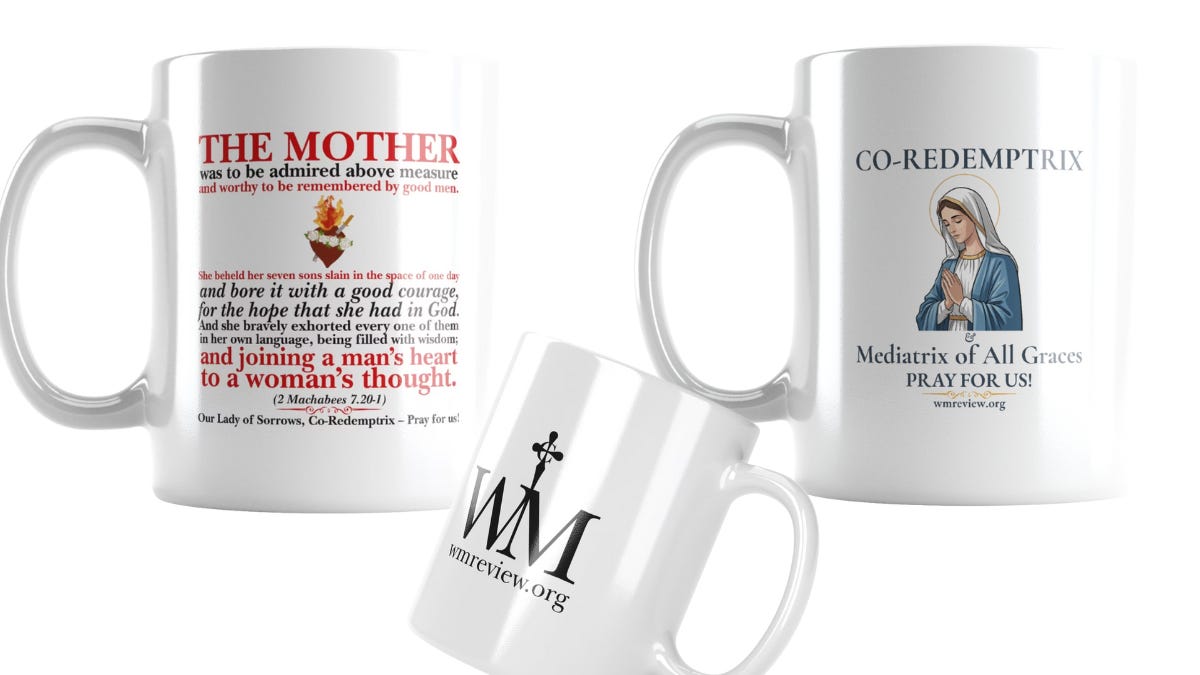
If you are enjoying this preparation for Total Consecration, why not get it in mug form?
Follow on Twitter, YouTube and Telegram:
Twitter (The WM Review)


