
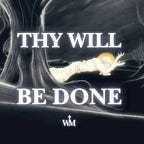

In the Garden of Gethsemane, Jesus permits the Agony to descend upon him, and enters his Passion alone.
Editor’s Notes
This is Day 29, in Week 3 – the purpose of which is growing in knowledge of Our Lord, so that we may love him more dearly and follow him more nearly.
Today we are returning to Fr Aloysius Ambruzzi’s Companion to the Spiritual Exercises of Saint Ignatius, and considering his treatment of the Agony of Our Lord in the Garden, before his blessed Passion.
David from Catholic Hub has again kindly agreed to read this text for us, following his previous readings:
Day 6: Satan’s battle plan to ensnare souls – and Christ’s battle plan to save them
The Two StandardsDay 8: Are you a weakling, a self-seeker... or something better?
The Three Classes of MenDay 9: Do we actually want what humility entails?
The Three Ranks of HumilityDay 12: Why Christians become liberals – and how to avoid it happening to YOU
From Liberalism is a SinDay 16: Why lukewarmness towards God can be worse than actual coldness
Tepidity
David has also released a video about True Devotion and this series:
Christmas and the Passion?
At the time of publishing this, we are only a few days from Christmas. It might seem strange to some, that we are meditating on sorrow and the Passion so close to Christmas.
But it is not strange at all. We want to grow in knowledge of Our Lord, and the Passion is what he was born to consummate. He assumed our human nature and was born at Christmas precisely to suffer and to die.
Before the wood of the Cross, there was the wood of the manger. Before the prison and the two thieves, Christ was in a stable between an ox and an ass.
Christmas is so much more wonderful and beautiful when we realise that the baby born to the Blessed Mother is not just another baby, no matter how beautiful – but a fully conscious and fully willing God-Man, who has come to offer himself as a sacrifice out of love for his Father, and for us.
In other words, it’s wholly appropriate and fitting for us to contemplate the Passion in the lead-up to Christmas. In fact, it is helpful, important, and necessary.
Finally, St Louis de Montfort recommends going to confession on the day of the consecration. Look ahead now, and consider whether you need to arrange that with a priest in advance.
CONTENTS:
READING: The text is based on an extract from Fr Aloysius Ambruzzi SJ.
MEDITATION: The points for meditation are included below. A guide on how to use these points in meditation can be found here.
Reading: In the Garden of Gethsemane
The Lonely Struggle of the King
A Companion to the Spiritual Exercises of Saint Ignatius
Fr Aloysius Ambruzzi SJ
First Prelude. The first Prelude is to bring to memory the narrative; which is here how Christ our Lord sent two Disciples from Bethany to Jerusalem to prepare the Supper, and then He Himself went there with the other Disciples; and how, after having eaten the Paschal Lamb, and having supped, He washed their feet and gave His most Holy Body and Precious Blood to His Disciples, and made them a discourse, after Judas went to sell his Lord.
Second Prelude. The second, a composition, seeing the place. It will be here to consider the road from Bethany to Jerusalem, whether broad, whether narrow, whether level, etc.; likewise the place of the Supper, whether large, whether small, whether of one kind or whether of another.
Third Prelude. The third, to ask for what I want. It will be here grief, feeling and confusion because for my sins the Lord is going to the Passion.
Christ has come to undo Adam’s work, to destroy sin and death and restore us to the dignity of children of God. Adam, yielding to pride and pleasure, had sinned in a garden of delight: the Son of God begins His work of Reparation and of Restoration in a garden of suffering.
He is our Head and our Heart. In Him there is summed up the whole of regenerated mankind. He is, then, the Universal Victim and the Model of us all—not only the King that goes before us and shows us the way, but also the Saviour Who gains for us the grace we need to follow in His footsteps.
It is only by grasping such truths that we gain a glimpse of what Christ suffers in the Garden of Gethsemane.
1. The first painful vision of Christ
His Sufferings
Christ was to redeem mankind through suffering and shame, through the Cross.
The first man rebelled against the Law of God through the love of pleasure and through pride: “You shall be as gods” (Gen. iii, 5). It is the love of pleasure, riches and honour that keeps so many of us in the bondage of Satan. And that is why Christ, Who came to teach us the true way of salvation, from the first moment of His Incarnation, planted the Cross in His Heart and chose as His constant companions Poverty, Sufferings, and Humiliations. They stood by His cradle; they followed Him all through His life; they were present on Calvary to receive His last sigh as He expired on the Cross. But as we might have thought that, perchance, pleasures and sufferings, glory and shame were but one and the same thing for Him—that, most unlike ourselves, He neither feared sufferings, nor was drawn to pleasures, He allows three of His Apostles, the very three who have already seen His glory, to witness the Agony that begins His sorrowful Passion.
So far the day of His Passion has appeared to Him as the day of His Espousals. He has seen only the speedy end and the glory that would follow, the joy and the fruits thereof. So far He has controlled His imagination. He has allowed His Divinity to exert its influence. He has had Mary as His companion and confidante.
But now it is so no longer. He wants to suffer all that He can. He uses His Omnipotence to increase, not to alleviate, His sufferings. He shuts off from Himself any vision of glory and gives instead free play to His imagination, so that it portrays the minutest details of His Passion in all their naked horror. He suffers in His Heart cumulatively what He will afterwards suffer successively and in detail. He sees Himself betrayed, bound, dragged along, led from tribunal to tribunal, calumniated, denied, spat upon, cried down as a malefactor, as a fool, as worse than the worst of men, scourged, crowned with thorns, nailed to the Cross and finally dying in an agony of torment.
Moreover, He suffers now whatever each member of His mystical body will suffer down the centuries, even to the end of the world. “Saul, Saul, why persecutest thou Me?” He is put to death with His martyrs, persecuted with His disciples, reviled with His ministers.
We know how terrible is the apprehension of a future calamity and still more of a certain calamity—how it oppresses and weighs one down. The Heart of Jesus was infinitely more sensitive than ours, His knowledge was more penetrating, and His sufferings were consequently more acute. What wonder if He begins to be sorrowful, and very heavy, and full of terror. How cruel and humiliating is the feeling of fear! It is a sentiment of men beaten and overcome in mind, confronted by an imminent evil which they take to be too much for them to resist and more than they can bear. No wonder that fear is the thing great men dread most, yet it is just what Christ deliberately chose to suffer in order to win for us courage to vanquish our fear. We should not think that the Saints were clods of earth. They also shrank from suffering and shame. But it was the fear that Christ underwent, which strengthened them to conquer their natural repugnance.
2. The second painful vision of Christ
The Sins of Men
But it is not only the sight of His Passion and of the sufferings of His future followers that weighs down the Heart of Jesus and makes Him cry: “My soul is sorrowful even unto death.” Far more than that it is the weight of sin.
He has come to atone for sin and to destroy its empire:
“He shall save His people from their sins.” (Matt. i, 21)
He is “to give His life a redemption for many.” (Matt. xx, 28)
“Behold the Lamb of God, behold Him Who taketh away the sin of the world.” (John i, 29)
“This is my Blood of the New Testament, which shall be shed for many unto the remission of sins.” (Matt. xxvi, 28)
From the first moment of His Incarnation He felt Himself loaded with the sins of all mankind. He knew, all along, that He must fully satisfy for each and every one of them:
“All we like sheep have gone astray, everyone hath turned aside into his own way: and the Lord hath laid on Him the iniquity of us all.” (Is. liii, 6)
However, so far He was supported by the sense of His inward sanctity and sinlessness, and by the thought of His final triumph. Now he is brought face to face with God’s inexorable Justice and unapproachable Sanctity. His face is crushed to the ground beneath the awful weight of the almost infinite number of the sins of men.
We make light of sin. We do not understand how the Creator can make so much of it.
But consider what sin is in itself—the mortal enemy of the All-Holy. Saints were, sometimes, allowed only a passing glimpse of the ugliness of a single venial sin as it is before God, and they have left it on record that the sight of it would have killed them, had not the vision been instantly withdrawn.
Who can imagine, then, the extreme disgust of Christ when He sees Himself covered all over with the hideous leprosy of sin? Who can imagine His horror when He finds His eyes and hands and feet, His Heart and soul, as if they were the eyes, hands, feet, heart and soul not of God, but of the Evil One. (Cf. Newman, The Interior Sufferings of Christ)
All the sins of the living and of the dead, of the lost and of the saved, and of the yet unborn gather round the Lord in troops more numerous than the locusts or the plagues of hail and flies and frogs sent against Pharao, and they all shout out: “We are Thine; we are the work of Thy hands!”
They are all before Him now. They are all upon Him and in Him. They are all let loose to wreak their vengeance and fury on the Son of God. And we too were present to Him there. We were there, with every sin committed, as if it were a stone in our uplifted hand to fling at the defenceless head of our Saviour. No wonder He moans: “My soul is sorrowful even unto death!”
3. The third painful vision of Christ
The Ingratitude of Men
And yet He would willingly have endured even more than the inexorable Justice of the Father demanded, if only He knew that there would be some poor return of love and gratitude from those for whose sake He was suffering, and was to suffer so very much. But alas! He looks round: the eight Apostles, left at the entrance of the Garden, have forgotten Him; His three special friends, to whom He appealed for support, are asleep; one and all will soon abandon Him and take to flight. Judas is plotting against Him. His own people are preparing to crucify Him.
He looks down the ages, and He sees nothing but ingratitude and indifference from an overwhelming majority of mankind. Millions will not even know Him; others will reject Him; many, even among His friends, will prove ungrateful.
He sees each one of us—our sins, our infidelities, our ingratitude. But ingratitude, alas! is sharper than the serpent’s tooth. Hence the touching complaint of Jesus:
“I looked about, and there was no one to help. I sought, and there was none to give aid.” (Is. lxiii 5)
“What profit is there in My blood!” (Ps. xxix, 10)
Three years ago, Satan had appeared to Him in the Desert and had tempted Him with the allurement of honour and power. Now he comes to tempt Him with feelings of despair and despondency. There he had tried to induce Him to choose other ways to save mankind. Here he works to make Him shrink from the Cross.
4. The Agony
These are three visions that oppress the Saviour to death.
Look at Him prostrate on His face. He has longed for this hour. He has called it the Baptism with which He has to be baptized. He said that He was terribly straitened till it was accomplished. And now He prays to His Father that the chalice of sufferings may pass from Him: “Abba! My Father! All things are possible for Thee: if it be Thy Will, take this cup away from Me.”
An Angel descends from Heaven to strengthen Him, and indicates to Him once more the Will of His Father. He is to die; He must atone for sin, yea, and that in spite of men’s ingratitude.
Our Lord repeats the oblation which He made of Himself in the Supper Room: “Not what I will, but what Thou willest.”
A fierce encounter of wills now ensues, i.e., between the Superior will of our Lord, determined to suffer and die in obedience to His Father, and His inferior will, seeking to flee from what is so repugnant to nature. In the midst of this conflict, the tormented Heart of Christ, the seat of tenderness and love, begins to labour and to beat with unwonted vehemence. “The foundations of the great deep are broken up”: the red streams rush forth, and bursting through the pores, they stand in a thick dew all over His body. Then forming into drops, they roll down, full and heavy, and drench the ground. If that Heart does not break, it is because of the omnipotent Will of Christ to drink the chalice to the dregs.
He has begun to shed His Blood. No soldier’s scourge has yet touched His shoulders, nor have the hangman’s nails marked His hands and feet. It is His agonizing Heart and Soul which have broken up His framework of flesh and poured it forth. “Behold that Heart!” It is the Passion of the Divine Heart to which we must specially direct our attention in our contemplation of the Agony in the Garden. Vide amorem: vide dolorem! Behold the height of love: contemplate the depth of sorrow:
“O all ye that pass by the way, attend and see if there be any sorrow like to my sorrow: for he hath made a vintage of Me as the Lord spoke in the day of His fierce anger.” (Lam i, 12)
Sorrowful with Thee full of sorrows!
1. My soul is sorrowful unto death. O my Jesus, the sufferings of Thy Heart are as great as the boundless sea! Thou endurest now in Thy soul, all at once, what Thou wilt successively endure throughout Thy Passion. Thou seest Thyself betrayed, bound, dragged along, led from tribunal to tribunal, calumniated, spat upon, cried down as a malefactor, worse than the worst of men, scourged, crowned with thorns, nailed to the Cross, dying in an agony of torment.
2. Thou art the victim for all the sins of men and hast undertaken to atone for them. And now, covered all over with them, Thou facest God’s inexorable justice and unapproachable sanctity, and art crushed to the ground beneath the awful weight.
3. Thou lookest down through the ages and seest men’s malice, their ingratitude and indifference. Thou seest my sins, my black ingratitude, and my cold indifference.
4. No wonder if Thou beginnest to fear and be heavy, if Thou beggest of the Father that the chalice of Thy Passion may pass from Thee! An Angel comes to strengthen Thee—and Thou sayest to Thy Heavenly Father: Not what I will, but what Thou wilt; and being in an agony, Thou prayest the longer, till Thy sweat becomes as drops of blood trickling down upon the ground.
5. O my agonizing King, let me lie prostrate by Thy side! Grant that a drop of Thy Blood, reaching my sinful and cold heart, may purify it, and inflame it with Thy love. May I learn from Thee to conquer fear, to feel true shame and contrition for my sins and for the sins of others, to work and suffer for Thee in spite of men’s neglect and ingratitude.
Meditation for Day 29
The Agony in the Garden
Taken from St Ignatius’ Spiritual Exercises
It is in mental prayer that that much of the preparation will be achieved – and meditation is a means of entering mental prayer. See our guide to meditation for two ways to use the below texts.
The Preparation
Prayer. The usual Preparatory Prayer.
First Prelude. The first Prelude is to bring to memory the narrative; which is here how Christ our Lord sent two Disciples from Bethany to Jerusalem to prepare the Supper, and then He Himself went there with the other Disciples; and how, after having eaten the Paschal Lamb, and having supped, He washed their feet and gave His most Holy Body and Precious Blood to His Disciples, and made them a discourse, after Judas went to sell his Lord.
Second Prelude. The second, a composition, seeing the place. It will be here to consider the road from Bethany to Jerusalem, whether broad, whether narrow, whether level, etc.; likewise the place of the Supper, whether large, whether small, whether of one kind or whether of another.
Third Prelude. The third, to ask for what I want. It will be here grief, feeling and confusion because for my sins the Lord is going to the Passion.
The Points for Meditation
First Point. The first Point is to see the persons of the Supper, and, reflecting on myself, to see to drawing some profit from them.
Second Point. The second, to hear what they are talking about, and likewise to draw some profit from it.
Third Point. The third, to look at what they are doing, and draw some profit.
In addition to the usual consideration of persons, words and actions, St Ignatius wants us to consider the following in all meditations on the Passion:
Fourth Point. The fourth, to consider that which Christ our Lord is suffering in His Humanity, or wants to suffer, according to the passage which is being contemplated, and here to commence with much vehemence and to force myself to grieve, be sad and weep, and so to labor through the other points which follow.
Fifth Point. The fifth, to consider how the Divinity hides Itself, that is, how It could destroy Its enemies and does not do it, and how It leaves the most sacred Humanity to suffer so very cruelly.
Sixth Point. The sixth, to consider how He suffers all this for my sins, etc.; and what I ought to do and suffer for Him.
One could consider these points in reference to oneself: How far have we been conscious of this in our daily lives so far, what practical conclusions should we draw from these truths, how far have we lived up to them so far, what must we do to live up to them in the future, etc.
One could consider the acts of virtue we can make in response to these truths – Acts of faith, humility, hope/confidence, thanksgiving, contrition and love – talking all the while to God, the Blessed Virgin, our Guardian Angels, etc.
One should feel free to linger on only one of the points, if this is how the meditation proceeds.
The Colloquy
Colloquy. I will finish with a Colloquy to Christ our Lord, and, at the end, with an Our Father.
Note. It is to be noted, as was explained before and in part, that in the Colloquies I ought to discuss and ask according to the subject matter, that is, according as I find myself tempted or consoled, and according as I desire to have one virtue or another, as I want to dispose of myself in one direction or another, as I want to grieve or rejoice at the thing which I am contemplating; in fine, asking that which I more efficaciously desire as to any particular things.
And in this way I can make one Colloquy only, to Christ our Lord, or, if the matter or devotion move me, three Colloquies, one to the Mother, another to the Son, another to the Father, in the same form as was said in the Second Week, in the meditation of the Three Pairs, with the Note which follows The Pairs.
Fr Ambruzzi has further suggestions above. It is important to speak frankly to God in our own words, rather than simply reading somebody else’s. If one feels moved to speak to God before meditating on all the points, one should certainly do so. The same applies if one feels moved to simply rest in God, rather than engaging in discursive meditation. These impulses should be followed over any particular method of meditation.
The End
End the meditation with a vocal prayer – such as the Our Father, the Anima Christi.
Reflect on how well we have prayed, and how well we have followed our chosen method.
Select a spiritual nosegay from your meditation to keep with you for the rest of the day.
See you tomorrow. Hit subscribe to make sure you don’t miss it or any of our other material:
See the index and explanation to this series here:
For more on the St Louis de Montfort’s True Devotion and Total Consecration, for which we are preparing, see here:
The theological basis of ‘True Devotion’ and the Consecration to Mary (Garrigou-Lagrange)
The fruits of ‘True Devotion’ and Consecration to Mary (Garrigou-Lagrange)
For more on the importance of not getting bogged down with methods, and on allowing God to act, see here:
For more on Week 3, and the vocal prayers that are are suggested for each day, see here:
‘Week 3’ of St Louis de Montfort’s Total Consecration preparation (Prayers, practices and reading)
Get the book here:
True Devotion to the Blessed Virgin Mary (St Louis de Montfort)
HELP KEEP THE WM REVIEW ONLINE WITH WM+!
As we expand The WM Review we would like to keep providing free articles for everyone.
Our work takes a lot of time and effort to produce. If you have benefitted from it please do consider supporting us financially.
A subscription gets you access to our exclusive WM+ material, and helps ensure that we can keep writing and sharing free material for all.
You can see what readers are saying over at our Testimonials page.
(We make our WM+ material freely available to clergy, priests and seminarians upon request. Please subscribe and reply to the email if this applies to you.)
Subscribe to WM+ now to make sure you always receive our material. Thank you!
If you are enjoying this preparation for Total Consecration, why not get it in mug form?

We also have our best-selling Co-Redemptrix mugs:
Follow on Twitter, YouTube and Telegram:
Twitter (The WM Review)


