
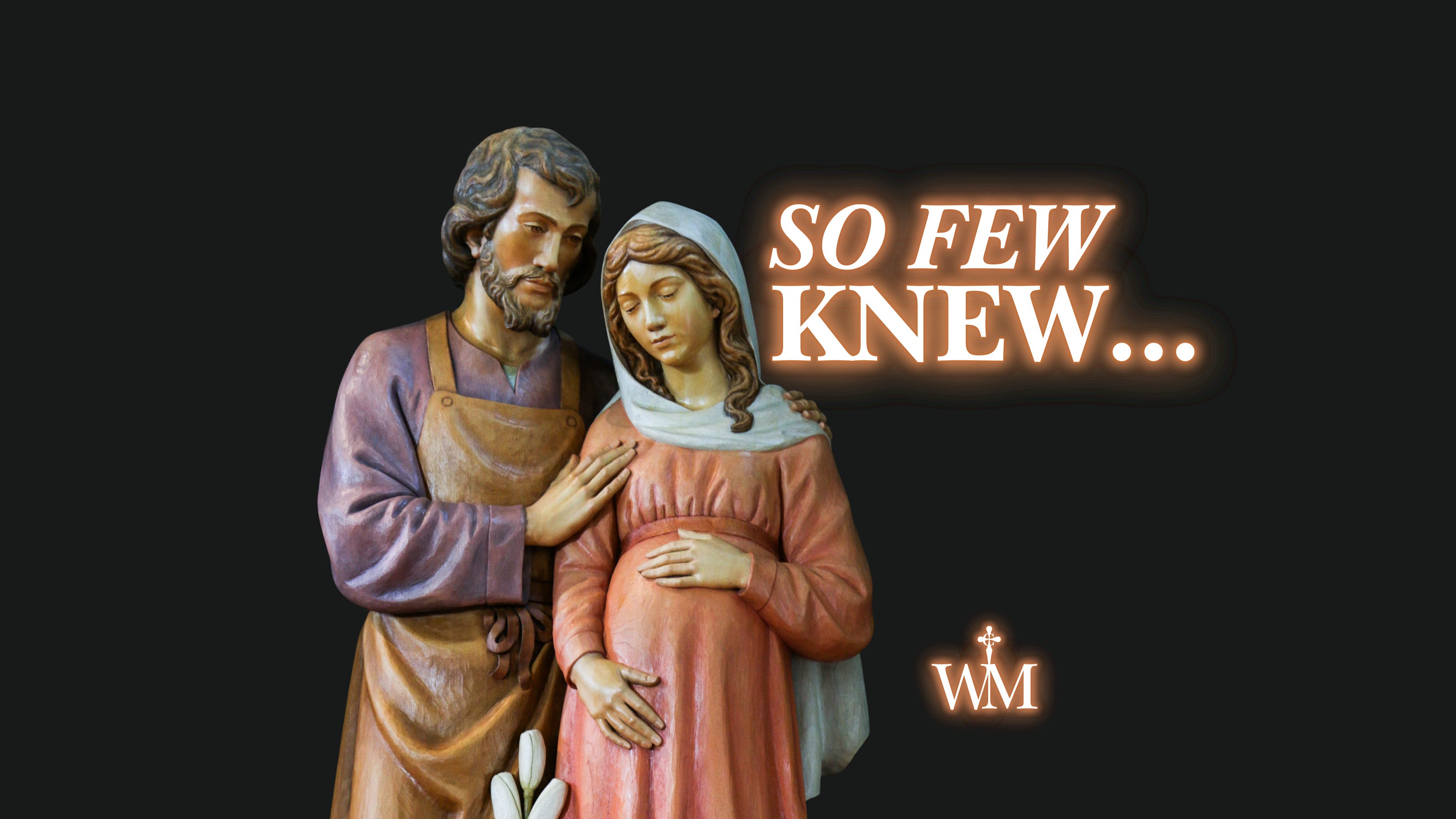
Our Lord’s time in the womb was not like that of other babies – neither for him, nor his Mother.
Editor’s Notes
The second period of the preparation for St Louis de Montfort’s Total Consecration to the Blessed Virgin is focused on gaining a greater knowledge of Our Lady, and seeking to unite ourselves to her.
In this reading, we’re going to consider the nine months in which Our Lady carried the Son of God in her womb – and consider how this important period can make us grow in knowledge and love of both her and her son.
This is an important point for St Louis de Montfort, and he expresses a great devotion to “Jesus Living in Mary” throughout his work. Catholic writers say that we too are to be formed in the womb of the Blessed Virgin, if we want truly to be a part of Christ.
This text is taken from Fr Henry James Coleridge. The WM Review runs a project called Father Coleridge Reader, which serialises this great nineteenth century Jesuit’s works. But while Fr Coleridge is great to read, his style and language make reading him aloud a little difficult. That is why the text in the attached audio has been simplified. The original text is below.
The themes, as well as vocal prayers and readings associated with Week 2, can be found here. You can find the book here.
Finally, it would be good to return to the meditations on the Three Classes of Men and the Three Ranks of Humility this week. We anticipated them in Week 0, but St Ignatius puts them with the meditations we are considering now in Week 2:
Day 8: Are you a weakling, a self-seeker... or something better?
The Three Classes of MenDay 9: Do we actually want what humility entails?
The Three Ranks of Humility
Although this is part of the Total Consecration preparation, it also stands alone as a great text in its own right.
CONTENTS:
READING: The text is based on an extract from Fr Henry James Coleridge’s The Nine Months.
MEDITATION: Fr Coleridge’s text intended to provide material for the meditation, which appears in point-form following it. A guide on how to use these points in meditation can be found here.
Reading: The Life of Our Lord in the Womb
The Nine Months
Fr Henry James Coleridge SJ
The secret worshippers
Mary understood what had taken place as no one else could understand the condescension of God.
She knew His worth and rights, as no one among the highest seraphs knew them. She knew what was the blessing of His presence, and what the dues to His Majesty.
But He was her own. No ordinary presence, even as of the Blessed Sacrament in the tabernacle, was that in which He dwelt in her. He had taken His Flesh and His Blood from her substance. He lived by her life. He was sustained in His human existence by her.
She was nearer to Him than the priest who offers Him on the Altar, nearer to Him than the Angels who kneel in adoration wherever He is to be found; Flesh of her flesh, Bone of her bone.
And He was her own in the other sense, which involves so infinite a trust, so limitless a responsibility. She alone knew of Him. She alone was to discharge the duties of the whole visible creation in honour of Him, thanking Him, adoring Him, praising Him, loving Him for His condescension. If we can suppose Heaven emptied of its citizens, and one Angel alone left to adore the Divine Presence of the Ever-Blessed Trinity, we might compare that Angel’s thoughts with those of Mary.
It will certainly help us to understand the immense grace required for a position of this kind, to consider a little what that life was of our Lord which began at the moment of the Incarnation, and continued uninterruptedly for the nine months which had to pass before the first Christmas Day. It is a part of what we term in general the Holy Infancy, which has a kingdom of its own in Christian devotion, like the devotion to the Babe of Bethlehem, or to the many years of the Hidden Life at Nazareth. It contains both these, for it is the Babe of Bethlehem Who is dwelling in the womb of Mary. And never was He nearly so much hidden, even in the quietest years of His Life at Nazareth, as during these nine months.
It is clear that each part of this great devotion has its own features and characteristics. It is also clear that this phase of it can have been practised by no one from the beginning but our Blessed Lady herself, though at a point of time which is not directly discernible, it must have spread to St. Joseph, St. Elisabeth, St. John Baptist, St. Zachary. Moreover, it may have become known before the time came for the journey to Bethlehem to others of the immediate relatives of our Lady or her holy spouse.
We shall attempt in the few following paragraphs to give a short sketch of the considerations on which this great devotion has to feed itself.
Homage due to our Lord
God might have become Man without going through all the ordinary stages of human existence, including the first stage of all, the nine months in the womb of a Mother. But He did not choose to be different from us in this respect, and the consequence of His condescension is that we have to contemplate the theological truths which are involved therein.
We cannot imagine that this chain of wonderful and beautiful truths was unknown to our Blessed Lady and to St. Joseph, and to the other Saints mentioned above, in the order of time in which it pleased God that it should become known.
It is natural to think that the homage due to God Who had made Himself a creature was entrusted to them, and that it was not to be delayed until the humble birth at Bethlehem. We must suppose that God did not leave His own greatest work unrecognized and unhonoured, even though all the homage of angels and saints may be as nothing before Him.
A very short survey of this great field of contemplation, as we may suppose it to have been laid open to Mary and to others after her, must be enough for us here.
Body and Soul of Jesus
The history begins with the fiat of Mary. At that moment, as has been already said, our theology teaches us that, by the action of the Holy Ghost, a part of her most pure blood was formed into the perfect Body which was to be that of our Lord, and that at the same time, God created the Human Soul which was to dwell in that Body. Mary received, at the same time, a marvellous increase of grace and knowledge, corresponding, as it were, to her elevation at that moment to be the Mother of God.
The Body was made small, as that of other infants; it was made, as the saints tell us, not only most beautiful, but also most delicate, and capable of the utmost suffering, while the glory, impassibility, and other gifts which were connatural to a body which was to be the body of a Divine Person, were suspended, in order that the decrees of God might be carried out in it. The Soul which was created for it had all the natural excellencies which became it, and it was enriched also by immense gifts of grace.
We are forced to put all these things in some succession, but the act of God in them all was simultaneous and in a moment. So also was the essential and substantial act of the Incarnation itself, by which the Soul and the Body which were created and united, became the Soul and the Body of the Eternal Son made Man.
Here is enough for angels and saints to feed on in endless contemplation. But the knowledge of these marvels implies praise, wonder, adoration, thanksgiving, oblation, and other affections, and it is natural to suppose that these were paid duly at the time, as the knowledge concerning them was communicated to them, both by Mary and by Joseph.
It is unreasonable, with the Scriptural account of the Visitation before us, to exclude from this reverent worship either St. John, or his parents, St. Elisabeth and St. Zachary. Beyond these, it must be left to devout conjecture alone to extend the range of the human worshippers of the Infant God. But at the time of which we speak, Mary alone possessed the secret.
Excellencies of the Sacred Humanity
The next great field of contemplation under this head, is that which contains the consideration of the excellencies of the Sacred Humanity. It became at once the highest of all God’s creatures, present, past, and future, for all that God Himself can create and elevate must be lower than that Humanity which is His own.
The union with the Divine Word implied the communication of all the Divine perfections, and the right to the adoration and homage of angels, men, and all creatures. It implied the sanctification of that Soul by the substantial sanctity of God, and its being made, not only essentially holy in itself, but the source and origin of the sanctification of others.
To say that it was absolutely and necessarily impeccable, and free from the faintest shadow of the sin which other infants contract in their conception, is superfluous. It was the Soul of the Incarnate God. It was full of all grace, and the source and fountain of grace for others. It was adorned with every possible virtue in the highest perfection, so that it could not, in the strictest sense of the words, advance and increase in grace or in virtue.
It was full of all knowledge and all wisdom, knowledge of God, of itself, of all things. It knew the past, the present, the future perfectly. Angels and men, and all other creatures, lay open before it, to the very inmost thoughts and movements of their affections and intelligences, the good, and the evil, and the imperfect, in all, as clearly as all will lie open before Him when He sits at the Last Day to judge the world. And all the treasures of wisdom and knowledge thus communicated to His Soul, our Lord directed from the first in the most perfect manner to the love and service of His Father.
Gifts of the Holy Ghost
The seven gifts, as we call them, of the Holy Ghost were in their consummate perfection in the Soul of our Lord at the first.
The gift of wisdom was in Him a most lofty contemplation and a most loving enjoyment of all the mysteries and secrets of God, a gaze full of intense love and joy on His infinite perfections, attributes, designs, judgments, and ways.
The gift of intelligence or understanding showed Him among other things, all that had been arranged and decreed and foretold concerning Himself; the plan of His Life and the measure of His work from His Birth to the end, with all the circumstances of His wonderful actions and ineffable sufferings.
The gift of counsel, in the same way, showed Him exactly what to do in every occasion, what was the best in every conjuncture, how every moment of His Life was to be most perfectly spent and employed, for the glory of the Father.
The gift of fortitude secured the most ready and punctual and complete execution of whatever the gift of counsel showed Him to be done.
So it was with the other gifts. His gift of knowledge opened to His Soul the full and penetrating insight into all created things, what was their real value according to the designs of their Creator, their end, their use, their relative worth or worthlessness.
His piety filled Him with the tenderest and most just affections of reverence and love towards His Father, His Blessed Mother, St. Joseph, and all those with whom He was immediately concerned, and also to all men, all angels, and all creatures which have been created by God, all in their due rank and proportion; all loved and honoured with the true and most faithful and most appreciative affection and dutifulness of His Heart.
And lastly, the gift of fear was in Him in perfection in that way in which it could be in Him, that is, a perfect awe and respect for the greatness of God and all that is His and comes from Him, a deep sense of loving dependence on Him as His creature, the work of His hands, in Whom all things live and are and subsist.
Complacency of God – Joy of the Three Divine Persons
It is needless to say that this beautiful Soul in itself, and apart from the Life which it was to lead, and which it began at once to lead, in the full exercise of all its faculties in the womb of Mary, was the object of the most tender joy and complacency and delight to God.
The Eternal Father rejoiced to see His Son clothed with that Human Nature in which He was to do so much for the glory of His Father and for the benefit of mankind, out of love for His Father and for our salvation. It was a part of this joy and complacency that He had made Mary His Mother so full of grace and every perfection, and raised her to a dignity so high in Heaven and on earth. And He rejoiced also in all the treasures of grace which the Sacred Humanity had received for us, and for the use which His Son was to make of them in distributing them so largely and bountifully among men, thus producing a glory and a beatitude which are to last for endless ages in the next world.
It was a joy to the Eternal Son that He was now at last become Man and able to carry out the designs of His eternal love for the Father and for us, that He could now unite to the Human Nature which He had chosen all His Divine perfections and powers, and He rejoiced especially in the humiliation which this union implied for Himself, because it was the will of His Father.
It was a joy to the Holy Spirit to see His work accomplished, and that Human Nature perfected by the union with the Divine Person of the Word, into which He was to pour all His gifts and graces in order that they might be communicated to us.
The Life of our Lord in the womb
We must next pass on to the Life of our Lord in the womb of His Mother. It was a Life that began at once in full vigour of mind and heart, a vigour which was to last on throughout all eternity.
It was a Divine Life, wholly directed to the glory of God, a Life of merit in His sight so great as to suffice for the redemption and glorification of a thousand worlds. It was a Life which was not His own, inasmuch as it was from the first devoted to God and to us.
The Soul of Jesus was perfectly conscious of, and took immense delight in, its own elevation, its union with the Divine Person, its immense gifts and privileges, its prerogative as the source of all spiritual blessings to our Lady, St. Joseph, all the saints and all the faithful, the possible source of infinite blessings to infinite numbers of souls that would never actually enjoy them.
All the blessings, actual and possible, and all the souls to whom they were to be given or might have been given, were perfectly present to it from the first moment.
Interior work for God – Vision of God, and all things
It began at once its Life of interior work for God, with the utmost fervour, with unrelenting perseverance, with the utmost purity of intention, and with the full, tranquil, and deliberate purpose to gain all the holiest ends for which such actions could be offered.
The Soul of our Lord at once saw God perfectly with the plenitude of Beatific Vision, and here again it had this not only for itself, but also for others. To see God was to understand His infinite greatness, to adore Him with the most perfect worship as a creature, to love Him most intensely, and all creatures in Him and for Him, and especially men who had been made our Lord’s brethren by the Incarnation.
Then followed gratitude, thanksgiving in His own Heart, and in the heart of His Mother. For the Magnificat reveals to us, as we shall see, what it was that our Lord inspired in her at that time. And, as far as was consistent with God’s decree, and in due time, in the hearts of the other Saints of the Incarnation, Joseph, Elisabeth, Zachary, John, the same holy exercise was kindled into life by the presence and grace of our Lord.
This blessed Soul also saw and understood the human world into which He had come, Mary, His own Mother, Joseph, whose office was to be His father, St. John His Precursor, and the whole race of man, past, present, future. Then came the vision of the miserable state of the race of which He was now one, its need of redemption and restoration, and the will of the Father that this should be His work.
This led to His oblation of Himself for this purpose, of which St. Paul speaks in the Epistle to the Hebrews, to His renouncement of the rights of His Body, in order that He might suffer, and the rest. The whole of His own future on earth and in Heaven, as well as that of all souls, was clearly manifested to Him.
Special virtues at this time – obedience
There is another head of consideration on this subject which is found in the virtues which were especially practised by our Lord in this Life of His in the womb. He was of course, at this, as at all times of His Life, the pattern of all virtues, but there are some which seem more particularly to belong to this period, on account of the conditions under which His marvellous existence was carried on, as there are other similar circumstances in His Life in the Blessed Sacrament, to which this Life in the womb of Mary bears so much resemblance.
Thus it may be said that our Lord was Incarnate at the bidding of obedience, inasmuch as it was an act of obedience on the part of His Mother that made the Incarnation possible in the counsels of God and actual when it took place. Our Lady’s words, “be it done to me according to thy word,” were the signal for the Incarnation. He remained in the womb, notwithstanding the perfection of His Manhood both in Soul and Body, for the full natural space of the nine months, out of obedience to the usual laws in such cases.
And one of His occupations in the womb was to offer Himself continually to be obedient, not only to His Eternal Father for Whose love He became Incarnate, but also to all who in any way or measure represented Him, as our Lady His Mother, St. Joseph who was to be in the place of His Father, and even to all authorities lay or ecclesiastical who had derived their power from Him.
Humility
In the same way, when we consider the perfection of our Lord from the moment of His Conception in intelligence and the use of His faculties, we cannot but be astounded at the extreme lengths to which He went in His humiliations during this interval before His Birth.
The Church sings of Him, “Thou didst not abhor the Virgin’s womb,” and although those words of hers may have more than one meaning, they seem to express her sense of the depths of His humiliation. It did in a manner befit the ways of God and the character of our Lord, that when He had received in His Human Nature the very highest possible exaltation by the union with the Divine Person of the Word, He should at once seek to humble Himself to the very utmost, by His imprisonment in the womb of His Mother.
And yet this does not adequately express the humiliation of our Lord, on account of His perfect consciousness and possession of all His faculties. For these enabled Him to surpass the actual humiliation of His sojourn in the womb by the affections of humiliation which His Sacred Heart conceived while there, in which He desired and decreed to humble Himself not only before God His Father and Lord, but beneath the feet of the lowest and vilest of His creatures.
Meekness and patience
Another special virtue of this period of our Lord’s Life is His marvellous meekness. God has become Man, but He has laid aside the majesty and the mightiness in which He appeared of old, as when He gave the Law on Mount Sinai. He is especially, as He delights to call Himself, for our sake, meek and humble of Heart, and He begins the practice of this virtue in the womb of His meek and humble Mother. He begins at once to appease the anger of His Father towards men, by this extreme meekness, and He prepares Himself, as it might seem, by the practice of this most beautiful virtue from the beginning, for that exercise of it towards men in His later life which made it His most characteristic virtue.
The same may be said of His practice of the love of poverty. For He is here entirely dependent on His Mother for sustenance, and He has, as the Apostle says, being rich, made Himself poor for our sakes, that He might communicate to us the true riches of Heaven. And this poverty which He began to practise now He continued throughout His whole Life.
Patience, the suffering of all inconveniences and incommodities, is another of these virtues of this stage of the Infancy. This again was more to Him than to others, on account of the perfection of the use of all His faculties which was from the very beginning, and even this suffering of confinement and straitness and darkness and the like He increased, by the interior acts of His patience.
For in the womb itself He was continually looking forward to the torments which He was to undergo, far greater and more painful than those sufferings which He then actually experienced, and His Heart stretched itself also to that tender sympathy which led Him to make His own all the sufferings of others in the world, especially those which were to be undergone in any way for His sake, or by those who specially belonged to Him.
Prayer and silence
There remain a few other virtues more particularly practised in the womb by our Lord. Such was in a special manner the exercise of prayer and contemplation, which formed the most direct occupation of the Sacred Heart during these months, in which our Lord engaged Himself in the contemplation of His Father’s greatness, and also in the prayerful compassion for our miseries.
Such was also the practice of silence, the inseparable companion and guardian of prayer and the spirit of prayer, in which, it is needless to say, the time of our Lord’s existence was entirely spent. Such was the love of perfect retirement for the sake of being alone with God, a virtue of which we have many examples of our Lord recorded even in His most active Life, but which belongs in a special manner and degree to the Holy Infancy all through, though particularly to the Infancy before the Nativity.
Our Lady adoring
In all these points it is natural to suppose that our Lord’s Life in the womb was understood by His Blessed Mother, at least, from the very beginning.
It was her special duty and delight to adore Him in this stage of His infinite condescension, all the more because she was either entirely or nearly alone among mankind in having any cognizance of these humiliations and virtues. This would be occupation enough to feed her soul and heart.
But there are other ranges of truth connected with the infantine existence of our Lord, of which we have not yet spoken. For we have said nothing as yet of the titles and prerogatives of our Lord, which were His by right from the first moment of the Incarnation, and which called for the homage and acknowledgment of His creatures, all the more because they were His for their sakes. Such was His Royal Majesty, His Headship of the human race and of all creation, His power as Lawgiver, as Redeemer, as the Light and Sanctification of the world, as the Prince of Peace, our Spouse, our Pastor, our Example.
He is not more truly King of Heaven and of earth, now that He reigns at the right hand of the Father, than He was when Mary carried Him in her womb. But now His throne is honoured by the incense of the continual adoration of millions of saints and angels, and the homage of all earth and Heaven. Then He was unknown on earth, and the multitudes of His saints had not been admitted to Heaven, which He was to open to them as the fruit of His humiliations. All the particulars of His condition were manifested to His Mother.
It was Mary’s office to honour Him in the name of all, to sympathize with His humiliation and His sufferings, to join her heart with His in the continual stream of loving acts of thankfulness and adoration and self-oblation which rose from Him before the throne of His Father.
Our Lady and the Sacred Heart of her Son
We see some of the breathings of the Sacred Heart in the Magnificat, of which we shall presently have to speak, and we cannot doubt that the presence of our Lord with her in this most marvellous way was a grace which raised her daily higher and higher in her most consummate perfection.
We are nowhere told of the secret intercourse and converse which united the Hearts of Jesus and Mary in a continual exchange of the most fervent affections at this time. This is a secret of Heaven, though we cannot doubt that every movement and thought of our Blessed Lady must have been divinely influenced thereby. No heart was like hers for perfect docility to interior movements and the inspirations of God, and it is natural to think that no heart was more likely to receive them in so great abundance and magnificence. Her position with regard to our Blessed Lord was altogether unique, in Heaven and on earth.
If our Lord can be so lavish of His interior converse, as we see Him to have been in the case of some of the saints of whose interior history we know the most, revealing Himself especially to them with the utmost familiarity at times such as that of Holy Communion, it is only rational to think that His communications of His secrets and His intercourse, Heart to heart, with His Blessed Mother, must have been far surpassing anything of which record remains to us. The ecstasies and raptures of the saints who have been most favoured in this respect, in which their existence seems to have been altogether absorbed and their ordinary life superseded, need not be looked for in her who was so much nearer to Divine things than any one else could be.
Thus she could bear the most wonderful communications of a supernatural kind without having the calm tenour of her life disturbed thereby. It is not surprising that nothing of this kind should be recorded of our Blessed Lady, that the very scanty accounts which have reached us of her, represent her as walking on from day to day, without anything about her to attract notice from men.
But the thoughts on which we have been dwelling may show how unlikely it would be that she should have been left without the perfect intelligence of the mystery that had taken place in her, in all its bearings. And if this is supposed to have been the case, we can understand how sublime and interior a life she must now have led until the time when our Lord came forth from her sacred womb in the stable at Bethlehem.
Meditation for Day 23
The Life of Our Lord in the Womb
In addition (and perhaps in preference) to the points below, Fr Coleridge provides 48 meditations on this period of Our Lord’s life.
It is in mental prayer that that much of the preparation will be achieved – and meditation is a means of entering mental prayer. See our guide to meditation for two ways to use the below texts.
The Preparation
Prayer. The usual Preparatory Prayer.
First Prelude. See first the house at Nazareth, small and poor, where Our Lady dwells alone after the Angel’s departure, the Word made Flesh now dwelling within her womb. Then to see the hill country of Judea, and the house of Zachary where St. Elisabeth awaits her kinswoman’s coming. Finally, to see that same house at Nazareth through the passing months, as Our Lady makes ready all things needful for the birth of her Son, while her heart burns with longing for His coming into the world.
Second Prelude. Ask God for an interior knowledge of Our Lady’s dispositions in these first months of the Incarnation: her profound humility before so great a mystery, her burning charity toward God and toward souls, and her ardent longing for the manifestation of her Son—that knowing these things, I may the more love her and follow her example, and may learn from her how to carry Christ to others and to await His work with patient desire.
The Points for Meditation
First Point. Consider Our Lady alone after St Gabriel departed from her. She is the joy of all Heaven and earth, the one perfect thing outside of God Himself, and in the truest sense “our fallen nature’s solitary boast.” Alone, with Christ in her womb, she makes acts of faith, humility, love and adoration.
Second Point. Consider Our Lady visiting St Elisabeth; how her presence and that of Christ in the womb brings great joy to her cousin, and sanctifies St John the Baptist; and how she glorifies God in the Magnificat which she sings.
Third Point. Consider the longing of Our Lady over the nine months of her expectation. As the perfect Mother, she longs to see her divine Son; still more does she long to see him begin his work as the Redeemer, for the glorification of God and the salvation of souls.
One could consider these points in reference to oneself: How far have we been conscious of this in our daily lives so far, what practical conclusions should we draw from these truths, how far have we lived up to them so far, what must we do to live up to them in the future, etc.
One could consider the acts of virtue we can make in response to these truths – Acts of faith, humility, hope/confidence, thanksgiving, contrition and love – talking all the while to God, the Blessed Virgin, our Guardian Angels, etc.
The Colloquy
At the end a Colloquy is to be made, thinking what I ought to say to the Three Divine Persons, or to the Eternal Word incarnate, or to our Mother and Lady, asking according to what I feel in me, in order more to follow and imitate Our Lord, so lately incarnate.
If one feels moved to speak to God before meditating on all the points, one should certainly do so. The same applies if one feels moved to simply rest in God, rather than engaging in discursive meditation. These impulses should be followed over any particular method of meditation.
The End
End the meditation with a vocal prayer – such as the Our Father, the Anima Christi.
Reflect on how well we have prayed, and how well we have followed our chosen method.
Select a spiritual nosegay from your meditation to keep with you for the rest of the day.
See you tomorrow. Hit subscribe to make sure you don’t miss it or any of our other material:
See the index and explanation to this series here:
For more on the St Louis de Montfort’s True Devotion and Total Consecration, for which we are preparing, see here:
The theological basis of ‘True Devotion’ and the Consecration to Mary (Garrigou-Lagrange)
The fruits of ‘True Devotion’ and Consecration to Mary (Garrigou-Lagrange)
For more on the importance of not getting bogged down with methods, and on allowing God to act, see here:
For more on Week 0, and the vocal prayers that are are suggested for each day, see here:
‘Week 2’ of St Louis de Montfort’s Total Consecration preparation (Prayers, practices and reading)
Get the book here:
True Devotion to the Blessed Virgin Mary (St Louis de Montfort)
HELP KEEP THE WM REVIEW ONLINE WITH WM+!
As we expand The WM Review we would like to keep providing free articles for everyone.
Our work takes a lot of time and effort to produce. If you have benefitted from it please do consider supporting us financially.
A subscription gets you access to our exclusive WM+ material, and helps ensure that we can keep writing and sharing free material for all.
You can see what readers are saying over at our Testimonials page.
(We make our WM+ material freely available to clergy, priests and seminarians upon request. Please subscribe and reply to the email if this applies to you.)
Subscribe to WM+ now to make sure you always receive our material. Thank you!
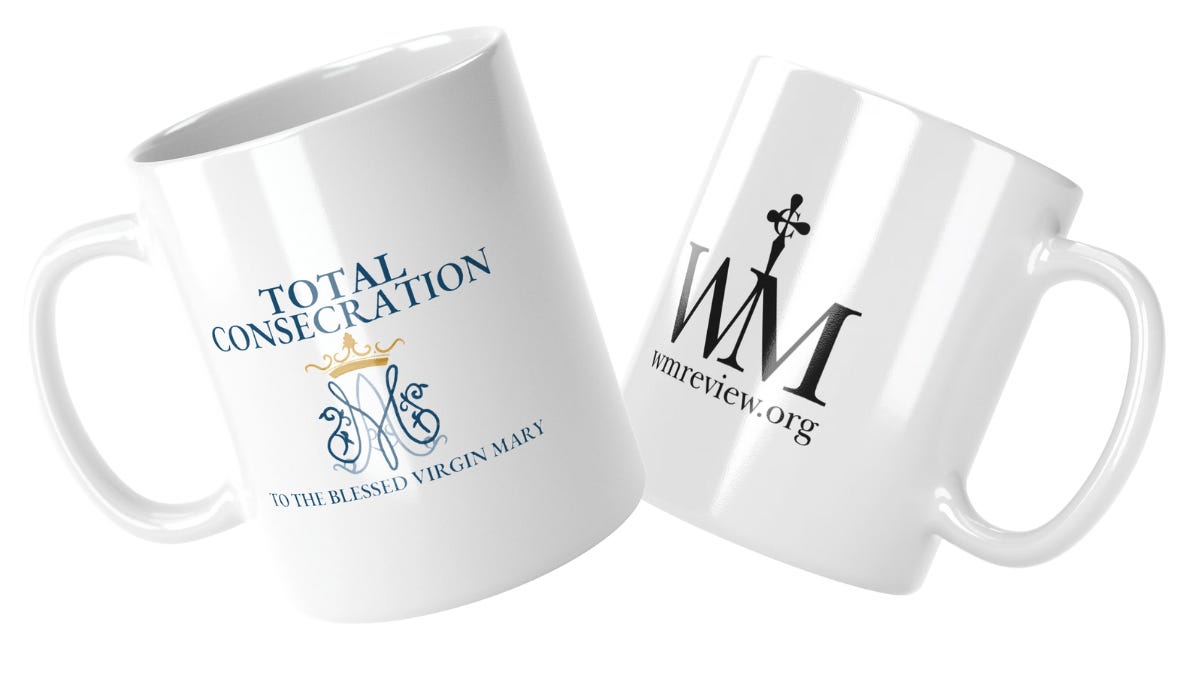
If you are enjoying this preparation for Total Consecration, why not get it in mug form?
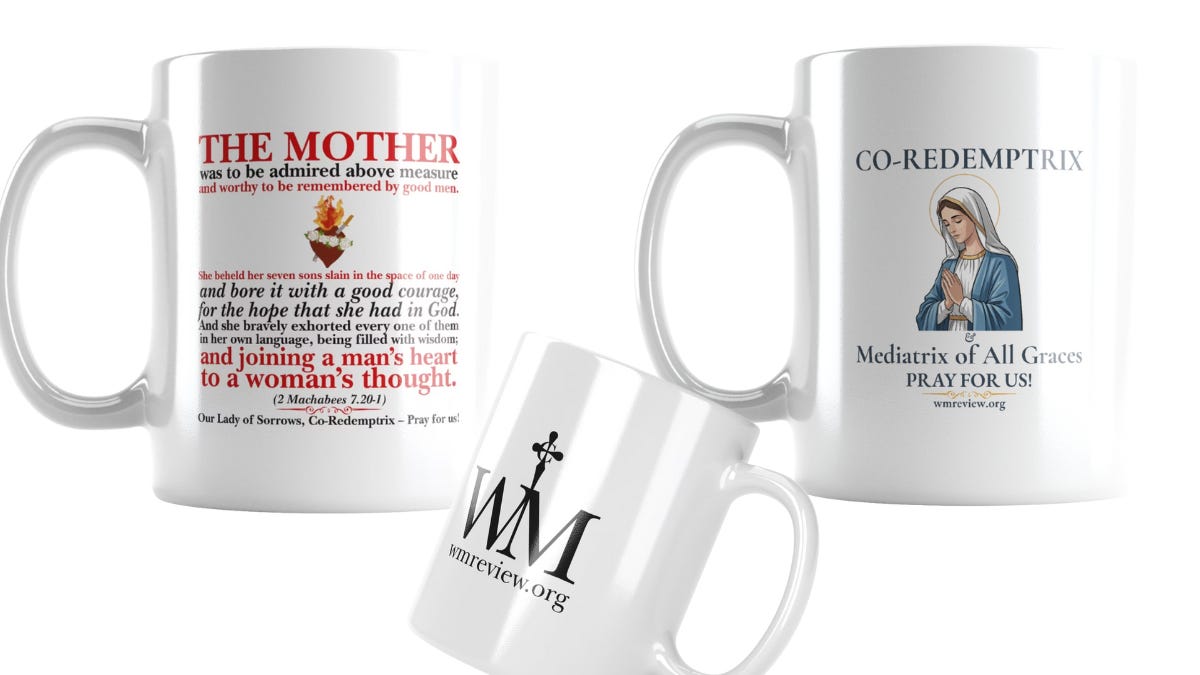
We also have our best-selling Co-Redemptrix mugs:
Follow on Twitter, YouTube and Telegram:
Twitter (The WM Review)


