

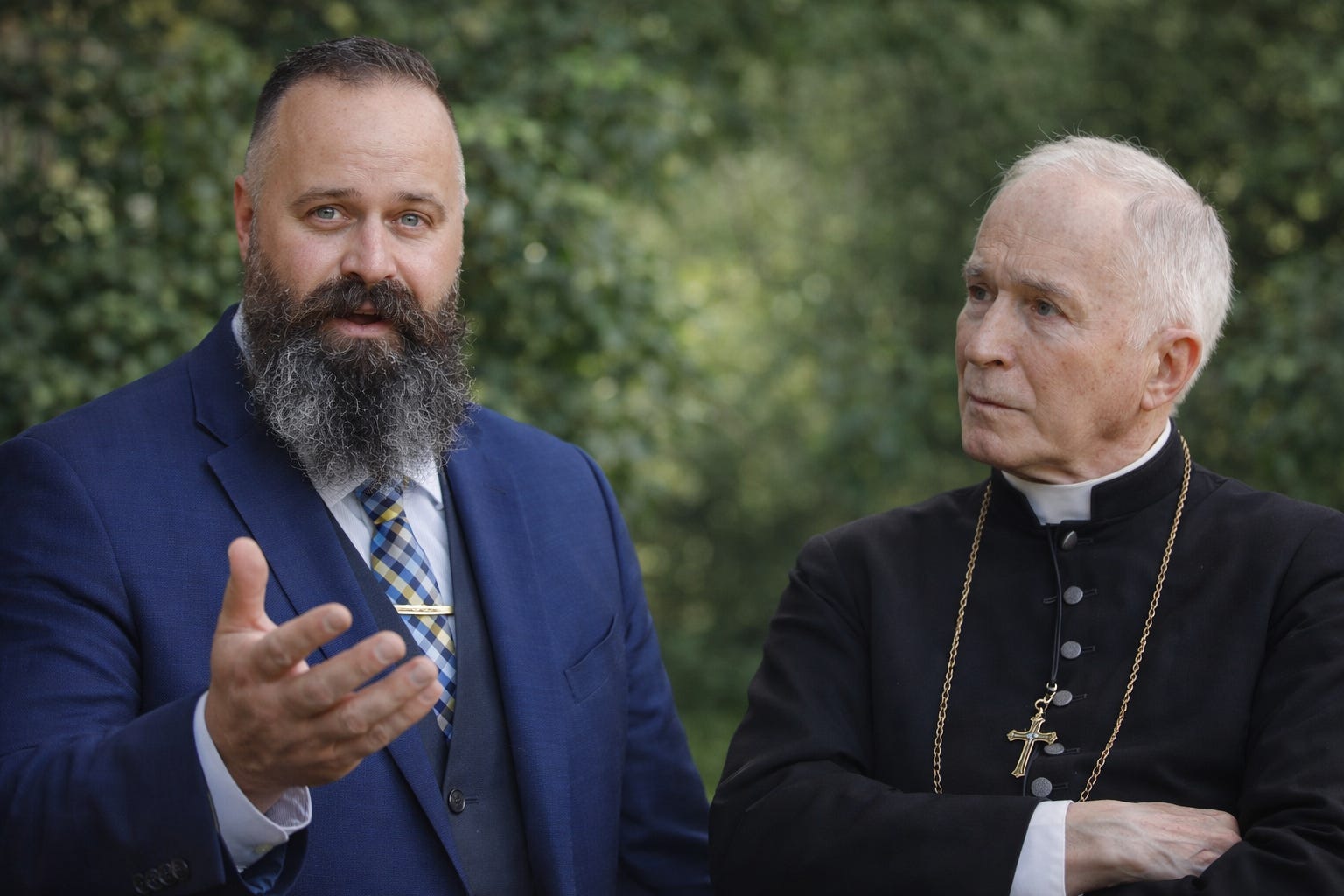
The nature of video shorts and tweets is that they don’t give the whole picture. But sometimes the partial picture they give can be positively misleading.
Reactions to the SSPX’s announcement
There are certainly no shortage of opinions expressed about the announcement that the SSPX intends to consecrate bishops in July. In the last few days, articles and video roundtables have multiplied, and show no sign of stopping.
Many views expressed are extremely wanting; however, they have provided opportunities to make some necessary points. For example:


We also published an article on the matter when the news broke:

Discussions of the legitimacy of these consecrations have been severely wanting. This is principally because most arguments have started – whether for or against – from the incorrect presupposition that Leo XIV is a true Pope. Without the extended vacancy of the Holy See, it is difficult to see how they can be justified.1
However, we must take objection with a particular comment made by Mr Kennedy Hall, accompanied by a short video (extracted from a longer Pelican+ video). Having contacted Mr Hall to let him know of our intentions, let us proceed to address this comment:

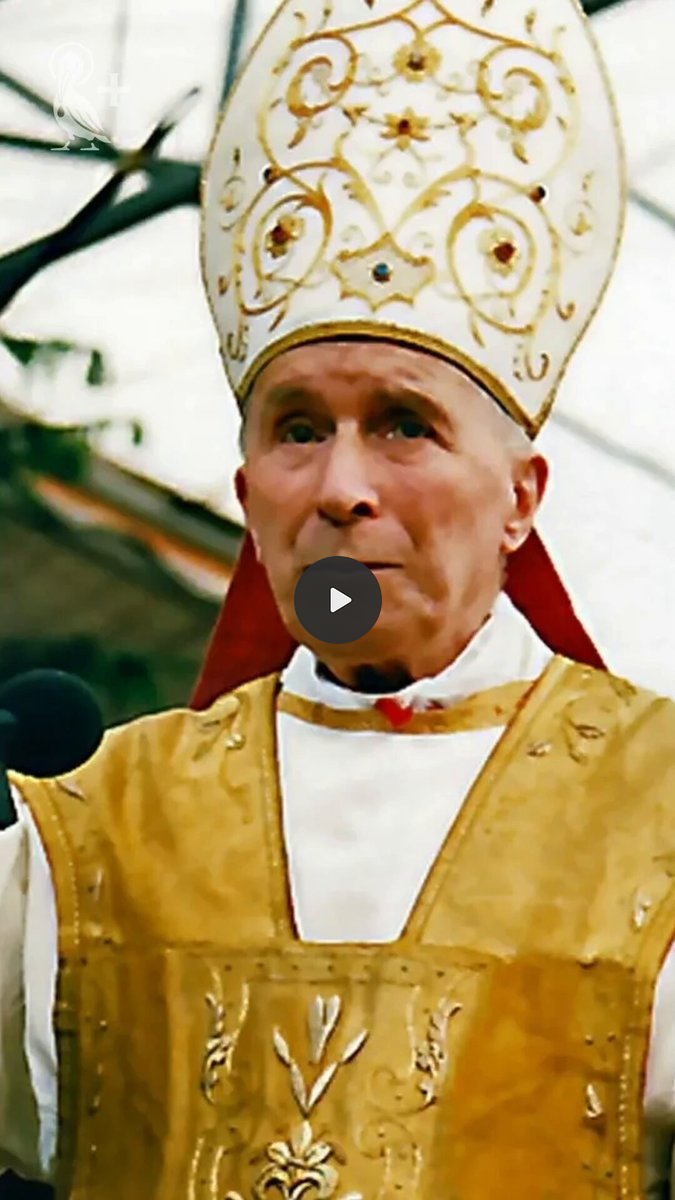
The problems with the comment
As mentioned previously, analysing what happens on Twitter may appear to be a waste of time: but, in fact, it provides an important opportunity to clarify points of doctrine and, in this case, the historical record about Archbishop Lefebvre.
Mr Kennedy Hall says in the quoted tweet:
“The SSPX does not exist because it thinks it replaces the Church.”
While true as far as it goes, this comment obscures the reality and conveys precisely the sort “sanitisation” which we have critiqued elsewhere.
This revisionist approach to Archbishop Lefebvre paints him and his Society as a kind of “edgy version of the FSSP”: essentially the same, but operating outside law. This perspective is very pervasive, being frequently voiced in real life and online.
Addressing this “sanitisation” phenomenon, and using Lefebvre’s words to do so, is not an attempt to co-opt the Archbishop as a theological authority for our own views, still less as some kind of prophetic figure to whom we should conform our minds. On the contrary, it is a means of demonstrating that the modern conceptions mentioned above are significantly in rupture with what Lefebvre actually said. As for our own conclusions in the current crisis, they should be based not on clergymen of our choosing, but on the Church’s magisterium, her Doctors and her approved theologians.2
To turn to Mr Hall’s comment specifically: Lefebvre certainly did not think the SSPX “replaces” the Church; but he did question whether the body, headed then by John Paul II, and now by Leo XIV, was really the Church. He held that the Society, in a non-exclusive way, represented the continuation of the Church. Here is what he said to priests and seminarians in 1988:
“You continue, and you really represent, the Church: the Catholic Church. I think you need to be convinced of this: you really represent the Catholic Church. Not that there is no Church outside of us; that is not the point. But lately we have been told that it is necessary for Tradition to enter the visible Church. I think that this is a very, very serious mistake.
“Where is the visible Church? The visible Church is recognised by the signs she has always given for her visibility: she is one, holy, catholic and apostolic.
“I ask you: where are the true marks of the Church? Are they more in the official Church (it is not the visible Church, it is the official Church) or in us, in what we represent, what we are?”3
He then discussed each of the four marks of the Church – the means by which the Church is rendered visible – arguing that they were present in the body of men made up of the Society and other traditionalists. He concluded:
“All this shows that it is we who bear the marks of the visible Church. If there is still any visibility of the Church today, it is thanks to you. These signs are no longer to be found among the others. The unity of faith no longer exists with them, yet it is faith which is the foundation of all visibility of the Church. [...]
“To leave, then, the official Church? In a certain measure, yes, obviously. The entire book of Mr. Madiran, The Heresy of the Twentieth Century, is the history of the heresy of the bishops. One must therefore leave that milieu of the bishops, if one wishes not to lose one’s soul.”
He said on other occasions that the self-styled “Conciliar Church” was not the true Church at all. For example, in 1989:
“To stay inside the Church, or to put oneself inside the Church—what does that mean?
“Firstly, what Church are we talking about? If you mean the Conciliar Church, then we who have struggled against the Council for twenty years because we want the Catholic Church, we would have to re-enter this Conciliar Church in order, supposedly, to make it Catholic. That is a complete illusion. It is not the subjects that make the superiors, but the superiors who make the subjects.”4
This is why, in the same text, he called the concern about the “visible church” on the part of Ecclesia Dei adherents “childish”:
“This talk about the ‘visible Church’ on the part of Dom Gerard and Mr. Madiran is childish. It is incredible that anyone can talk of the ‘visible Church’, meaning the Conciliar Church as opposed to the Catholic Church which we are trying to represent and continue.”5
Lefebvre continued, acknowledging again that the SSPX is not, in itself, the Catholic Church, but merely a part of the body of those who continue to practice the Catholic faith – to the exclusion of the so-called “visible church”:
“I am not saying that we are the Catholic Church. I have never said so. No one can reproach me with ever having wished to set myself up as pope. But, we truly represent the Catholic Church such as it was before, because we are continuing what it always did. It is we who have the notes of the visible Church: One, Holy, Catholic, and Apostolic. That is what makes the visible Church.”6
Finally, in the same talk, speaking of those who cut a deal with the Modernist Vatican and operate with the approval of the pseudo-authorities:
“That is no longer the Catholic Church: that is the Conciliar Church with all its unpleasant consequences. They are contributing to the destruction of the Church.”
Many other such texts could be produced to this effect, and can be found here:

All in all, Mr Hall’s comment is correct in what it says – that Lefebvre did not see the SSPX as replacing the Church – but, given that it neglects the salient points necessary to state with such a comment, it is incorrect.
Brief comments on the liturgy
This is to say nothing of the video short, the content of which differs from the written comment. Here is what Mr Hall said:
“The initial trouble that Archbishop Lefebvre found himself in, in the 1970s, was because he refused to say the New Mass. And it was the understanding, at the time, that the Latin Mass had been ‘cancelled’, had been abrogated. Archbishop Lefebvre said, ‘No, this is impossible.’ Fast forward to 2007, Pope Benedict comes out and says, ‘Latin Mass was never abrogated.’ This was seen as a great vindication of Archbishop Lefebvre, at least one aspect of it.
“The point is that the Society of Saint Pius X does its work, and has always stated as such, for the good of the Church. This is not their Mass, this is their priesthood, this is not their Catholic Faith: this is the Church’s, this is Jesus Christ our Lord’s Catholic Church, his faith and his Mass. And the work of the Society is for the Church as a whole. It wasn’t the intention of the Society to, you know, have this game of poker, where you call my bluff or something. It was the intention of the society to work towards liberation of the traditional Latin Mass – for the Church’s sake.”
Again, parts of this are correct; parts of it err by omission. As presented, and without wider context, the message of the second half could have come from an FSSP apologist – thus reinforcing the “edgy version of the FSSP narrative.”
Mr Hall is certainly aware that both the problems and Lefebvre’s concerns were wider than the Mass; one presumes that this is why he said above, “at least one aspect of it.”
While the Society did indeed request the “liberation of the traditional Latin Mass,” it also offered blistering critiques of the Novus Ordo liturgy. Such critiques necessitate a wish to see the Novus Ordo liturgy suppressed and condemned.
But this is not all either. Here is what Lefebvre said a few months after the consecrations, about Dom Gérard and those who had “rallied” to the Conciliar Church, based on concessions given to the traditional Roman liturgy:
“This is what is grave in Dom Gérard, and it is what has been his undoing. Dom Gérard has always seen only the liturgy and monastic life. He does not see clearly the theological problems of the Council, of religious liberty. He does not see the malice of these errors. He has never been greatly concerned with that. What affected him was the liturgical reform, the reform of the Benedictine monasteries. He left Tournay saying: “I cannot accept that.” So he re-established a community of monks with the liturgy, in the Benedictine spirit. Very well, it was splendid.
“But I think he did not sufficiently measure that those reforms which had led him to leave his monastery were the consequence of the errors that are in the Council. Provided that he is granted what he was seeking, that monastic spirit and the traditional liturgy, he has what he wants and the rest is indifferent to him. But he falls into a trap, for the others have conceded nothing on those false principles.
“It is a pity, for it still involves sixty monks, about twenty priests among them, and thirty nuns. There are almost a hundred young people there, completely disoriented, and whose families are worried or even divided.
“It is disastrous.”
It is difficult not to see similarities between Dom Gérard’s perspectives and those of others in the so-called “traditionalist movement.”
Although Lefebvre took different positions towards the Vatican over time, even in the years leading up to the consecrations, his recurring theme – to which he adhered firmly in the final years – was that Vatican II was the problem, particularly in its treatment of the the “Social Kingship of Christ” and religious liberty. This is why he said, two years after the consecrations:
“This fight between the Church and the liberals and modernism is the fight over Vatican II. It is as simple of that. And the consequences are far-reaching.
“The more one analyzes the documents of Vatican II, and the more one analyzes their interpretation by the authorities of the Church, the more one realizes that what is at stake is not merely superficial errors, a few mistakes, ecumenism, religious liberty, collegiality, a certain Liberalism, but rather a wholesale perversion of the mind, a whole new philosophy based on modern philosophy, on subjectivism.”7
Against this, and thus also against the Social Kingship of Christ, Dom Gérard’s monastery later published a book defending the Vatican II doctrine of religious liberty. Lefebvre said in his final interview before his death:
“I believe that Dom Gérard is about to publish a small book written by one of his monks on religious liberty, which will attempt to justify it.
“From the point of view of ideas, they are gradually turning, and end by admitting the false ideas of the Council, because Rome has granted them a few favours for the sake of Tradition. It is a very dangerous situation.”8
This is the “dangerous situation” being courted by the “mainstream” traditionalist influencers – and which a video short like Mr Hall’s appears to support when presented in isolation. Against these attitudes, Lefebvre said the following in the same final interview:
“Certainly, the question of the liturgy and of the sacraments is very important, but it is not the most important. The most important is that of the faith. For us, it is resolved. We have the faith of all time—the faith of the Council of Trent, of the Catechism of Saint Pius X, of all the councils and all the popes before Vatican II.”9
One cannot say everything in every article written or video made. But what is left unsaid, and the impression given, shows that one must be careful with the impressions given by video shorts – which we acknowledge may be more the fault of the video team than Mr Hall himself.
However, Mr Hall’s collaboration with Pelican+ itself brings us to another point.
‘That’s a betrayal!’
It is a fact that Archbishop Lefebvre condemned views which are strongly endorsed by persons integral to the Pelican+ project – which appears to exist in order to advance a narrative about the crisis in the Church which diverges from what we have seen above. It is also a fact that Lefebvre condemned collaboration with such persons.10
Mr Hall’s position might believe there to be good reasons for doing so: but it is certainly a departure from what his chosen authority stated in emphatic terms.
Here is what he said in 1990, in a text which was very difficult to find for some time:
“Instead of looking to their friends, to the Church’s defenders, to those fighting on the battlefield, they look to our enemies on the other side. ‘After all, we must be charitable, we must be kind, we must not be divisive, after all, they are celebrating the Tridentine Mass, they are not as bad as everyone says’—but they are betraying us—betraying us! They are shaking hands with the Church’s destroyers. They are shaking hands with people holding modernist and liberal ideas condemned by the Church. So they are doing the devil’s work.
“Thus those who were with us and were working with us for the rights of Our Lord, for the salvation of souls, are now saying, ‘So long as they grant us the old Mass, we can shake hands with Rome, no problem.’ But we are seeing how it works out. They are in an impossible situation. Impossible. One cannot both shake hands with modernists and keep following Tradition. Not possible. Not possible.
“Now, stay in touch with them to bring them back, to convert them to Tradition, yes, if you like, that’s the right kind of ecumenism! But give the impression that after all one almost regrets any break, that one likes talking to them? No way! These are people who call us corpse-like traditionalists, they are saying that we are as rigid as corpses, ours is not a living Tradition, we are glum-faced, ours is a glum Tradition! Unbelievable! Unimaginable! What kind of relations can you have with people like that?
“This is what causes us a problem with certain layfolk, who are very nice, very good people, all for the Society, who accepted the Consecrations, but who have a kind of deep-down regret that they are no longer with the people they used to be with, people who did not accept the Consecrations and who are now against us. “It’s a pity we are divided”, they say, ‘why not meet up with them? Let’s go and have a drink together, reach out a hand to them’—that’s a betrayal! Those saying this give the impression that at the drop of a hat they would cross over and join those who left us.
“They must make up their minds.”11
Conclusion
These views of Archbishop Lefebvre here may be difficult for some to comprehend, and are unpalatable for many. The sanitised, “edgy version of the FSSP” narrative has become so pervasive that fewer and fewer persons are aware of these views; such texts have also been obscured over the years. In some cases, we had to hunt down old copies of Fideliter and make fresh translations ourselves, because they were simply unavailable in English.
It is to address this both the “sanitisation” and the lack of awareness that we have been assembling a growing index of such texts here. The index also includes a defence of why we can and should be interested in what Archbishop Lefebvre said – not as the words of a theological authority or prophet, but for their historical interest and apologetic value.

HELP KEEP THE WM REVIEW ONLINE WITH WM+!
As we expand The WM Review we would like to keep providing free articles for everyone.
Our work takes a lot of time and effort to produce. If you have benefitted from it please do consider supporting us financially.
A subscription gets you access to our exclusive WM+ material, and helps ensure that we can keep writing and sharing free material for all.
You can see what readers are saying over at our Testimonials page.
And you can visit The WM Review Shop for our ‘Lovely Mugs’ and more.
(We make our WM+ material freely available to clergy, priests and seminarians upon request. Please subscribe and reply to the email if this applies to you.)
Subscribe to WM+ now to make sure you always receive our material. Thank you!
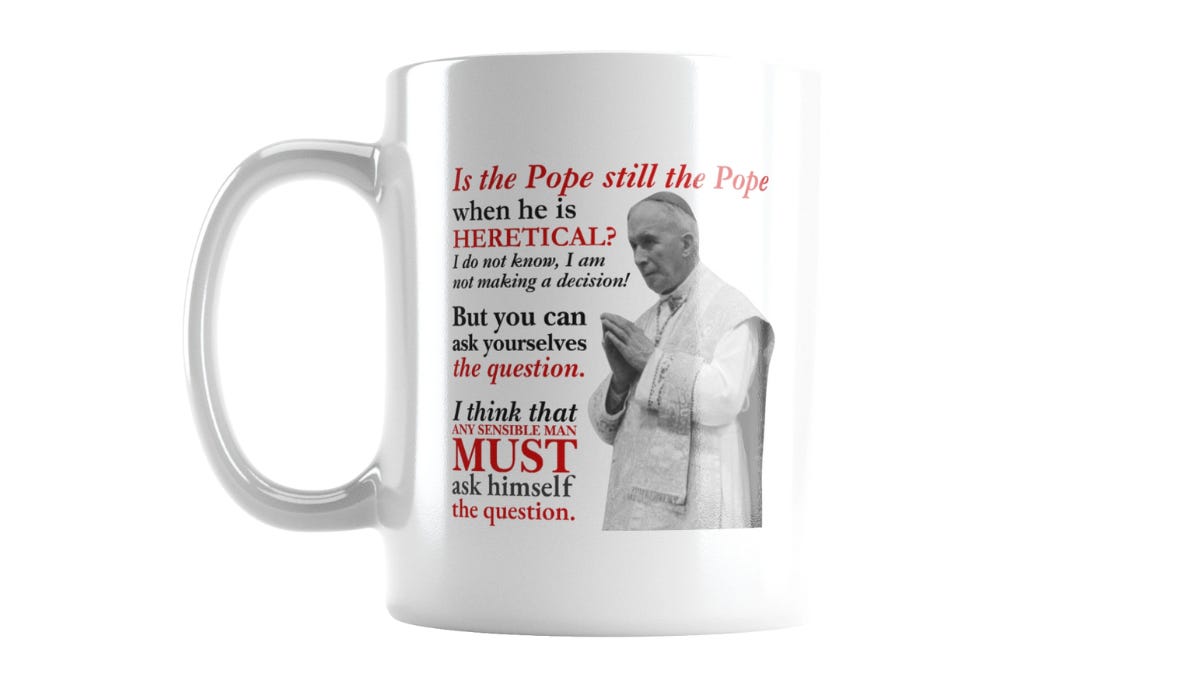
If you liked this article, why not get it in mug form?
Get your Archbishop Lefebvre Mug today:
Read Next:
The WM Review Lefebvre Archive
See also:

Follow on Twitter, YouTube and Telegram:
Twitter (The WM Review)
Even once the vacancy is recognised, the matter remains complex: on the one hand, episcopal consecrations require a mandate from the Pope, and certainly cannot be conferred against his expressed will; on the other hand, Leo XIV is not the Pope. Exactly how these two points affect the legitimacy (or otherwise) of these episcopal consecrations is unclear.
Clergy who recognise this vacancy have taken different positions on this question. On the one hand, a German priest at Antimodernist.org, took us to task for what we had published previously, seeing the situation as follows:
Now—quite regardless of whether under “normal” or “extremely confusing circumstances”—a schism is unfortunately a schism and remains so, even when it is committed in good faith, believing one is doing “what is necessary.”
As E. Michael Jones once very correctly argued in a discussion with Michael Davies—who some decades ago was Mr. Shaw’s predecessor as “President” of “Una Voce” and in that discussion put forward arguments similar to those of Mr. Wright:
“Archbishop Lefebvre’s subjective intentions may earn him mitigating circumstances before the judgment seat of God, (...) but that does not change the objective gravity of what he did here below. It does not change the fact that his action was schismatic according to any reasonable definition of the term.”
Nor does it matter whether the person he considered to be the Pope actually was Pope or not. The mere fact that he resisted the command of the one he considered to be the Pope constitutes the schism, and that in the objective, not “in the subjective sense.” The only thing that could have freed Lefebvre from the accusation of schism would have been his confession that “John Paul II” was not Pope at all and that he had acted with this awareness.”
But if it is known in public that someone is personally guilty of the sin of schism, but on an entirely erroneous basis, is it so clear that they are schismatic in the sense relevant to membership of the Church? Our German priest believes so. On the other hand, Père Noël Barbara’s sees the objective illegitimacy of the non-Pope as decisive in a contrary sense:
ARE THE “LEFEBVRE” BISHOPS SCHISMATIC?
Are the consecrations in defiance of the law, performed by Archbishop Lefebvre and Bishop Tissier de Mallerais who recognize the Pope as the legitimate holder of Authority, schismatic?
For those who adhere to the May 15, 1988 declaration of Archbishop Lefebvre,[12] and for those who recognize John Paul II as the legitimate Pope of the Catholic Church,[13] these consecrations are unquestionably schismatic. For this group of people, the consecrators and those consecrated have incurred the penalty of excommunication which is required by law and they are cut off from ecclesiastical communion.
For such “Catholics,” these bishops, and all those who follow them, are excluded from communication with the official church, and as such they remain A SECT ASIDE THE OFFICIAL CHURCH. In fact, they fulfill all the characteristics of a sect. Just like the schismatics of previous ages, these bishops, consecrated without any mandate, and the members of their Fraternities, the religious and the nuns along with the faithful who support them, publicly scorn the censures passed on them by superiors that they recognize to be legitimate.
ARE THEY REALLY SCHISMATIC?
No! Despite appearances to the contrary, they are not such. According to the judgment of the Catholic faith, the Pope exists as an entity which is independent of how any person judges him. In reality, as far as Catholic doctrine is concerned, regardless of what judgment one passes on him, the occupant of the Holy See either is or is not the Pope.
The Catholic faith teaches us that an individual properly elected to the See of Peter becomes truly and really Pope if he is acceptable to Christ, if he is invested with Christ’s Authority, or to use the expression of Bishop Guerard des Lauriers, if he possess the quality of “being with.”[14]
Such is not the case with the popes of Vatican II.
Obviously, acceptability to Christ and the Pontifical Authority that is implied by “being with” are supernatural realities which do not fall within the realm of human understanding. It is not possible to perceive their presence in an individual, even in an individual who has been elected to the Papacy in a proper manner. But God, who knows everything, knows this also. He knows whether this individual, who is properly elected, is acceptable to Him; He knows whether or not He has invested him with His Authority, and whether or not he is His Vicar.
Since it is theological faith which demands our resistance to these popes of Vatican II, it is also this same faith, which is to say, fidelity to the word of God, which assures us that these “popes” lack that Authority which they should possess. Yes indeed, it is the faith which assures us that they are not acceptable to Christ as His Vicars, and that they do not have the quality of “being with” Him.[15]
As a result, in reality, both the four consecrations conferred by Archbishop Lefebvre, and that conferred on Father Rangel [of Campos in Brazil] by Bishop Tissier de Mallerais, despite appearances to the contrary, are not schismatic. There is no doubt but that they were conferred WITHOUT any Apostolic Mandate, and AGAINST the express will of John Paul II. But this latter individual has no Authority to grant or refuse such mandates. The consecrators and the consecrated, without being aware of it, have avoided the infamy of schism.
Despite this, the consecrations in question are and remain scandalous. They are in fact very gravely scandalous, for they are scandals against the faith.
Scandal is an act which can cause those who witness it to act sinfully. These consecrations were conferred despite the express refusal of the individual who the consecrators proclaim to be a true Pope of the Catholic Church. In so doing, Archbishop Lefebvre, Bishop Tissier de Mallerais and their entire Fraternity are teaching all the faithful that one can recognize someone as the authentic Vicar of Christ and at the same time knowingly disobey his most specific commands. The Master warned us that “there would be scandals.” But let us beware! He also told us that “Unhappy are those through whom such scandals come.” (Matt. XVIII, 7)
We can only pray that this “unhappiness” did not become Lefebvre’s lot.
(Fr Noël Barbara, Fortes in Fide, Series 3, Vol. 12. Available here.)
The way such episcopal consecrations could escape scandal of which Fr Barbara speaks is clear: by an accompanying declaration of Leo XIV’s illegitimacy and the vacancy of the Holy See.
In fact, even a statement of his doubtful legitimacy and a possible vacancy would probably be sufficient. This latter point seems to be what Bishop Donald Sanborn suggested in a recent video about the consecrations. The Bishop read several texts similar to those included in this article, and concluded:
“[The phenomenon described in these texts] justifies the consecration of bishops. Not this mealy-mouth stuff […]
“I think Fr Pagliarani should say these same quotes of Archbishop Lefebvre, in order to justify what he proposed to do. […]
“What I said: that justifies a consecration, all of those things Archbishop Lefebvre said.”
It is unlikely that Bishop Sanborn is suggesting that vehement criticism of Vatican II and the Novus Ordo religion are sufficient to justify episcopal consecrations against the will of a reigning Pope: rather, the crucial point seems to be Archbishop Lefebvre’s expressions of doubt (at least) about John Paul II’s legitimacy.
It is important to see the big picture, and not just the problems and scandal. All things being equal, these consecrations could represent:
Greater separation from the modernist Vatican
An undermining of the modernist Vatican’s credibility in various ways (e.g., permission given under pressure, or penalties imposed when rampant heretics run free)
The perpetuation of certainly valid holy orders, leading to the perpetuation of certainly valid sacraments
Each of these “positives” can also be viewed negatively, and can indeed have further negative effects; but these would counteract positives which would (again, all things being equal), remain so, rather than destroying them. Any discussion of the matter needs to take account of all this data.
Fr Francesco Ricossa wrote of this matter:
Archbishop Thuc is not the Man of Providence…fortunately!
The TC [La Tradizione Cattolica, a publication of the Italian District of the SSPX, referring here to the work published in English under the title Sedevacantism: A False Solution to a Real Problem, published by Angelus Press] dedicates a good 6 pages to the figure of Archbishop Thuc and to the episcopal consecrations he performed. If this special edition by the TC were a class assignment, I would mark these pages in red with capital letters saying: “off topic”. […]
[T]hey accuse Archbishop Thuc of not being the “man of Providence” or “a point of reference”, due to the undoubted errors he committed. The accusation is revealing. The TC seems to need a “Man of Providence”, for “a point of reference”, beyond those objective points of reference that God has given us (Christ, the Church, the magisterium, the Pope). The TC, which accuses us of subjectivism, of charismatic tendencies, of following the leaders of sedevacantism without understanding it because of the blind trust that we have for them (and none of this is true), instead demonstrates how its position is in reality dependent upon the blind faith that they accord to one man, even though of great quality: Archbishop Lefebvre and, in practice, to his current heirs (undoubtedly endowed with lesser qualities). This is the true, the great, the only argument that convinces members of the Society and its faithful: the authority of Archbishop Lefebvre, the “Man of Providence”; so that if Archbishop Lefebvre had declared the See vacant (as he many times was on the point of doing) the true Lefebvrians, who until then had declared: “John Paul II is the Pope” would have shouted: “John Paul II is not the Pope” (an event that, comical in itself, really happened at Ecône, after the “sedevacantist” speech by Archbishop Lefebve at Easter, 1986).
As for us, we do not know “men of Providence” or “points of reference” beyond those given by Christ: His Church, the papacy, the episcopate. We think that Providence made use of Archbishop Thuc, as it did of Archbishop Lefebvre and Bishop de Castro Mayer…to whom we recognize both qualities and defects. As for canonizations, we leave them to the Pope, believing - unlike the priests of the Society - in his infallibility in this matter.
Abbé Francesco Ricossa, ‘Réponse au numéro spécial de la Tradizione cattolica sur le sédévacantisme’ in Sodalitium, n. 55, November 2003, pp. 31-73. Available in English under the seemingly incorrectly labelled n. 56, September 2003, pp. 40-1.
Ibid.
Ibid.
For example, compare the texts from Archbishop Lefebvre given above, with the comments made by Dr Peter Kwasniewski in response to the announcement:
“I have always been moderately pro-SSPX, my position is well known on that score; but I have also always said that I think it is objectively better to be in full regular communion with the Catholic hierarchy, which is why I have always attended and would attend Mass with an Ecclesia Dei institute, given the choice.”
Ecclesia Dei was set up by John Paul II in order to facilitate what Lefebvre called a “betrayal” of the fight for traditional Catholic doctrine.
However, we must note that Dr Kwasniewski is correct: It is “objectively better to be in full regular communion with the Catholic hierarchy” – although “better” is perhaps faint praise for what is essential in order to be Catholic – and it is objectively a great evil to be out of communion with that hierarchy. The problem here is the assertion that the men that make up the hierarchy of the Conciliar/Synodal Church are the hierarchy of the Catholic Church.
Dr Kwasniewski is also correct in noting that that “the drama of this moment” lies in the Society’s non-recognition of this reality; however, he most regrettably passes into the following comment:
“Sedes dwell in an imaginary land where they have no actual earthly authorities to answer to; makes things simple, as only madness can do.”
We obviously do have earthly authorities to whom we must answer: His Majesty King Charles III, his government, as well as local governments, our masters or managers, our parents if we are children, and so on. However, Dr Kwasniewski means ecclesiastical authorities – although him specifying this would undermine the rhetoric and caricature of “sedes” as anarchic rebels.
But someone of Dr Kwasniewski’s education and station should be aware that neither the harm caused by the absence of a good, nor even indirect benefits caused by that same absence, mean that the good is in fact present.
It is to be lamented that Dr Kwasniewski must resort to rhetorical sniping when the subject of the extended vacancy of the Holy See arises.
This is especially so, given that Dr Kwasniewski himself shows little sign of answering to the ecclesiastical authorities himself, being subject rather to his own understandings of the history of liturgy and dogma – passing harsh judgements on the Roman Church for the former, and even calling for “rethinking” of aspects of the latter (viz. the Papacy). Although I wish to keep engagement with Dr Kwasniewski as fraternal as that with Mr Hall, we must note that the former is more of “a law unto himself” than his caricature of a “sede”, as he insists that he does indeed have “actual earthly authorities to answer to,” and carries on in this way in spite of them.
Cf. also the below:
‘Totem Pope’—Does the mere election of a pope fulfil Christ’s promises?
‘Totem Pope’—Should we ignore what goes on in Rome?
"he did question whether the body, headed then by John Paul II, and now by Leo XIV, was really the Church" - and, taking into account objective circumstances (i.e. sacramental revolution of Paul VI, wild ecumenism and interreligious fraternizing of JPII - the so-called spirit of Assisi, but not only, in general: desolation of the Church by "conciliar popes") he was absolutely right to raise that question which, BTW, remains valid and open today.
Those who today insist on 'the current pontiff' being the sign of the visible Church are quite happy not to see him at all. They see right through his every act as if it did not just happen, and their vision comes to rest only on the abstract 'See of Peter'. This really is a sort of naive inner vision on their part, a refusal to see the trees for the wood.