
What kind of mind appeals to Pope St Leo the Great and the Council of Chalcedon against the papacy?
Editors’ Notes
This is the seventh part of a serialisation of Orestes’ Brownson’s engagement with “Eastern Orthodoxy.”
It was originally published in two articles.
Article I
The background of this engagement – including that of the ex-Catholic author Abbé Vladimir (René-François) Guettée and his book The Schismatic Papacy – can be found in the first part. Here are the parts we have seen so far:
Those parts made up one article; Brownson then proceeded to a second, much longer article. As such, this seventh part is also the fourth part of the second article – which systematically dismantles Guettée’s attempted appeal to the Councils:
Article II
Eastern Orthodox? Why the sixth canon of Nicæa isn’t an argument
Eastern Orthodoxy? Rome did not have primacy merely for being the capital city
Eastern Orthodoxy? No, Pope Leo the Great is not a witness against papal primacy
Eastern Orthodoxy? ‘Orthodox proofs’ from Chalcedon undermine their own case
This present part contains ringing Brownson remarks such as the following, made in the face of “Orthodox” appeals to Pope St Leo the Great:
“Leo Magnus is our ideal of a pope, or visible head of the universal church, and we cannot sufficiently admire the hardihood or the stupidity that would claim him as a witness against the primacy he adorned, and the papal authority which he so gracefully and so majestically wielded, and with such grand effects for the church and the empire.”
For more on why we might bother republishing a nineteenth century review of a nineteenth century book, see the previous part. In short, Guettée’s book continues to bring the ill-informed into the Photian schism, and so Browson’s review and refutation continues to be of enduring importance.
As the contemporary “Orthodox” are publishing such works as Guettée's and encouraging Roman Catholics to enter into schism and heresy, they surely cannot complain about us publishing Brownson’s piece in response. We do so in good will, with the hope that they will instead return to the Church of Christ – outside of which there is absolutely no salvation whatsoever.

‘Orthodox proofs’ from the Council of Chalcedon undermine their own case
Guettée’s ‘The Schismatic Papacy,’ Part 2.1
Orestes Brownson
Originally published as “Guetté’s Papacy Schismatic’1
From The Catholic World, 1867
Published in The Works of Orestes A. Brownson, Vol. VIII
Thorndike Nourse, Deroit, 1884. pp 491-500
Headings and some line breaks added by The WM Review
Back to the twenty-eighth canon
The refusal of St. Leo to confirm the twenty-eighth canon gave rise to the report that he had refused to confirm the acts of the council, and the Eutychians, against whom its definitions of faith were directed, began to raise their heads and boldly assert that they were not condemned, that the definitions of the council against them counted for nothing, since the Roman pontiff had refused to confirm them, as he refused to confirm the doings of the Ephesian Latrocinium.
The imperial court became alarmed, and the emperor wrote to St. Leo for an explicit statement of what he had done. St. Leo answers that he has confirmed all the decrees of Chalcedon defining the faith, but that he has not confirmed the decree erecting the church of Constantinople into a patriarchal church. This fact does not seem to favor the author’s theory that the Roman pontiff was held to have only a primacy of honor, nor that St. Leo did not claim universal jurisdiction.
It will have been observed that the Council of Chalcedon undertakes to support, very illogically indeed, the twenty-eighth canon on the authority of the third canon of the first Council of Constantinople, which gave the bishop of Constantinople simply the primacy of honor after the bishop of Rome. But St. Leo, in the letter to the empress just cited, denies the authority of that canon, on the ground that it had never been communicated to Rome, and therefore could have no effect.
We have dwelt at great length on the sixth canon of Nicæa, the third canon of Constantinople, and twenty-eighth of Chalcedon, because they are the author’s three strongholds, and we have wished to show that they do not in the least aid him—do in no sense contradict the papal authority, but, as far as they go, tend to confirm it.
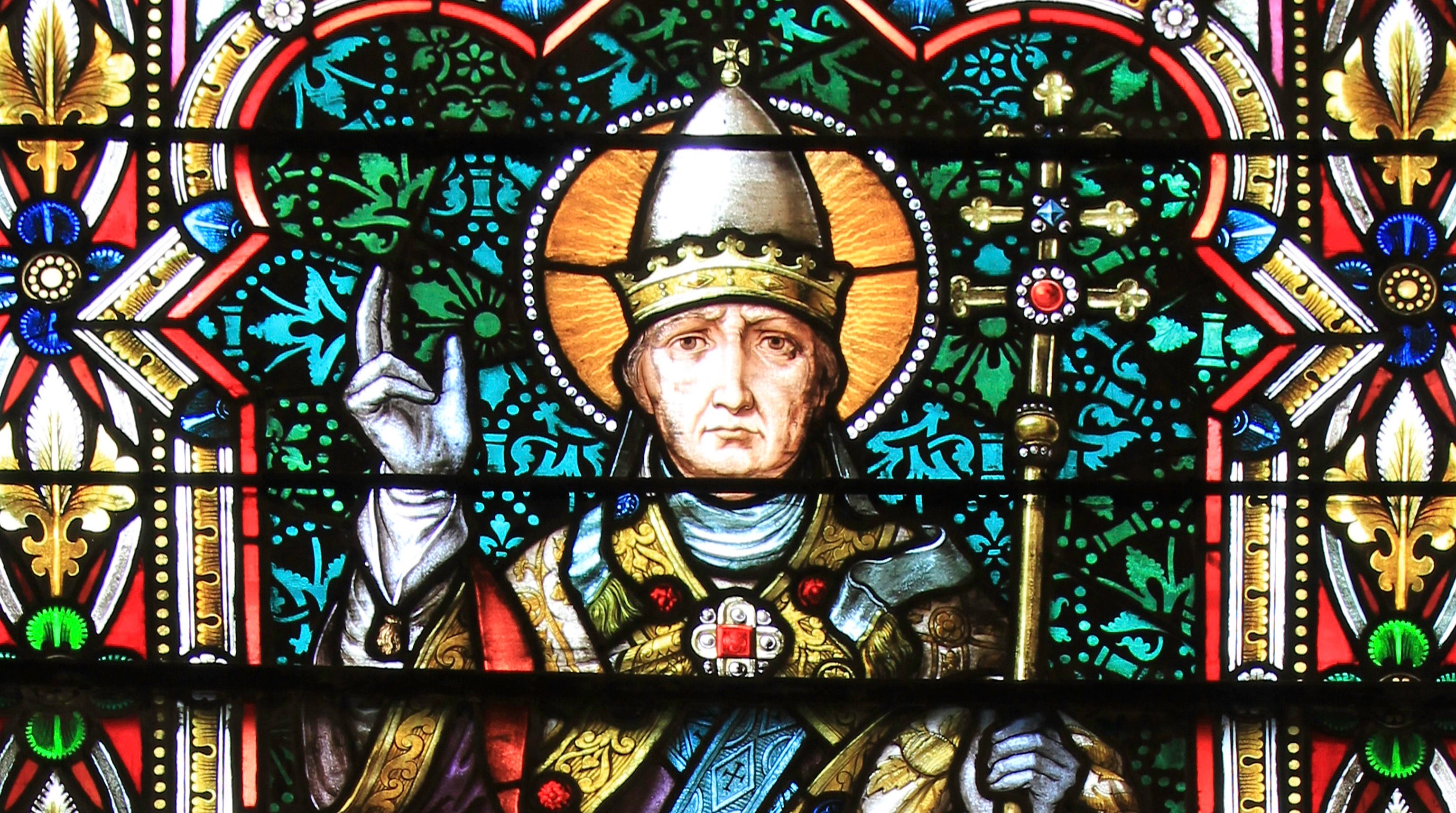
The author claims St. Leo as a witness against the Catholic doctrine of the papal supremacy, and we have thought it well to show that he has in him about such a witness as he had in St. Cyprian, or as he would have in our holy father, Pius IX, now gloriously reigning. Leo Magnus is our ideal of a pope, or visible head of the universal church, and we cannot sufficiently admire the hardihood or the stupidity that would claim him as a witness against the primacy he adorned, and the papal authority which he so gracefully and so majestically wielded, and with such grand effects for the church and the empire. No nobler man, no truer saint, no greater pontiff ever sat in the chair of Peter, and no higher or more magnificent character is to be found in all history. Sancte Leo Magne, ora pro nobis.
Inadequacy of Guettée’s authorities
The author says:
“The canons of the first œcumenical councils throw incontestably a strong light upon the prerogatives of the bishop of Rome. They are the complement to each other. The twenty-eighth canon contains nothing less than the doctrine we defend, even though the opposition of the West in the person of the bishop of Rome should strip it of its ecumenical character, as certain theologians maintain.” (p. 102)
M. Guettée finds but two canons that in any respect favor his doctrine, the third of the second general council, and the twenty-eighth of the fourth, neither of which was ever accepted by the universal church, and both of which have remained from the first without Catholic authority. A doctrine sustained or favored only by irregularity and violent innovation needs no refutation.
“St. Leo,” the author continues…
“… did not protest against it, (the twenty-eighth canon of Chalcedon,) as opposed to the divine and universal authority of the see of Rome, for which he claimed only an ecclesiastical primacy, but simply because it infringed upon the sixth canon of the council of Nicæa.”
That he claimed only an ecclesiastical primacy for his see is not true, for he claimed to annul the canon by authority of Peter. Nor did he object to it only because it infringed the sixth canon of Nicæa, but because it contained a grave innovation in the constitution of the church, and attempted to found the authority of bishops on a temporal instead of a spiritual and apostolic basis.
It proposed to change entirely the basis of the pontifical authority, which had hitherto rested on Peter, and to make it rest on the empire. The church of Constantinople was not an apostolic see, and only the bishop of an apostolic see could be clothed with patriarchal authority. This seems to us to be the great objection of St. Leo. Therefore, he writes to the emperor, as already cited:
“Let not the bishop of Constantinople disdain the imperial city, which he cannot make an apostolic see.”
Hitherto only apostolic sees and indeed only sees founded by Peter, had been clothed with the authority of patriarchal sees; and to give to a non-apostolic and non-Petrine church authority over other metropolitan churches was to strike at apostolic authority itself, and especially at that of Peter. The whole organization of the church was from the first based on Peter as the immediate representative of Christ and prince of the apostles.
The twenty-eighth canon of Chalcedon was therefore aimed at Peter, and in the name and by the authority of Peter, whom he fully represented, St. Leo annulled it, and declared it void, and the author, without knowing well what he concedes, says: “St. Leo was right.”
Guettée’s dilemma revisited
“One fact is certain, that they (the Roman pontiffs) did not convoke the first four ecumenical councils, that they did not preside over them and that they did not confirm them.”
This is certain only of the second general council, or first of Constantinople. But suppose it, what follows? Simply that they were not councils of the church at all—which will be very pleasant news to Unitarians and rationalists, who wish a Christianity without Christ—and can have the authority of general councils only by the ex post facto sanction of the universal church; but, as the two canons on which the author bases his anti-papal theory have never received that sanction, they have no authority, and never have had any.
Hence, the author’s theory, on any ground he chooses, has nothing in the church to sustain it. We shall, therefore, pass over what he adduces to prove the part taken by the civil authority in the councils, with the simple remark that the acts of several of them depend entirely on the confirmation of the Roman pontiff and the ex post facto sanction of the church for their authority.
‘Proofs’ of Orthodoxy prove Catholicism
M. Guettée’s proofs are not seldom proofs of the contrary of what he alleges.
“It is undeniable fact,” he says…
“… that the dogmatic letter addressed by St. Leo to the fathers of the council was there examined, and approved for this reason: that it agreed with the doctrine of Celestine [his predecessor] and Cyril, confirmed by the council of Ephesus.” (p. 118)
That the letter was read in the council, and that the council adopted its definitions of faith, is true; but that it was approved for the reason alleged does not appear from the proofs the author adduces. He continues, pp. 118, 119:
“At the close of the reading, the bishops exclaimed:
“‘Such is the faith of the fathers; this is the faith of the apostles. We all believe thus. Anathema to those who do not thus believe. Peter has spoken by Leo. Thus taught the apostles. Leo teaches according to piety and truth, and thus has Cyril taught.’”
Any one not bent on proving the papacy schismatic would gather from this that the bishops approved of the letter because they recognized in it the doctrine of the apostles and the tradition of the fathers.
HELP KEEP THE WM REVIEW ONLINE WITH WM+!
As we expand The WM Review we would like to keep providing free articles for everyone.
Our work takes a lot of time and effort to produce. If you have benefitted from it please do consider supporting us financially.
A subscription gets you access to our exclusive WM+ material, and helps ensure that we can keep writing and sharing free material for all.
You can see what readers are saying over at our Testimonials page.
(We make our WM+ material freely available to clergy, priests and seminarians upon request. Please subscribe and reply to the email if this applies to you.)
Subscribe to WM+ now to make sure you always receive our material. Thank you!
If you enjoyed this article, then why not get it in mug form?
(Now, now, our Eastern “Orthodox” friends, don’t get too stressed. It’s all in good humour. We wish you well, and pray for your good.)
Read Next:
Orestes Brownson’s review of Abbé Guettée’s The Papacy Schismatic:
Article II
Eastern Orthodox? Why the sixth canon of Nicæa isn’t an argument
Eastern Orthodoxy? Rome did not have primacy merely for being the capital city
Eastern Orthodoxy? No, Pope Leo the Great is not a witness against papal primacy
Eastern Orthodoxy? ‘Orthodox proofs’ from Chalcedon undermine their own case


Follow on Twitter, YouTube and Telegram:
Twitter (The WM Review)
The Papacy: Its Historic Origin and Primitive Relations with the Eastern Churches. By the Abbé Guettée, D.D.
Translated from the French, and prefaced by an original biographical notice of the author, with an Introduction by A. Cleveland Coxe, Bishop of Western New York. New York: 1867.
The original article is available in OCR form here.
Because we don't tell you to submit to a pope when there isn't one; or at least, if we say "submission to the Roman Pontiff is necessary", it is clear that we mean it in the sense that it is necessary actually when there is a pope, and when there is not this submission is to the laws of the Holy See and union with it. That's why your question is silly. It is on the level of saying "Why should we believe there is one God when you say there are three persons?" To ask such a question in such a way reflects badly in the questioner.
Why would you ask the Eastern Orthodox to submit to the Pope when you yourself declare the Chair of St Peter empty?