
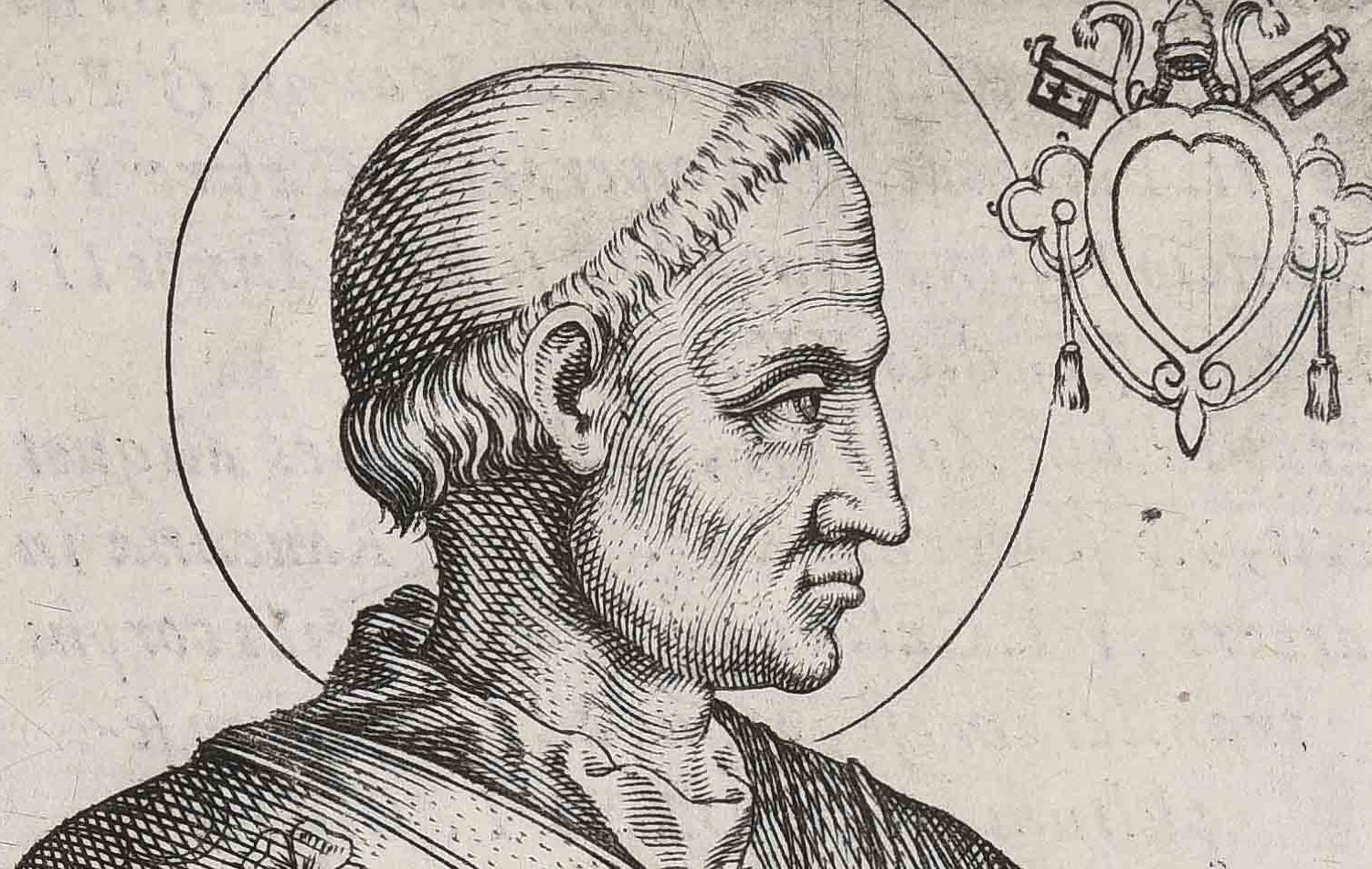
The answer is YES – if it is clear that he is exercising his authority as the Supreme Pastor, and defining a doctrine to be held by all.
Editor’s Notes
In the course of considering a number of texts from Fr Domenico Palmieri relevant to the “recognise and resist” movement, we published the nineteenth century theologian’s treatments of the “Heretic Pope” question, and of the authority of non-infallible teaching acts.
Both those texts were scholia to Thesis XXXII, which we reproduce below.
This section addresses the question of when the Pope speaks ex cathedra.
This text is relevant for its own intrinsic interest, but also because of its link with the case of Pope Honorius. As we have previously discussed, Pope Honorius’ letters to Sergius cannot be said to have been magisterial, because they were private. However, they were private because of their nature (as well as the fact that they were unknown for years), not because they were written to a single bishop or patriarch.
The History of Pope Honorius: Questioning Prof. Roberto de Mattei
‘Undoubtedly Magisterial Acts’? Pope Honorius and Roberto de Mattei
In this extract, Fr Palmieri presents the “other side of the coin” to this issue – explaining why a letter to a single bishop or patriarch can be magisterial under different circumstances.
Note: The Latin text from Fr Palmieri has been translated into English with the assistance of AI, with each line subsequently checked against the original by a human, and edited in the process.
You can read more about Fr Palmieri here.
Tractatus de Romano Pontifice cum Prolegomeno de Ecclesia
Fr Dominico Palmieri SJ
Editio Altera Aucta Et In Nonnullis Emendata
Prati, 1891, pp. 715–717
Available at Archive.org
The distinction between the Holy See and the man Seated upon it
Whether a Pope can fall into heresy, and whether he is ‘stripped of jurisdiction by God’
The proper response to the exercise of the Pope’s non-infallible magisterium
Do we need an infallible list of infallible propositions? Fr Palmieri responds
The following text is for WM+ members.
The WM Review is free for readers. This is because we believe these ideas must reach as many people as possible.
However, we also provide WM+ articles – additional material for those who choose to support this work financially.
This helps us continue producing serious Catholic research, while ensuring that the main body of material remains accessible for all.