

What was the nature of the ‘Pachamama Rite’ in which Father Robert Prevost allegedly took part – and what might be the implications?
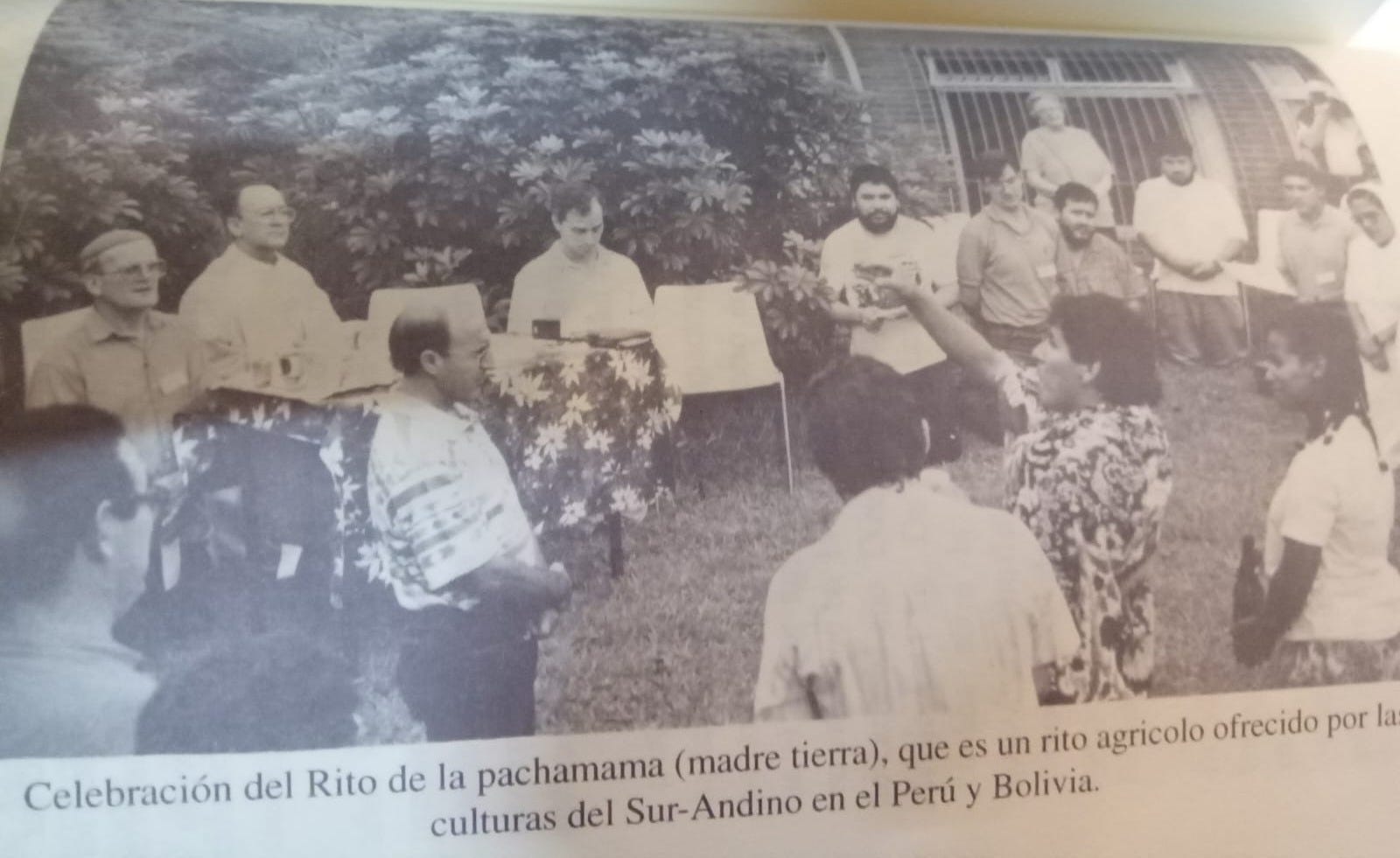
(WM Reports) – Photos have emerged which appear to show then-Father Robert Prevost – now Leo XIV – taking part in a “Pachamama Rite” in 1995.
This news was broken by LifeSiteNews on Faith and Reason.
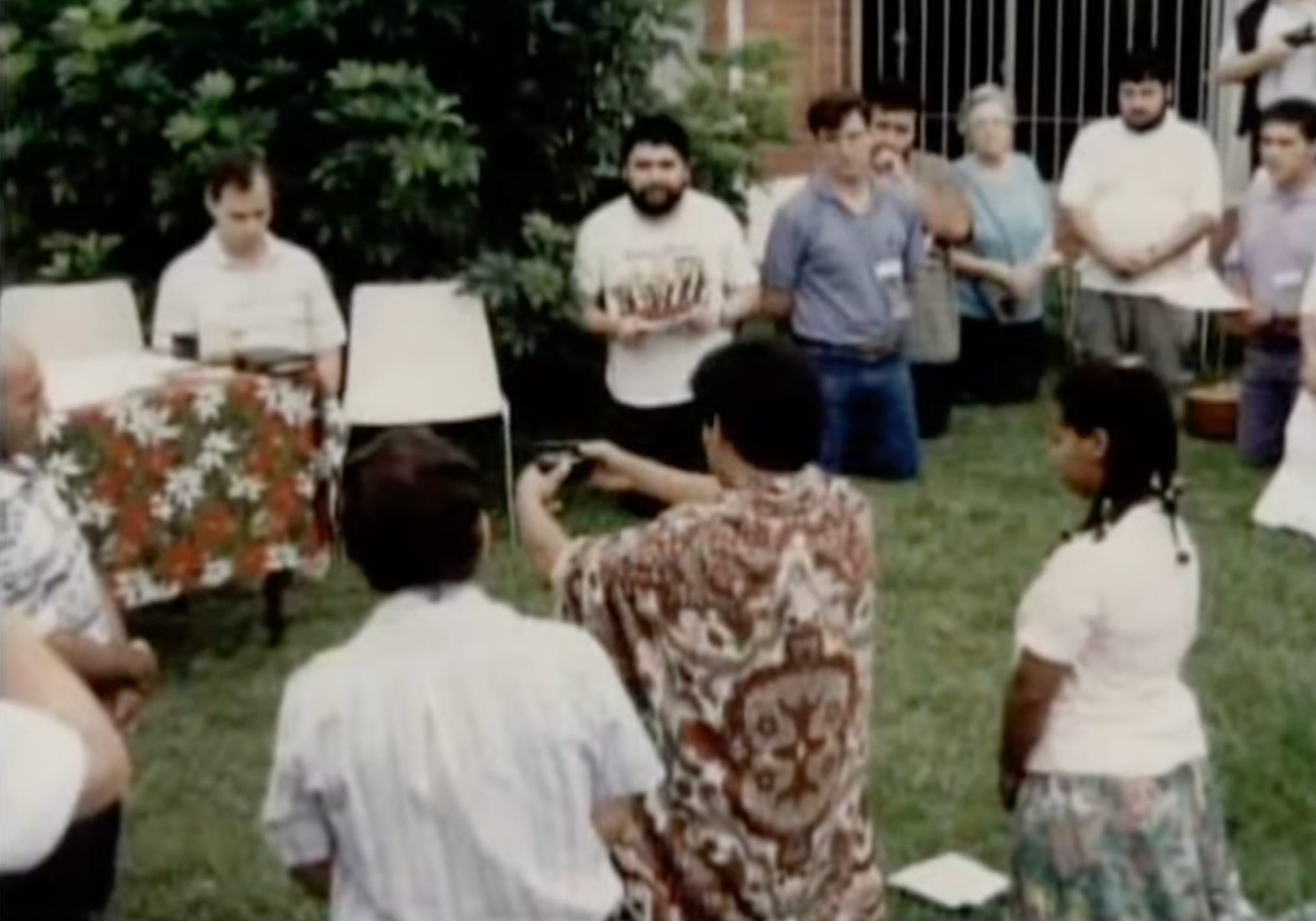
The photos, provided by Fr Charles Murr, depict a speaker (apparently in ceremonial garb) addressing a circle of 14, apparently including Fr Prevost. Some are kneeling and standing; Fr Prevost appears to be kneel, looking down. Whether what this photo depicts constitutes active participation will be addressed further on.
UPDATE: Novus Ordo Watch have announced that they too were working on this story independently:
“Novus Ordo Watch, too, has been working on this story behind the scenes, since last year, but had not yet released the information because not all i’s had been dotted and not all t’s had been crossed yet. We wanted to be absolutely sure that this was going to be an airtight, slam-dunk case against Robert Francis Prevost. […]
“Since Life Site has broken this news, we will now go ahead and, in this post, release the first part of our research on this.”
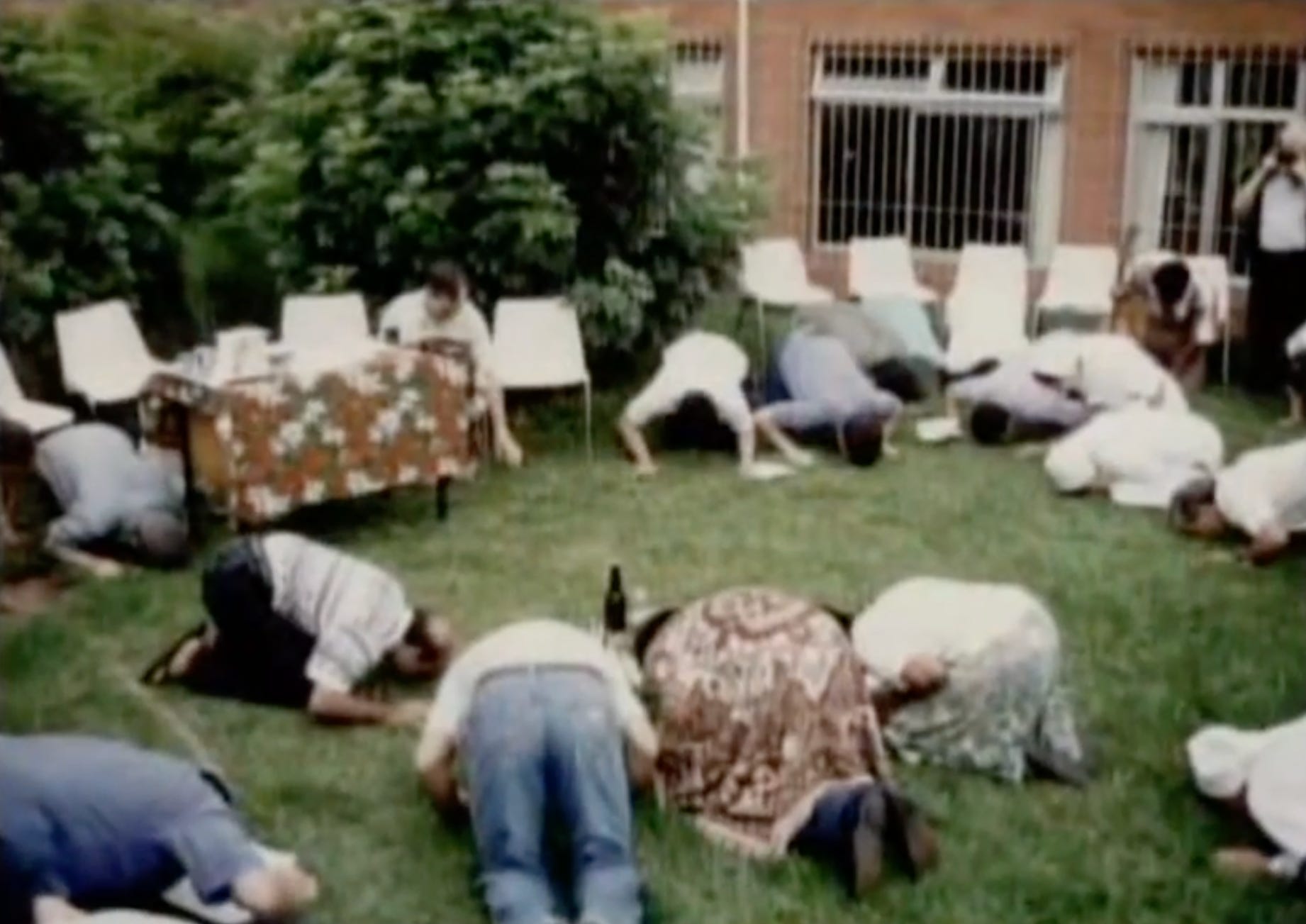
Novus Ordo Watch also found a video of the proceedings, including addition photos contained in a video. One of these photos included the participants of the ceremony prostrating themselves in front of a black object. It is unclear exactly what Prevost was doing at that moment.
The caption identifies the ceremony as “the Rite of Pachamama (Mother Earth)” and as an “agricultural rite”:
Celebración del Rito de la pachamama (madre tierra), que es un rito agrícola ofrecido por las culturas del Sur-Andino en el Perú y Bolivia.
[Celebration of the Rite of Pachamama (Mother Earth), which is an agricultural rite offered by the cultures of the South-Andean region in Peru and Bolivia.]
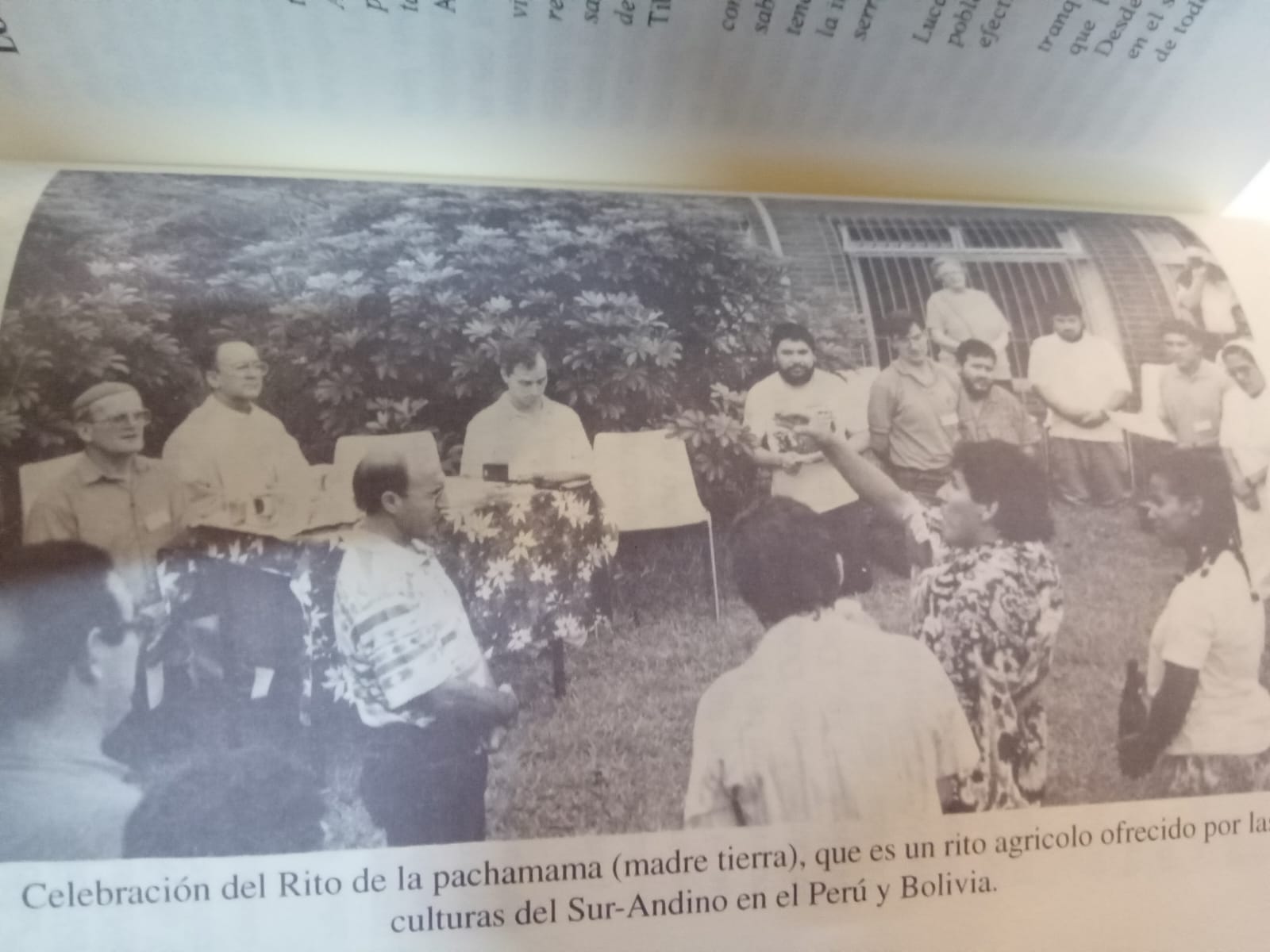
“Pachamama” is a name for the Andean “Mother Earth” goddess. InfoVaticana also recently reported on the documented links between Bolivian Pachamama rites and human sacrifice.
It is not clear whether the ceremony involved a physical Pachamama statue, like that which was used during 2019 Amazon Synod ceremony in Rome – although the presence of an idol is not necessary for it to have been an idolatrous ceremony. The woman standing next to the speaker does appear to be holding an object which may indeed be such a statue: this is difficult to say with certainty.
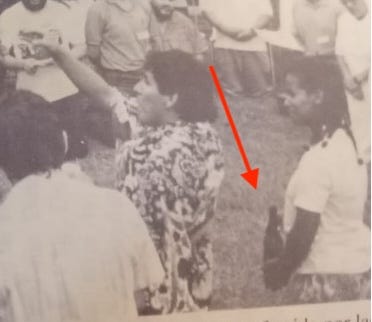
It resembles the black object to which the participants seem to be prostrating themselves in the photo above; however, it may also be the bottle that appears in another photo.
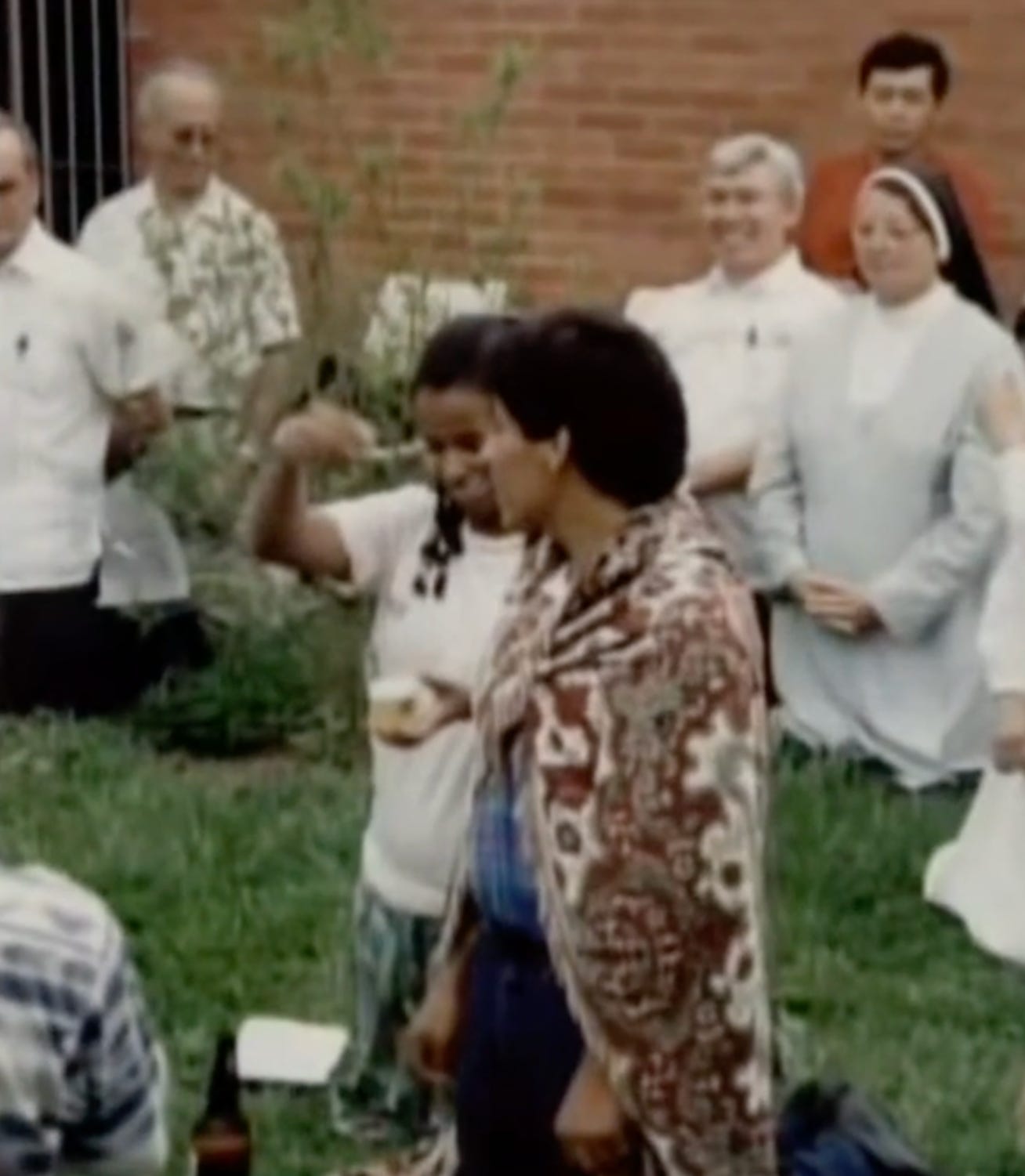
Some Pachamama rituals involve the sprinkling of alcoholic beverages, and another photo depicts the presider elevating what appears to be a cup – providing a possible explanation for the purpose of a bottle in this ritual.
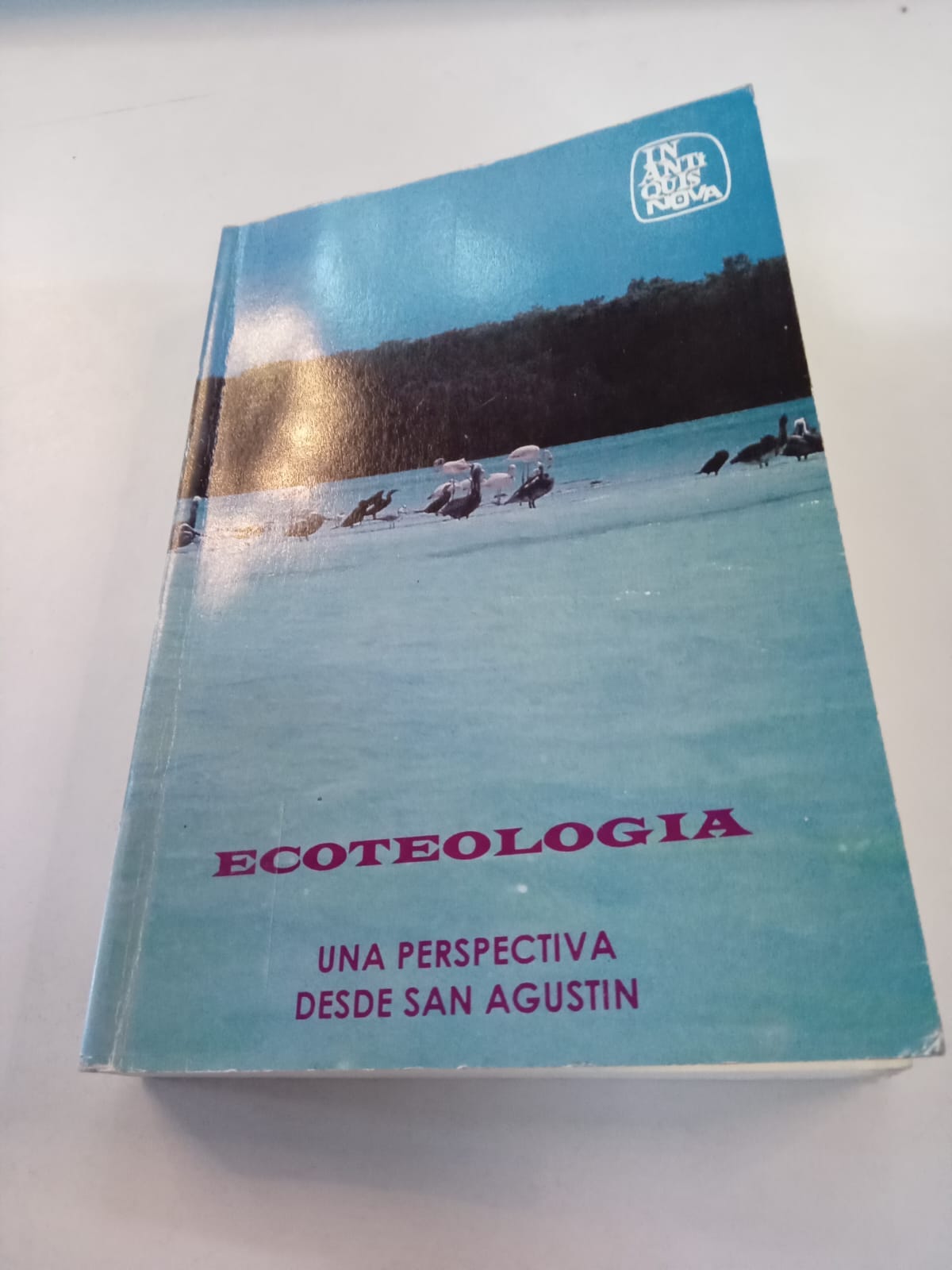
LifeSiteNews explain how Fr Murr located an original copy of the original publication which included these pictures to confirm their authenticity. The book is Ecoteología: Una Perspectiva desde San Agustín, published in Mexico, 1996, and is held in the Salesian Central Library of Buenos Aires, Argentina. The photos published are scans from this edition.
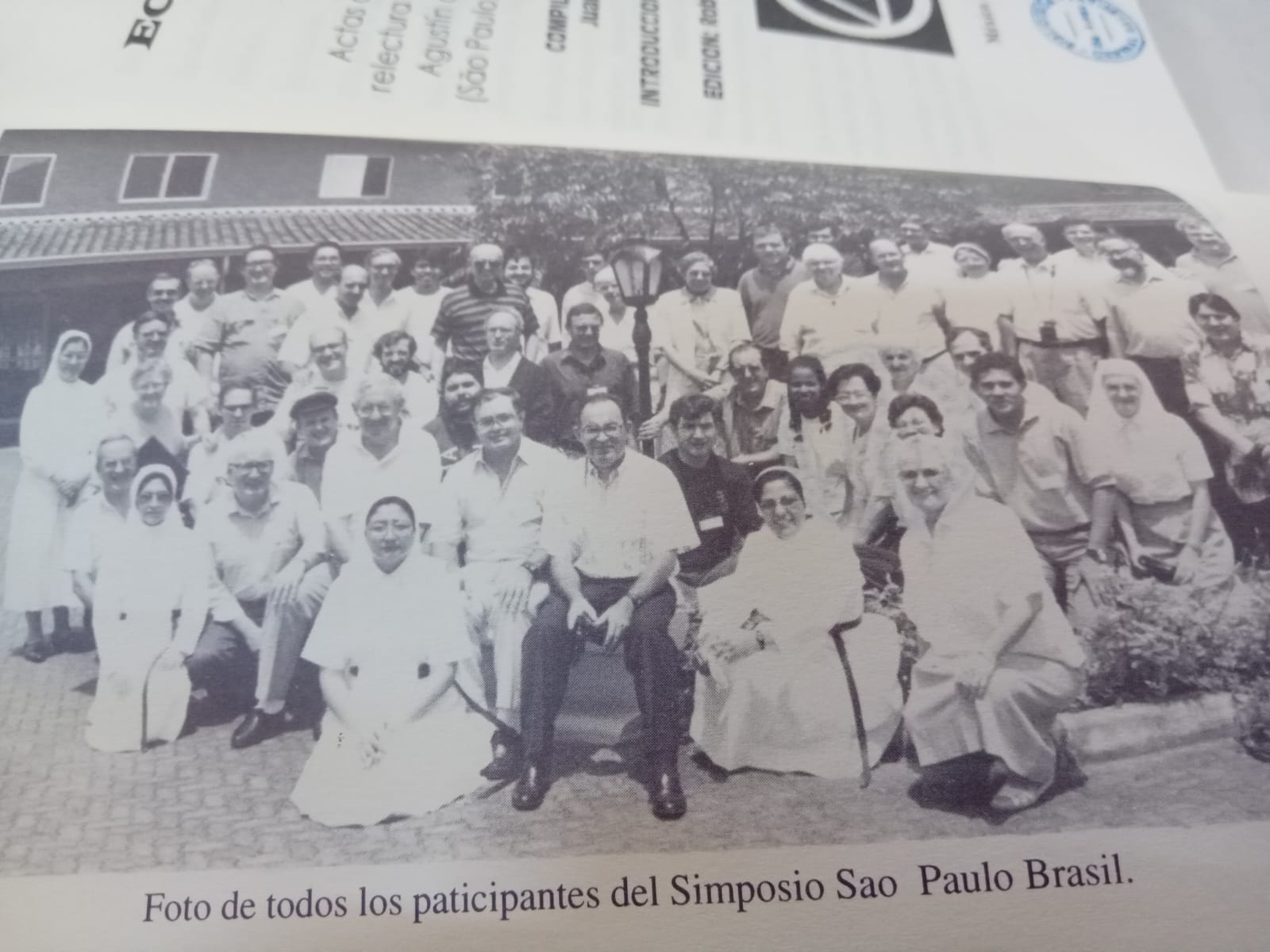
The book itself is an account of the proceedings of the “Fourth Symposium-Workshop: ‘Reading Saint Augustine from Latin America’” (IV Simposio-Taller “Lectura de San Agustín desde América Latina”), which took place in Brazil, January 1995. According to Fr Murr, it was an “official Augustinian theological symposium.”
Another photo in this book appears to include Fr Prevost amongst the participants of the symposium.
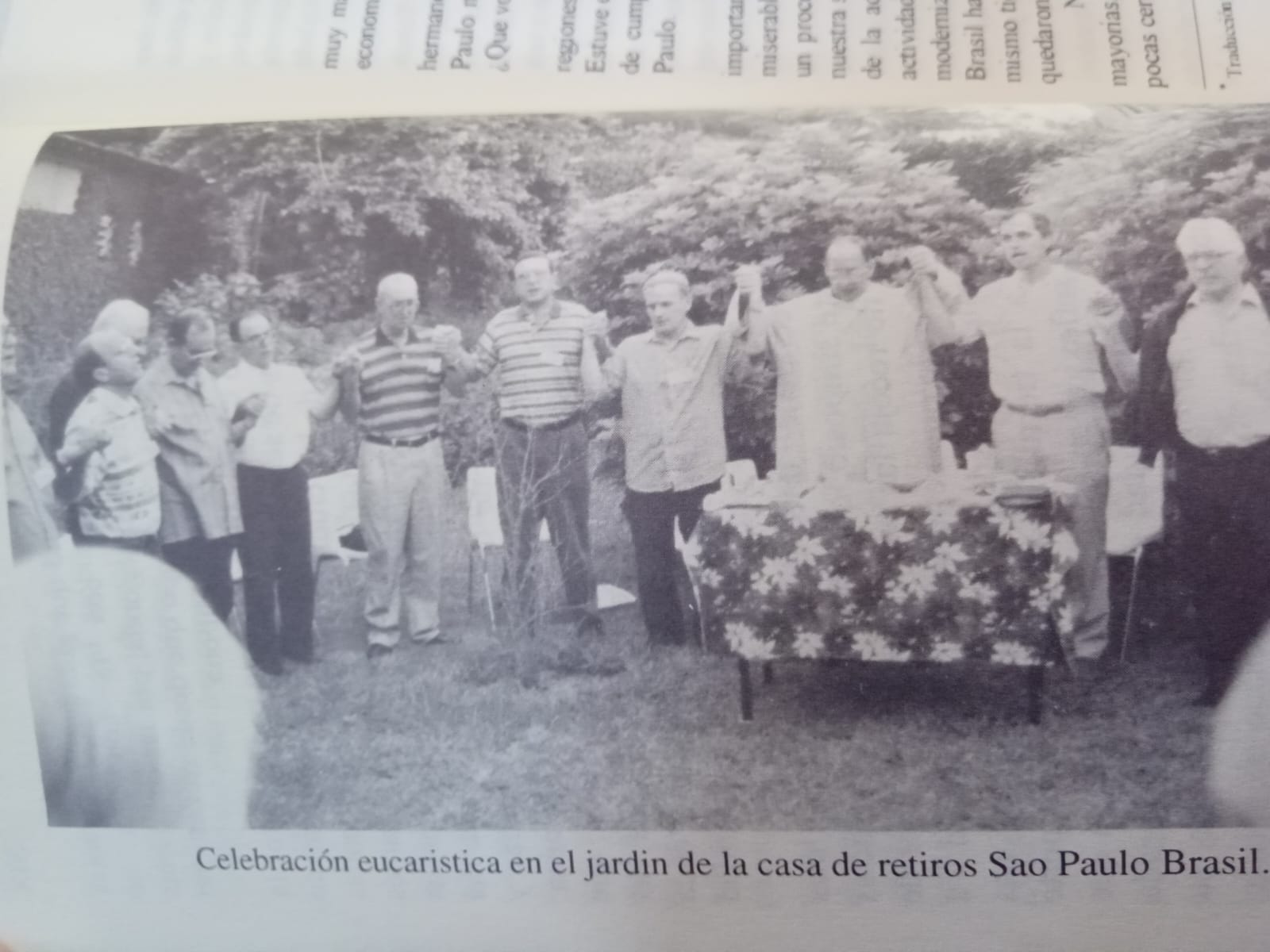
It also includes a picture of Prevost taking part in a “Eucharistic Celebration” in what seems to be the same location.
Objections from the sceptics
Already some of Leo XIV’s defenders are accusing LifeSiteNews of falsehood and calumny. However, Fr Murr provided the precise reference detail for the book in question:
“Fr. Murr has obtained high-resolution scans of the proceedings (including the clear kneeling Pachamama photograph) from the Salesian Central Library in Buenos Aires, Argentina (stamped call number 276.04 ACU :504 / 30.161, Biblioteca Central Salesiana, No. 30161).”
It would seem more prudent and just for those who doubt the veracity of the report to make their own enquiries before (ironically) calumniating those who have reported on it.
Quite risibly, some are saying that the story – which LifeSiteNews broke – has not been reported by any other outlets. Aside from anything else, that is because LifeSiteNews broke the story.
Others have also suggested that Catholics should not be interested in what happened in 1995, as it was a long time ago – and that nobody is without sin. However, such a revelation demands answers and clarification. According to canonical principles, this event was already “public”, and so requires public abjuration and/or reparation.
An unrepented mortal sin committed thirty years ago remains on the soul and does not somehow “lapse with time”, until the sinner repents. However, the issue here is not directly one of sin, and it is conceivable that Fr Prevost might have been morally inculpable. The point, rather, is that active participation in such a rite is a public fact with significant implications both for the Church, and for Prevost’s membership of her.
Before we turn to those implications, let us recall Leo XIV’s pre-conclave career in South America, and the events of 2019.
Prevost prior to the Conclave
Fr Prevost was in Peru in the 1980s and 1990s as a missionary. He was ordained in 1982.
In 2001, he was elected Prior General of the Augustinians, and returned to Peru in 2014 as Apostolic Administrator and then Bishop of Chiclayo diocese.
In Peru, he denied the “admissibility” of capital punishment on at least three occasions, 2021, 2022 and 2023 – a denial which he has repeated since his election Leo XIV.
The legitimacy of the death penalty is considered to be a revealed dogma of faith, taught by of Holy Scripture, and the universal ordinary magisterium. The pertinacious denial of such a dogma is heresy, which – if public – causes a person to lose his membership of the Church, and prevents him from holding any hierarchical office.
Prevost remained in Peru until 2023, when he was appointed Prefect of the Dicastery of Bishops and made a Cardinal – until we was elected by the 2025 Conclave and took the name Leo XIV.
Pachamama in Rome, 2019
The 2019 Amazon Synod prayer ceremony was a tree-planting included a circle of worshippers bowing down before figures of naked pregnant women. Francis and other ecclesial dignitaries sat apart as onlookers, offering the Our Father prayer without comment.
This event caused great controversy among Catholics, many of whom considering it to have been idolatrous, and a violation of the First Commandment.

The controversy resulted in the Pachamama figurines being thrown in the Tiber river by Alexander Tschugguel.
In his public apology for Tschugguel’s actions, Francis himself referred to them as “statues of the Pachamama” and claimed that they “were there without idolatrous intentions.” In spite of this, defenders of the ceremony claimed that these figurines depicted “Our Lady of the Amazon” rather than “Pachamama.”


The 2019 Amazon Synod also featured promotional materials including a topless woman breastfeeding both a child and a weasel, and further ceremonies involving Pachamama statues in St Peter’s Basilica itself.
The implications of the 1995 photographs
Murr told the Faith & Reason panel:
“The man who is now Leo XIV was documented kneeling in a pagan earth goddess ritual in an official gathering of his own religious order. The implications for the direction of the Church under this pontificate are profound.”
What are these implications?
It is notable that Francis himself was an observer of the 2019 ceremony1 – whereas the pictures released by Fr Murr appear to show Prevost kneeling, and appearing to pray.
The moral theologians Frs McHugh OP and Callan OP consider such involvement to be active participation in a rite,2 which they say is “intrinsically and gravely evil”, given that it “expresses a belief in the false creed symbolized”3 and is liable to make others conclude that one is taking part in false worship.4 The same applies, even if one only simulates active assistance in such worship whilst withholding assent to the creed which it symbolises.5
One implication is that Prevost may have committed a public act of apostasy, with it being unclear whether he ever abjured such an act.
One of the criteria for membership of the Church is an external profession of the faith. The term “profession of the faith” can mean different things in different contexts. In terms of membership, professing the faith does not only refer to something done on occasions – and it is something integral, and therefore incompatible with the open profession of heresy at other times. It implies a state or something constant, rather than something repeated – although specific acts of profession are sometimes required. Canon 1325 §1 illustrates this:
“The faithful of Christ are bound to profess their faith whenever their silence, evasiveness, or manner of acting encompasses an implied denial of the faith, contempt for religion, injury to God, or scandal for a neighbor.”6
It also includes not saying or doing anything openly contrary or incompatible with the profession of faith. Baptism makes someone a member of the Church, providing that there is no “obstacle in the baptized person” impeding this effect. Obstacles include heresy, schism and apostasy. Here is Billot’s formulation, showing that as criterion for membership, the profession of faith is in some sense negative rather than positive:
“The first condition [for baptism making someone a member of the Church] is that the social bond of the unity of Faith not be broken by formal heresy or even by merely material heresy.”7
As implied by Canon 1325, one professes the faith through a certain “manner of acting.” This can include frequenting the sacraments and the Mass, and worshiping God in an orthodox, traditional manner.
Likewise, acts and omissions can constitute the denial of the faith when they are clearly incompatible with professing the faith. This refers to all public acts and omissions, rather than simply authoritative ones. The canonist Dom Charles Augustine OSB explains further:
“[O]ne’s conduct, or ratio agendi, may imply a denial of the faith. To this class belong certain acts which are indifferent in themselves, but become wrong by the end for which they are performed, or by their object or accompanying circumstances.
“Thus eating meat is in itself an indifferent act, but may become sinful through either or all of three concomitant adjuncts. Thus to eat or prepare meat in odium fidei, in contempt of religion, is a grievous sin because the end is sacrilegious, and may amount to a denial of the faith, if the meat is taken as a signum protestativum of apostasy. If the act is performed merely for economy’s sake, without any religious motive, no denial is involved.”
Avoiding such acts and omissions is itself part of the profession of faith.
The worship of idols and the profession of faith
The early Church, persecuted by Rome, understood “a pinch of incense” offered to the Emperor to be an act of apostasy – although it is arguable that the term had a wider meaning than that later used in the context of membership. The historian Darras writes of the third century Decian persecution:
“There were several degrees of apostasy: these timid Christians were classed in three different categories, which were termed the thurificati, sacrificati, libellatici. The thurificati had only offered incense to the idols. The sacrificati had sacrificed to the false gods, or eaten immolated viands.
“The libellatici had gone to the magistrates, declaring that, as Christians, they were not permitted to offer sacrifice, but they offered money in order to procure an exemption from this ceremony. Through avarice or humanity, the proconsuls and governors gave them then a billet (libellum), purporting that they had renounced Jesus Christ, and sacrificed to the gods of the empire, even through they had done no such thing. These billets were read publicly, and their bearers were left in peace.
“All who belonged to these three categories were, without distinction, named lapsi (fallen), and for each of them canonical penances were appointed.”8
Even though the libellatici did not actually offer any incense, and acted under extreme pressure, their pretence at having done so was sufficient to be considered a visible departure from the profession of faith, putting him in a state of apostasy, and requiring a remedy and some positive action to leave it.
Theologians and canonists hold that apostasy prevents a man from being elected to the Papacy or hold any office.9
Although we know on independent grounds that Prevost is not and cannot be a legitimate Roman Pontiff, public apostasy10 – if established – would add another title by which he is prevented from attaining this office.
Conclusion: Questions to be Answered
As it stands, the photo raises more question that need to be answered:
What was the nature of the “Pachamama rite” mentioned in the caption?
What were the nature of the prayers?
What was his attitude towards the rite at the time?
What, as Leo XIV, does he have to say about the matter today?
The final question is the most important – because silence implies consent. If Prevost does not publicly abjure the scandal, then he is to be taken to approve of it. As Pope Felix III wrote:
“An error which is not resisted is approved; a truth which is not defended is suppressed… He who does not oppose an evident crime is open to the suspicion of secret complicity.”11
LifeSiteNews is already calling for Leo XIV to show his hand, and condemn Pachamama worship – and John-Henry Westen has asked Conciliar/Synodalist churchmen who condemned the 2019 event whether they will renew their condemnations with regard to Leo XIV:
“The question is, do those condemnations now apply to Pope Leo XIV? What Francis scandalously permitted in front of him, Leo actually engaged in.”
Nor need it be seen as presumptuous for anyone who considers Leo XIV to be the Pope to demand such answers. While, as stated, we already hold him not to be the Pope, and for absolutely certain reasons which impose themselves on those who understand them, those who somehow consider him only suspect of heresy (or apostasy) entitled to clarity.
Catholics have a right to know that an apparent Pope is a Catholic. They also have a duty to draw the conclusions if he is not.
See the full coverage at LifeSiteNews:
UNEARTHED: 1995 photo shows Pope Leo XIV participating in Pachamama ritual
Pachamama idolatry returns: Cardinals who condemned Francis’ scandal now face Leo’s
Faith & Reason Special: UNEARTHED: 1995 Photo Shows Leo XIV Participating in Pachamama Ritual
See also Novus Ordo Watch’s independent coverage:
HELP KEEP THE WM REVIEW ONLINE WITH WM+!
As we expand The WM Review we would like to keep providing free articles for everyone.
Our work takes a lot of time and effort to produce. If you have benefitted from it please do consider supporting us financially.
A subscription gets you access to our exclusive WM+ material, and helps ensure that we can keep writing and sharing free material for all.
You can see what readers are saying over at our Testimonials page.
And you can visit The WM Review Shop for our ‘Lovely Mugs’ and more.
(We make our WM+ material freely available to clergy, priests and seminarians upon request. Please subscribe and reply to the email if this applies to you.)
Subscribe to WM+ now to make sure you always receive our material. Thank you!
Read Next:


Follow on Twitter, YouTube and Telegram:
Twitter (The WM Review)
Observing a rite which is taking place anyway is not per se forbidden (although no putative Roman Pontiff can make such a claim about a rite taking place in the Vatican Gardens, as in 2019, given that he has the power to stop it). McHugh and Callan hold that kneeling and adoring the Blessed Sacrament, validly consecrated by a schismatic, is not necessarily active participation. (cf. nn. 968, 971(b))
McHugh & Callan, Moral Theology, 1955.
“Participation of Catholics in non-Catholic services is either active or passive.
(a) Participation is active when one takes a part or fulfils some function in an act that is an official expression of the worship and belief of a sect, even though this takes place outside a church, or is not open to the general public.
(b) Participation is passive, if one merely assists as a spectator, and not as a worshipper, at something pertaining to non-Catholic worship. […]
“A person who stands in the rear of a Quaker meeting house as an onlooker assists passively; but one who sits quietly among the others present, as if in meditation, assists actively. A person who sits in a pew during a revival in order to see what is going on, assists passively; but, if he joins with the congregation in bowing, groaning, etc., he assists actively.”
N. 962, 966

“It is unlawful for Catholics in any way to assist actively at or take part in the worship of non-Catholics (Canon 1258). Such assistance is intrinsically and gravely evil; for
(a) if the worship is non-Catholic in its form (e.g., Mohammedan ablutions, the Jewish paschal meal, revivalistic “hitting the trail,” the right hand of fellowship, etc.), it expresses a belief in the false creed symbolized;”
n. 964
“[I]t is not lawful to do an indifferent act which bystanders from the circumstances will have to conclude is an act of false worship. Thus, Eleazar would not eat lawful meat which was put before him in order that he might pretend to eat the meat of sacrifice after the manner of the heathen (II Mach., vi).”
N. 965, (a)
“It is unlawful for Catholics to simulate active assistance in the worship of non-Catholics, for, while the non-Catholic rite would be avoided, something which appeared to be that rite would be done, and thus profession of faith in it would be given.”
N. 965
The 1917 or Pio-Benedictine Code of Canon Law, in English Translation with Extensive Scholarly Apparatus, trans. Dr Edward Peters, Ignatius Press, San Francisco, 2001
Louis Cardinal Billot, Tractatus de Ecclesia Christi, Tomus Prior, Prati ex Officina Libraria Giachetti, Filii et soc, 1909, 291. Trans. Fr Larrabee.
J.E. Darras, A General History of the Catholic Church, Vol I. P.J. Kennedy, New York, 1898, p 241
Cf. the text cited by Fr Cekada:
“1° What is required by divine law for this appointment: (a) It is required that the appointment be of a man who possesses the use of reason — and this at least because of the ordination the Primate must receive to possess the power of Holy Orders. Indeed, this is required for the validity of the appointment. “Also required for validity is that the appointment be of a member of the Church. Heretics and apostates (at least public ones) are therefore excluded.”…
https://traditionalmass.org/wp-content/uploads/2025/05/TradsInfall.pdf
For more on what is meant by “public” in this context, see the canonists included in the following:

Cited by Pope Leo XIII in Inimica Vis, n. 7, 1892.
I asked chatgbt what these "rites" might be:
The Rito de la Pachamama is a traditional Andean agricultural ceremony practiced in regions of Peru and Bolivia that centers on honoring Pachamama, or Mother Earth, through acts of gratitude and reciprocity. The ritual typically involves preparing an offering (ofrenda or despacho) composed of symbolic items such as coca leaves, grains, food, sweets, and drink, which are then either buried in the earth or burned so that they may be received by the spiritual forces. Participants often perform libations (ch’alla), pouring liquids like chicha or alcohol onto the ground before consuming them, acknowledging dependence on the earth’s provision. The ceremony is usually led by a ritual specialist or elder who invokes Pachamama and other natural spirits, offering prayers for fertility, protection, and abundance, especially in connection with agricultural cycles. Rooted in indigenous Andean cosmology, the rite expresses a worldview in which the earth is a living being and humans must maintain harmony with it, and in some regions it is practiced alongside or blended with elements of Catholic tradition.
Although this incriminates the papal pretender Leo & will probably help a good number of people who were on the fence about him to reject him as an invalid pope, there will be a lot fewer who will reject the counterfeit V2 church on account of it, which is of immeasurably more importance. In other words, I'd say Satan doesn't mind this kind of thing at all. He may even encourage it, since it will distract V2ers from focussing on the counterfeit nature of the V2 church as a whole. But most of them will likely not even hear about it.