

Sometimes a little of what J.R.R. Tolkien called ‘sub-creation’ is necessary.
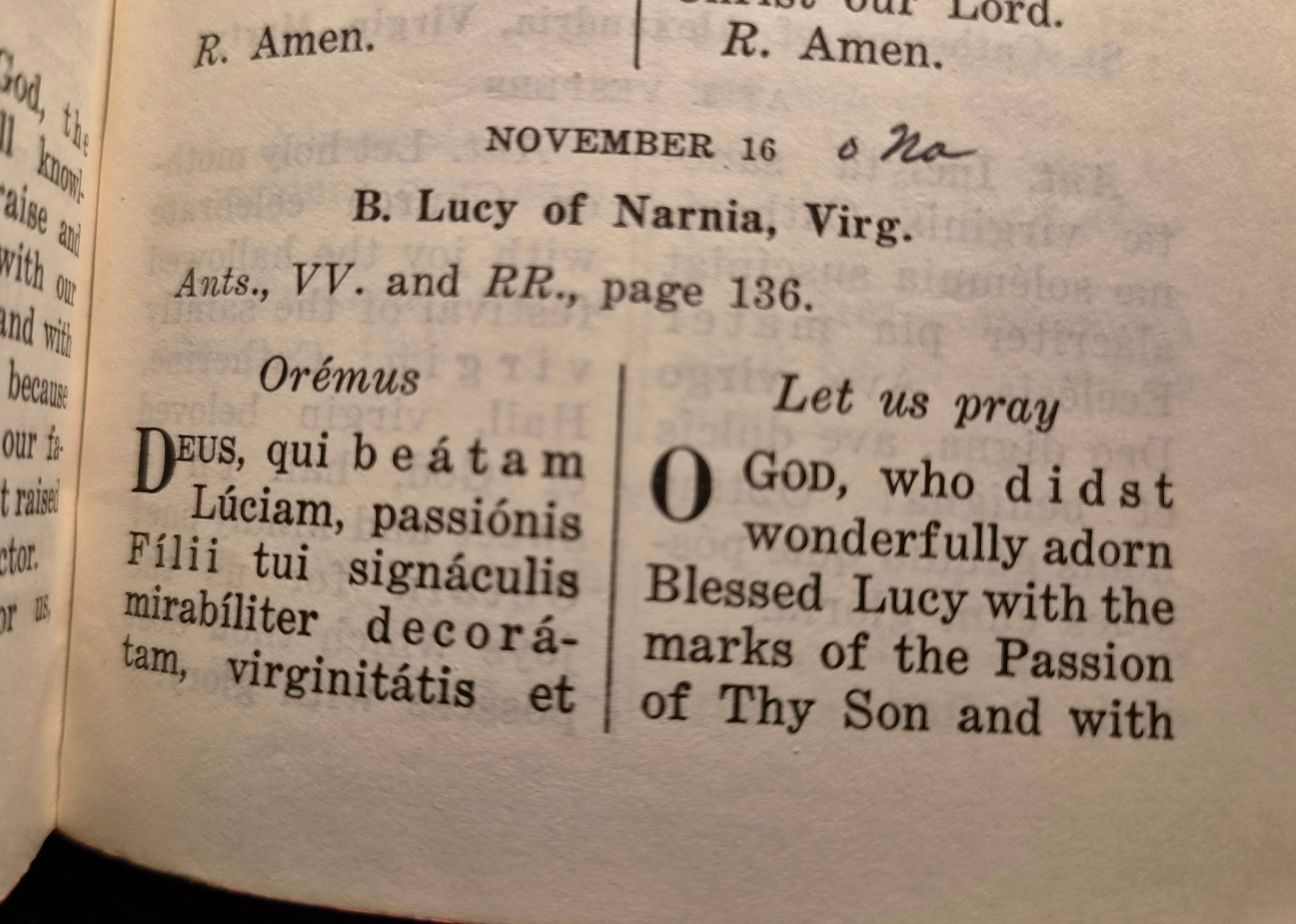
16 November: Commemoration of Bl. Lucy of Narnia
How on earth did Bl. Lucy of Narnia end up in the liturgical calendar of the Order of Preachers, to be commemorated on 16 November?


There are two answers to that question.
The first answer is that Bl. Lucy Brocadelli was a Dominican tertiary of the sixteenth century, from the town of Narnia (now called Narni) in Umbria, Italy. This first answer is the true one.
You can find an account of her remarkable life here:
However, the second answer is that Bl. Lucy of Narnia really is Lucy Pevensie (1932–1949), one of the four children who visited the land of Narnia. This second answer is not (“strictly speaking”) true – but it would be fun if it were.
From time to time, it is necessary to have a little fun, and to engage in what J.R.R. Tolkien called “sub-creation”. It’s good for the soul.1
And so you can find an account of the “second answer” – in which we imagine how Lucy Pevensie might have made her way into Catholic liturgical books – below.
Before we proceed to that, readers may also be interested in John S. Daly’s discussion of related subjects:
Just to be clear: see the disclaimer following this article. This is a pastiche, an exercise of the imagination, and to be understood in keeping with that disclaimer.
‘Bl. Lucy of Narnia’ – and ‘The Problem of Susan’ resolved
Peter Pevensie’s search for the Truth
After the events recounted in the 1951 manuscript Prince Caspian (which took place in A.D. 1941, Narnian year 2303), the Pevensie children – led by the eldest, Peter – set about in earnest seeking to know the lion Aslan by his “other name”.
However, at that time Peter was only 14 and Lucy was only 9 – their means for such an investigation being therefore somewhat limited. Susan Pevensie was in America with her parents for some of this time, and so did not involve herself in this search.
In 1945, at aged 18, Peter went up to Oxford to read literature at Magdalen College.
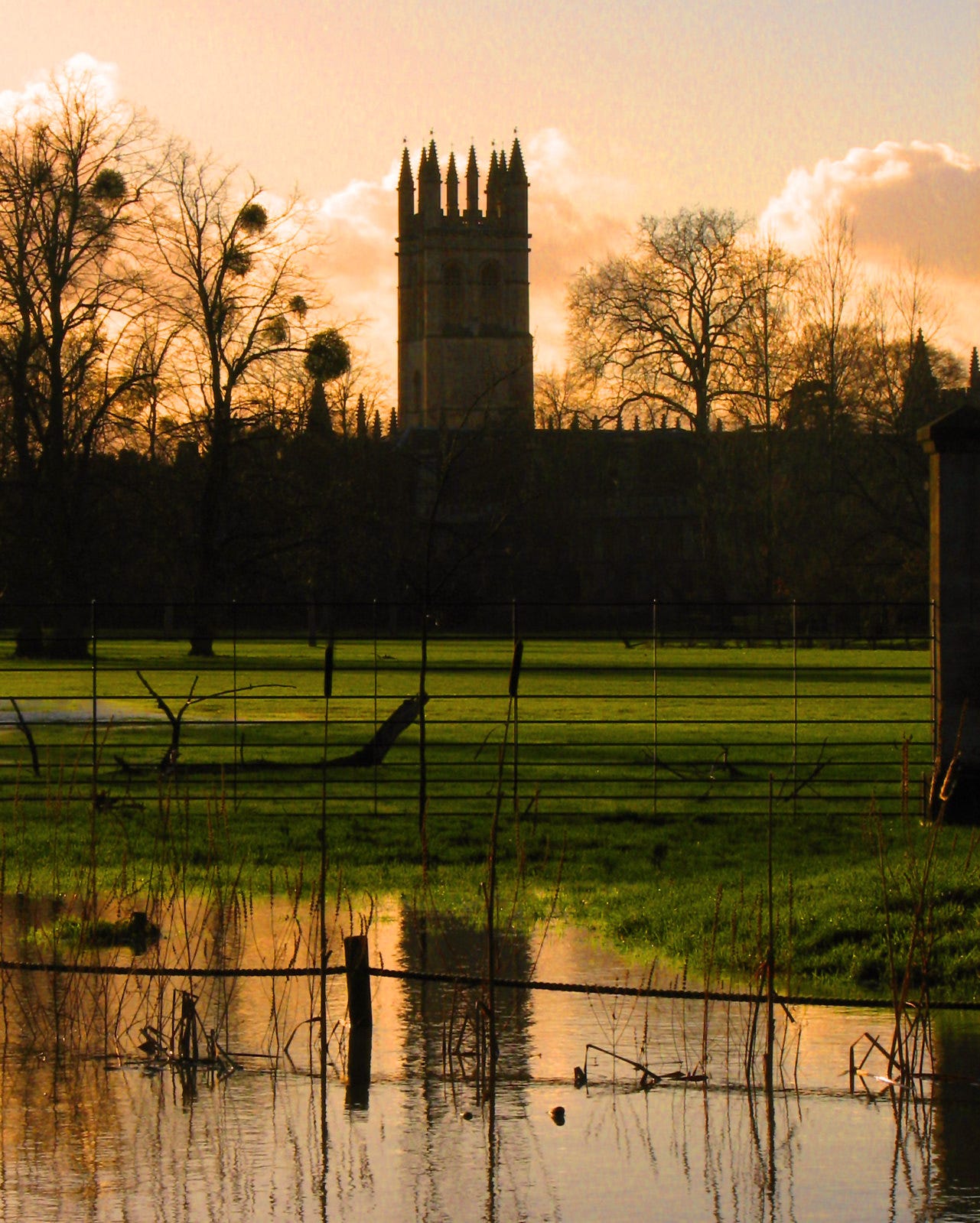
At Magdalen, he fell under the influence of the Anglo-Irish literature academic C.S. Lewis. Over the course of his first year at Oxford, Pevensie relayed what had happened to his siblings in Narnia, and the further events involving his cousin Eustace Scrubb and his schoolmate, Jill Pole.
Lewis, who had converted to Anglicanism in 1931, took what Pevensie said seriously, and was able to help him understand what it had meant. Thus, after four long years, Lewis helped Pevensie realise what the lion Aslan had meant by the “other name”, by which he was known in this world. Having been raised in a conventional English home, Pevensie was already a confirmed member of the Church of England, and began to practise his religion in earnest.
However, in the course of his time at Oxford, Lewis introduced Peter Pevensie to his circle of writers, the Inklings, including J.R.R. Tolkien. Tolkien had already discovered the manuscript of The Red Book of Westmarch, and was in the process of translating and preparing it for publication. (It is thought by some that Tolkien was in contact with Fr Ambrose Greyhame SJ throughout this period, and that many of his loud comments about the influence of “Morgoth” following 1965 were influenced by him.)
Tolkien’s influence over Peter Pevensie grew stronger during this time, both intellectually and spiritually. He did not share the same cultural loyalties which may, unfortunately, have held Lewis back from Rome – and so like many other young men at the time, he came to see the deficiencies of the Anglican settlement, and the truth of the Catholic religion.
Entering the Ark of Salvation
In 1947, Pevensie was reconciled to “the one true fold of the Redeemer”. He made his abjuration, was conditionally baptised, and received into the Catholic Church at St Aloysius’ Church on Woodstock Road, where Tolkien usually went to Mass. Tolkien was his sponsor, and he took his sponsor’s given name “Ronald” as his confirmation name.
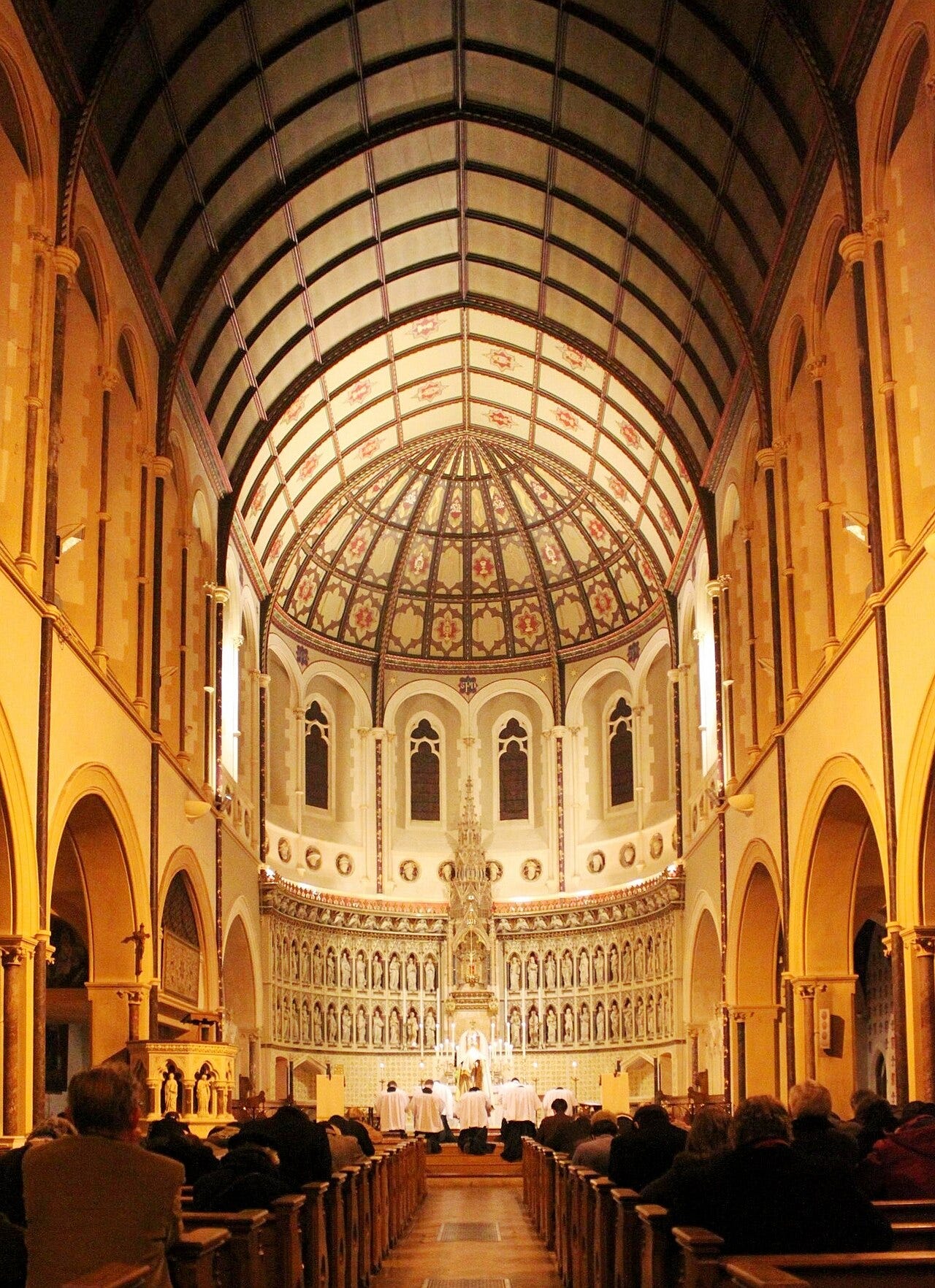
Naturally, Pevensie shared his progress on these matters with his siblings, cousin, and Pole. “Here,” he wrote to his brother Edmund, on the evening of his reception, “here is Aslan”:
“Here he is known by his true name, here alone he is loved and worshipped. Here is the true Ark, outside of which there is no salvation, where the Lion of the Tribe of Judah is received and united to us – whole and entire, under the appearances of bread and wine, and even more really and closely than he was in Narnia.”2 (Emphases in the original)
Trusting the leadership which he had long exercised, the others followed Peter, one by one, into the Catholic Church. Even his parents, Christopher and Helen Pevensie, were soon received. (On the alleged “improbability” of these conversions, and the order in which they took place, see the Appendix below.)
Lucy was the first, also in 1947. She was received at the Dominican priory of Blackfriars (re-established in 1921), a few minutes south of St Aloysius.
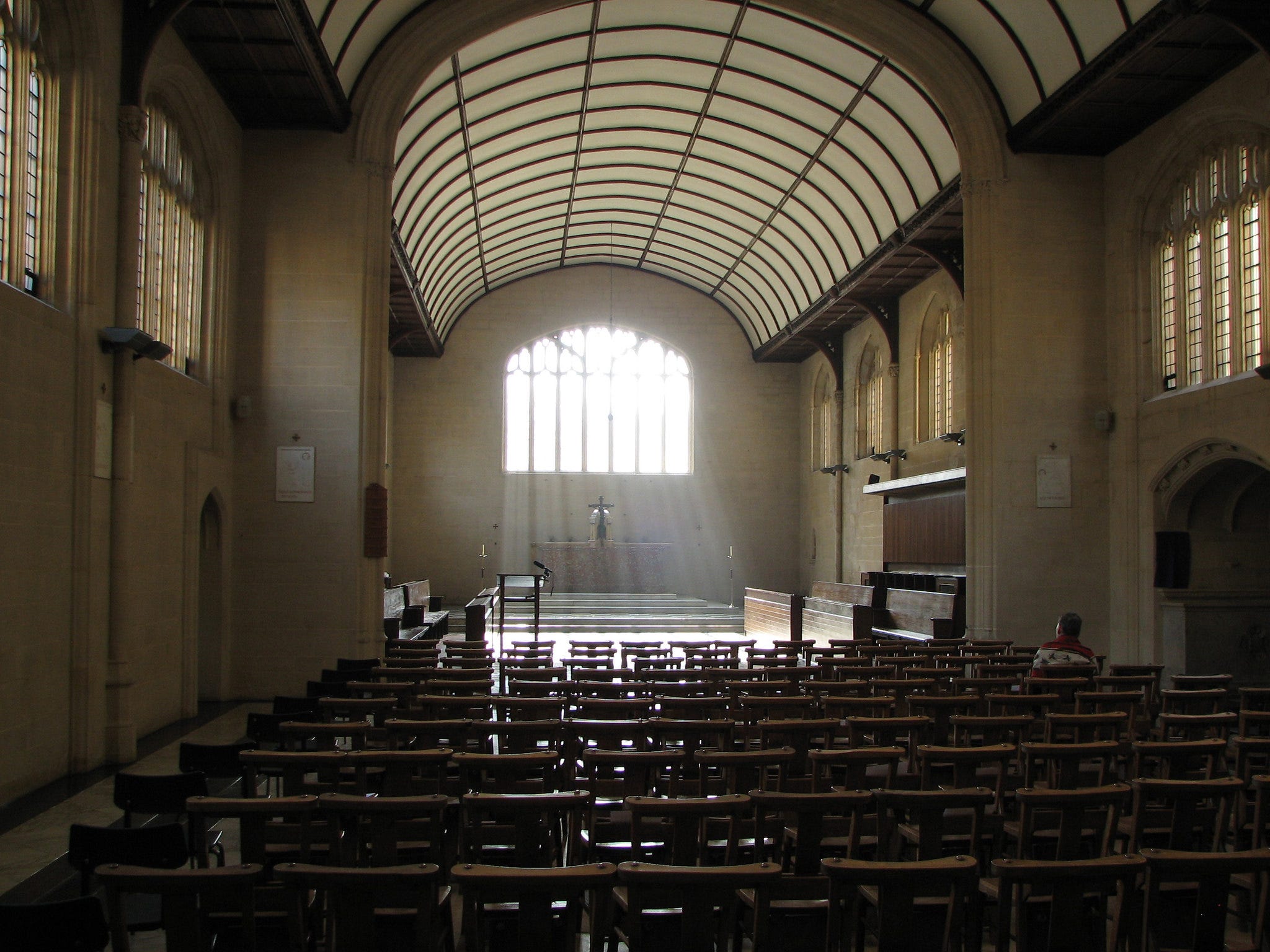
She was so attached to the Dominican Fathers and their way of life that she began conforming herself to the rule of a Dominican Tertiary. According to the order’s witnesses, she intended to enter as a nun. This association is why she is commemorated in the liturgical books of the order – although how she came to be there will be discussed below.
Jill Pole was the last, in 1948. She was only 15 at the time, and had to seek the bishop’s special permission to be received against the wishes of her parents.
As for the conversions of Professor Kirke and Miss Plummer, who were also related to the matters recounted in the Chronicles, these are too well known to need to be recounted here.
Tragedy strikes
The following year, 1949, tragedy struck. A catastrophic train crash took the lives of Peter, Edmund, Lucy, and their parents. Also lost in this disaster were the aforementioned Eustace Scrubb and Jill Pole, as well as the celebrated Prof. Digory Kirke and his associate Miss Polly Plummer. These events were narrated in the published manuscript The Last Battle (published 1956).
Some have later remarked at the strangeness of all these persons being taken together; others have noted that, given that it took place so soon after the last of them had entered the true Church, the timing was neither too early, nor too late, but precisely when it was intended.
Following the train crash, however, Lucy is said to have appeared again, marked with the wounds of Christ, and recounted what had happened. The one who received this vision gave testimony, under oath, to her beloved Dominican Order. Lewis drew on this material for The Last Battle, although his account deviates in certain points from the original testimony, which is currently held in the Vatican libraries. Copies are available upon request at Blackfriars, Oxford.
Following a number of striking miracles worked at the invocation of “Lucy of Narnia”, her cause was opened, and she reached the stage of beatification with great rapidity. Under norms then in force, a 50-year waiting period would normally have been needed before a cause could be opened at Rome, but given the extraordinary nature of the evidence and miracles, the Holy Father granted a dispensation from this customary period.
Lucy’s cause for canonisation, like many others, sadly floundered following the events of the 1960s. While she has suffered the same “unpersoning” fate as St Philomena, her commemoration remains in the pre-conciliar liturgical books of the Order of Preachers, and in the section Proprium Sanctorum pro Aliquibus Locis of certain other liturgical books.
So much for the “second explanation” of how Lucy Pevensie might have found her way into the liturgical books. While it may not be true in our world, we declare it to be canon in the sub-created3 secondary world with which we are currently dealing.
The ‘Problem of Susan’ resolved
But what of Susan? During Peter’s time at Oxford, Susan Pevensie had grown apart from the others, to such a point that she was described as “no longer a friend of Narnia”. She did not lapse into an impure life, as some have alleged, but simply one of worldly concerns. She looked upon Peter’s association with Lewis and Tolkien – as well as the “mass conversion” of the others – as an attempt to continue the escapist fantasies of their youth. Extant letters show the scorn that she poured upon it all at this time.
Upon attaining the age of 18, she returned to the United States and distanced herself from her family. However, other letters show how distraught she was following the train crash of 1949. Unsurprisingly for a young woman left alone in the world at age 21, they convey a complicated anger at those who had died, and at herself – as well as at “the Lion.”
Following years of such rage, in 1954, she made the acquaintance of one Ignatius Evans, an Englishman then living in the United States. Evans was himself a direct descendant of the brother of Bl. Philip Evans SJ, a Welsh Jesuit priest who had been martyred with Bl. John Lloyd SJ in 1679, following the early “false-flag” operation known as the “Popish Plot”. Evans’ family had kept the faith in the intervening centuries, notwithstanding difficulties which did not ease until the nineteenth century.


Evans was intoxicated by both the beauty of Pevensie, and by the mixture of pride, rage, sadness and regret he found within her. With profound reservations on religious grounds, which he and his family shared alike, he set about wooing Pevensie. Due to his fine stature, and many sterling qualities, this was not a great challenge. However, the religious differences proved to be a greater obstacle.
The return to England and the reconciliation
In 1955, the two returned to England, to meet their respective families. During this trip, the couple visited Evans’ old school, the Jesuit-run Stonyhurst College, Lancashire, and viewed the relics of various martyrs there. The relics have since have been confirmed to include those of Bls. Philip Evans and John Lloyd.
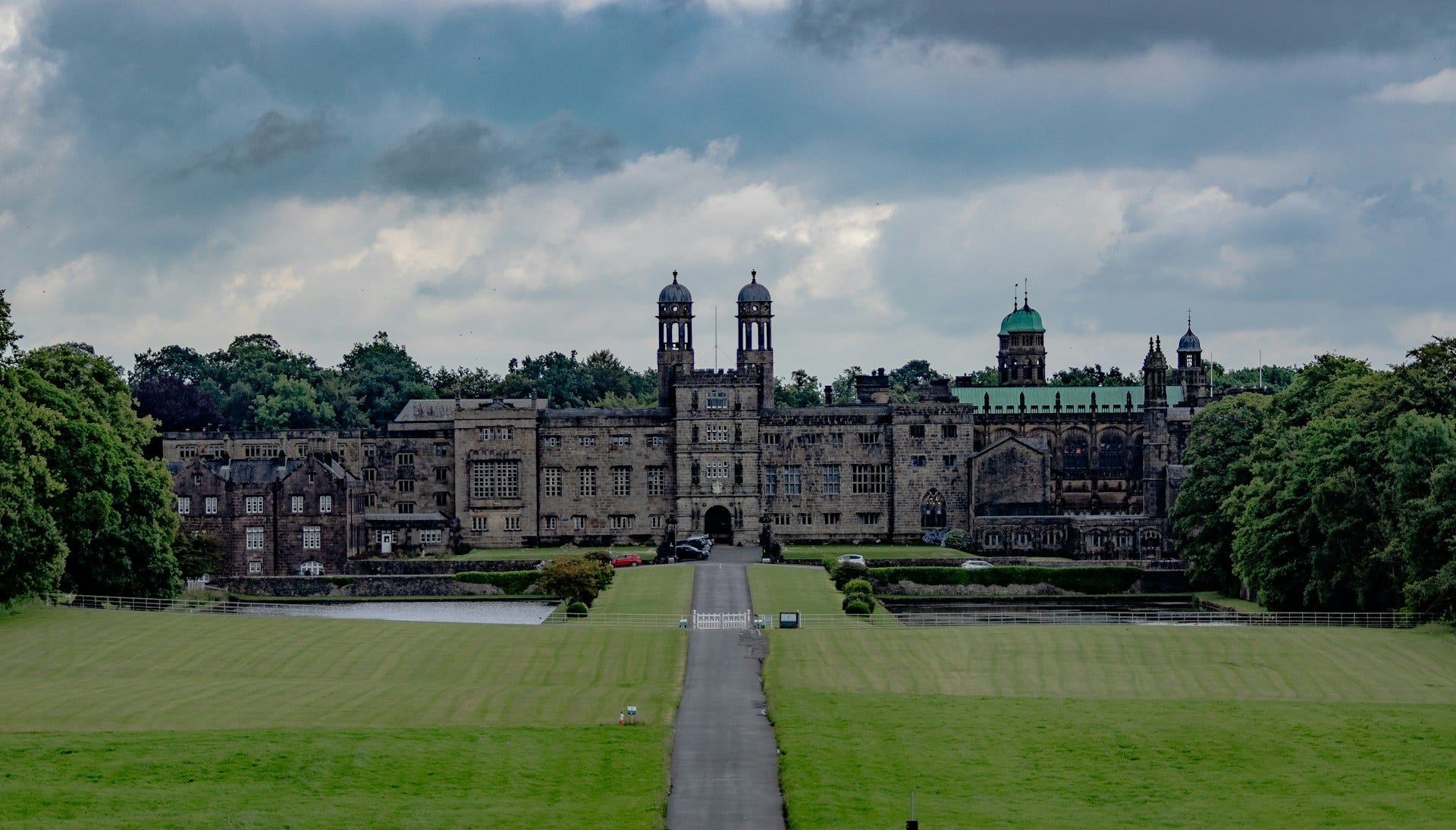
It is not clear exactly what happened, but the couple emerged from Stonyhurst with their differencss resolved, and engaged to be married. It had also been arranged, at the same time, that Pevensie would seek lodgings in the environs of the College, and begin instruction with the previously mentioned Fr Ambrose Greyhame SJ, then stationed at the school, as preparation for entering the Church.
She too became a Catholic six months later in 1956, taking “Lucy” as her confirmation name. Thus, at last, Susan departed from the “Shadowlands”, and was reconciled with Aslan under his “other name”.
Evans and Pevensie were married the following month by Fr Ambrose: the couple had two daughters in 1957 and 1960 respectively, and remaining in Lancashire for much of their lives.
Nonetheless real
Although her conversion was most sincere, it appears that Susan still remained unsure, for a time, about the events described in the Chronicles. This may explain why she never involved herself in Lucy’s cause, and sought privacy for herself and her family in the following years. However, she is known to have said, at least initially, that even if the events had simply taken place in the children’s heads, “that did not prevent them being real.”
It seems probable that her doubts were resolved, however, as is indicated by this remarkable detail. Following the deaths of both Susan and Ignatius in 1981 (Susan being only 53 years of age), a highly unusual quiver of arrows was found in her home in Lancashire. Two of the arrows were broken, a third was stained with blood. As they were discovered alongside a bow and horn, many naturally took them all to be the items mentioned in the Chronicles, and they were taken into safekeeping by the authorities. Their whereabouts are not currently known.
As for the details of their deaths, and the significant role that other members of the Evans family played in the conflicts of the second half of the twentieth century, these are less well known. I am given to understand that Professor N.W.B. Janeway is in possession of at least one version of the facts, and that he will be recounting the history in due course.
The official record says, however, that the two Evans showed no less bravery in death than the Pevensies had shown in life – and that Susan had proved herself as worthy an Evans as a Pevensie.
Appendix
Note on certain critical scholars, and the claim of ‘improbability’
Some critical scholars, primarily of modern writers of North American background, have since cast doubt on the series of Pevensie conversions. The chief argument, if it may be called that, is that they considered it improbable that Englishmen be Catholics.
Such a suggestion, however, is simply based on ignorance of social conditions of English religious life at the time. Starting with the Tractarian movement, England had enjoyed a significant religious revival. However, seeing that the trajectory of this movement could not be fulfilled in the Church of England, various men of renown (most notably Cardinals Newman and Manning) converted to the Catholic Church.
Over this period, much of the anti-Roman prejudice fell away amongst the English people. The large-hearted sincerity, so characteristic of the nation, led to several waves of converts, each including both prominent intellectuals and ordinary men and women. Thus, the critical claim of “improbability” is fundamentally flawed on the sociological level. There is nothing improbable about it at all.
It also ignores the reality that conversion to Rome is, in fact, the most probable outcome for those who experienced events such as those described in the Chronicles.
Handwritten annotation on the order of the Pevensie conversions
[The following notes, from an unknown author, were found written by hand on the manuscript recounting the “second account” of Bl. Lucy of Narnia.]
“Some have found it strange that Lucy was not the first to swim the Tiber, given the role that she had played in earlier events in Narnia. Why didn’t she lead the way again?
“That is indeed what would have happened if this were a mere fictional account of what happened, and these persons mere characters in a story. But in fact, reality proceeds according to its own order. Queen Lucy may have been beloved of Aslan, but King Peter was the High King.
“And in any case, if one wishes to see literary foreshadowings in these events, there is something fitting in Peter, whose namesake is the rock and visible head of Christ’s body on earth, leading the way. Similarly, St John ran to the Holy Sepulchre faster and arrived first, but it was St Peter that entered first, even before the Beloved who believed.”
DISCLAIMER
Sorry to break your immersion, but this article is an unofficial “sub-creative” work in the tradition of Tolkien’s own narrative conceit that his works were “found” and translated from pre-existing manuscripts. The characters of the Chronicles of Narnia were created by C.S. Lewis, and all rights are held by the C.S. Lewis Company. Lewis himself, however, said:
“The books don’t tell us what happened to Susan. She is left alive in this world at the end, having been turned into a rather silly, conceited young woman. But there is plenty of time for her to mend, and perhaps she will get to Aslan’s country in the end – in her own way. I think that whatever she had seen in Narnia she could (if she was the sort that wanted to) persuade herself, as she grew up, that it was ‘all nonsense.’”
“I could not write that story myself. Not that I have no hope of Susan’s ever getting to Aslan’s country; but because I have a feeling that the story of her journey would be longer and more like a grown-up novel than I wanted to write. But I may be mistaken. Why not try it yourself?”4
“Why not,” indeed. Any resemblance to characters from other well-known works of fiction is, of course, entirely coincidental and no infringement is intended upon the rights of their respective creators.
References to real persons, institutions and places are used fictitiously, and no association with or endorsement by any such person or institution is claimed or implied. This article is not endorsed by or affiliated with any estate, publisher or rights-holder. It is merely an exercise in sub-creation, and is offered as such.
HELP KEEP THE WM REVIEW ONLINE WITH WM+!
As we expand The WM Review we would like to keep providing free articles for everyone.
Our work takes a lot of time and effort to produce. If you have benefitted from it please do consider supporting us financially.
A subscription gets you access to our exclusive WM+ material, and helps ensure that we can keep writing and sharing free material for all.
You can see what readers are saying over at our Testimonials page.
And you can visit The WM Review Shop for our ‘Lovely Mugs’ and more.
(We make our WM+ material freely available to clergy, priests and seminarians upon request. Please subscribe and reply to the email if this applies to you.)
Subscribe to WM+ now to make sure you always receive our material. Thank you!
Read Next:
This article has been prompted by recent discussion of “Blessed Lucy of Narnia” – and more can be found about the real and the imaginary Lucys below:
Follow on Twitter, YouTube and Telegram:
Twitter (The WM Review)
“Sub-creation was a term used by J.R.R. Tolkien for a philosophical concept that he applied to all aspects of his life, including his work on the legendarium. It described the inclination of all living beings to create things within the Primary World (i.e. the physical world in which they inhabit), using materials and experiences derived from the primary world. The primary world in this framework came to exist through an act of true creation – that is to say the creation of something from nothing. […]
“‘Sub-creation᾽ was also used by J.R.R. Tolkien to refer to process of worldbuilding and creating myths. In this context, a human author is a ‘little maker’, creating his own world as a subset within God’s primary creation. Like the beings of Middle-earth, Tolkien saw his works as mere emulation of the true creation performed by God.
“‘...liberation ‘from the channels the creator is known to have used already’ is the fundamental function of ‘sub-creation’, a tribute to the infinity of His potential variety, one of the ways in which indeed it is exhibited...”
J.R.R. Tolkien, Letter 153
From the article ‘Sub-creation’ on Tolkien Gateway.
We see here the influence of Tolkien as a mentor. Consider the following from Letter 43, to Michael Tolkien:
“Out of the darkness of my life, so much frustrated, I put before you the one great thing to love on earth: the Blessed Sacrament. . . . There you will find romance, glory, honour, fidelity, and the true way of all your loves on earth, and more than that: Death: by the divine paradox, that which ends life, and demands the surrender of all, and yet by the taste—or foretaste—of which alone can what you seek in your earthly relationships (love, faithfulness, joy) be maintained, or take on that complexion of reality, of eternal endurance, which every man’s heart desires.”
He wrote similarly to Michael in Letter 250:
“The only cure for sagging or fainting faith is Communion. Though always itself, perfect and complete and inviolate, the Blessed Sacrament does not operate completely and once for all in any of us. Like the act of Faith it must be continuous and grow by exercise. Seven times a week is more nourishing than seven times at intervals.”
See note above.