

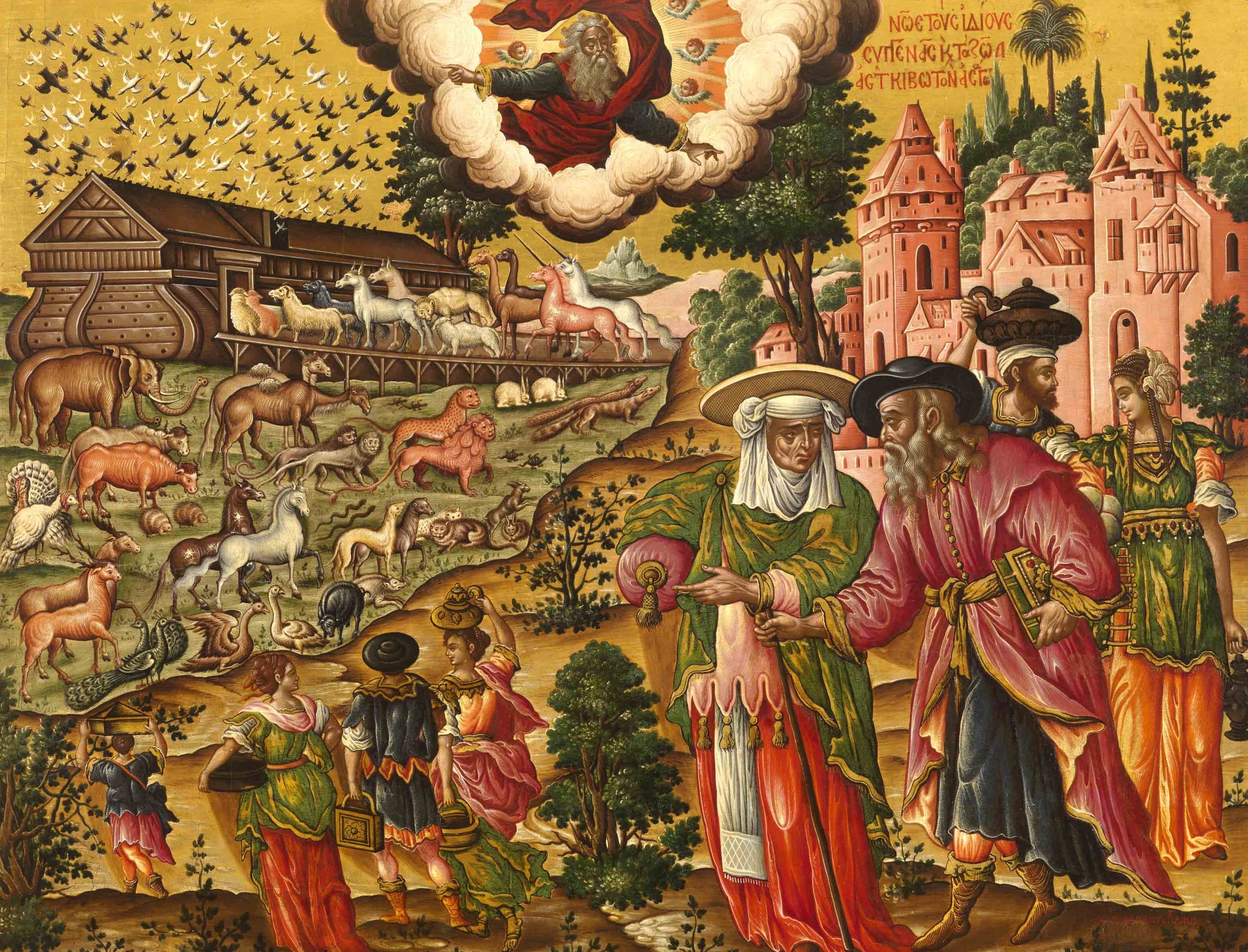
Noah’s Ark is an image of the Church – even during this terrible crisis.
Sexagesima Sunday and being preserved from the chastisement
In previous articles on the season of Septuagesima (or “Gesimatide”), we considered the purpose of this pre-Lent period, as well as its meaning.
Several liturgical commentators suggest that Septuagesima (rather than Advent) marks the beginning of the new liturgical year.1 The liturgical texts mark a sharp contrast with the Sundays after Epiphany – turning from a sense of having entered into the eternal Kingdom of God, to being lost in the wilderness of sin. When this is set in light of the Church beginning to read the Book of Genesis at Matins, Septuagesima evokes the state of fallen man prior to the Redemption of Christ.
This is most fitting as a preparation for Holy Week and Easter, as well as Lent itself. Gesimatide clarifies our reasons for doing penance: we fell from grace in Adam, and mankind compounded the situation by further personal sins.
We also previously discussed how Gesimatide also recalls the seventy years that the Jewish people spent exiled in Babylon, away from the Holy Land, and the sacrificial altar of the Temple. This “Babylonian Captivity” is itself an image of mankind’s state prior to the redemption of Christ. But more: it also represents our own state today, in the greatest crisis the Church has ever faced.
Having considered the season of Gesimatide in general, and Septuagesima Sunday in particular, let us now turn to the Sundays of Sexagesima and Quinquagesima.
The WM Review is free for readers. This is because we believe these ideas must reach as many people as possible.
However, we also provide WM+ articles – additional material for those who choose to support this work financially.
This helps us continue producing serious Catholic research, while ensuring that the main body of material remains accessible for all.
If you want to ensure that this continues, join WM+ today.
(Clergy and seminarians can contact us for free membership.)