

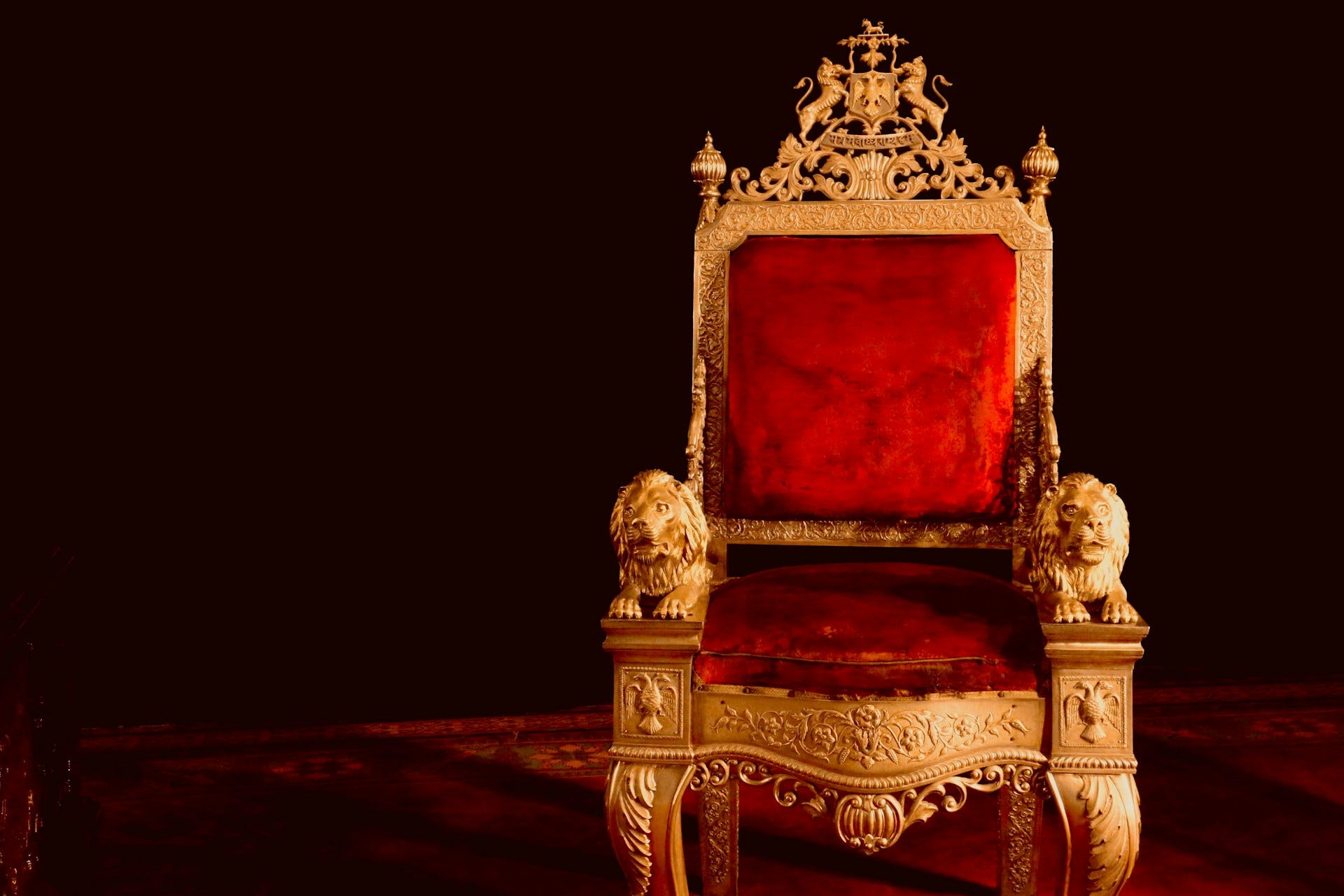
When there are two bodies claiming to be the Church, universality and continuity can identify the true one. But what if the other body is the one with the apparent Roman Pontiff?
Editors’ Notes
The following is a standalone supplement to Zero Marks, Chapters III and V – on Catholicity and Apostolicity.
In his magnum opus L’Eglise du Verbe Incarné (The Church of the Word Incarnate) Cardinal Charles Journet explains that apostolicity is a note of the Church in two ways, corresponding to two groups of men:
“Those who already believe that Christ and the Apostles brought the definitive religion to the world”, as Journet puts it
Those who do not know whether Christ and the Apostles did this.
For both groups, the note of apostolicity is a means of identifying the true Church. But both are groups of non-Catholics seeking to identify her from the outside.
For the last sixty years, Catholics have been driven to ask a different question: whether what emerged from Vatican II was the same Church, or something else. In 1988, Cardinal Joseph Ratzinger observed this phenomenon:
“All this leads a great number of people to ask themselves if the Church of today is really the same as that of yesterday, or if they have changed it for something else without telling people.”1
This is not exactly the question the theologians had in view in their treatment of the four notes. I have previously written:
“Our problem is not precisely identifying the true Church. We have already identified her: she is the Roman Catholic Church. Our problem is identifying where the Roman Catholic Church is, and who is and is not a member of her hierarchy. This distinction provides the key to the solution.”
And:
“However, the question at hand is not precisely ‘Which is the true Church’ – because all parties to this discussion recognise that it is the Roman Catholic Church. The question at hand, however, is this: ‘Where is the Roman Catholic Church, the true Church?’ No doubt the former question remains relevant, because we cannot locate the Church without regard for the criteria by which we know her to be the true Church. Nonetheless, these questions are distinct, and must be kept distinct in order to make sense of the crisis in the Church.
While the theological explanation of the notes is usually ordered towards proving the Catholic claims to non-Catholics, it remains important in answering the question currently under discussion.
To this end, we shall examine this extract from Cardinal Journet (‘Apostolicity as a Note’ pp. 532-538), in which he explains how to identify the true Church following a schism which results in two claimants.
About Cardinal Journet
Who was Cardinal Journet? Charles Journet was born in 1891, in Geneva, Switzerland. He began priestly studies in 1907, entering the Grand Séminaire of Fribourg in 1913, and receiving ordination in 1917. After about seven years of priestly ministry, he became a seminary professor of dogmatic theology in 1924. Even then, he was responsible for overseeing the reception of many converts, including those of significant societal standing.
Following several decades as a professor, he published The Church of the Word Incarnate in several volumes. For years, the first volume (The Apostolic Hierarchy – from which the text in question has been taken) was the only one translated into English.
Journet’s work had an important influence on Vatican II. It was influential on the development of the documents, and even cited in the preliminary drafts. At first, he was a peritus at the Council, but was later elevated to both the episcopate and the cardinalate in February 1965. This elevation is widely considered to have been motivated by Paul VI’s wish for Journet to contribute as a full member of the Council. Roger Nutt, in his Introduction to the new translation of Journet’s work, wrote the following:
“This was strategic on the part of Paul VI, who was preparing to lead the Church through the final session of the Council. Journet’s episcopal consecration and elevation to the College of Cardinals enabled him, per Pope Paul VI’s design, to take an active role in the final session, frequently working in close collaboration with the Pope himself.”
Journet played a mixed role at Vatican II, arguing both for the Church’s traditional teaching on the indissolubility of marriage, and for Vatican II’s novel and erroneous doctrine of religious liberty. Nutt continues:
“Often at the direct request of the Pope, Journet made a number of written interventions on the documents under consideration by the Council Fathers, and he gave two important speeches in Latin from the floor of the Council on the affirmation of matrimonial indissolubility in Gaudium et Spes and the proper understanding of the Church vis-à-vis the question of religious liberty as taken up in Dignitatis Humanae.”
The historian Roberto de Mattei considered this latter intervention to have been decisive:
“With a printed intervention that was decidedly Maritainian, he wanted to bring to bear in support of the declaration on religious liberty his authority as a theologian, asserting that it deserved the utmost approval: ‘Mihi videtur maxime approbanda.’”2
Mgr Joseph Clifford Fenton also criticised Journet’s work for obscuring the visibility of the Church on certain points. Nonetheless, even Fenton recognised that Journet had “given evidence of extraordinary erudition in his book.”3
It is therefore only with appreciative caution that we can approach Journet’s work.
Comments on the text
Schism and catholicity
When a schism or separation leads to two competing claimants, Journet first considers catholicity as a mean of identifying the true Church:
“[T]he Church of Christ is that where universality is found.”
I have explained elsewhere that the Conciliar/Synodal Church – the body of men which recognises the post-conciliar “popes” as their spiritual leaders, and are in good standing with him – has denied its own universality, by its explicit rejection of “catholicity de jure”.4 But even aside from this, Journet notes that there is more to universality than numbers alone:
“[I]t was not altogether impossible for the dissidents at a given moment to be more numerous than the faithful. […]
Geographical and numerical universality, the quod ubique, quod ab omnibus, will often be a fully sufficient criterion to mark the true Church and distinguish her from schism. […] However, because the true Church is mysterious in her essence and in the mode of her diffusion, it may happen in other circumstances—likely to become more and more common nowadays when errors, like truths, make the circuit of the world in a moment and insinuate themselves everywhere—that the criterion of universality will remain ambiguous […]”
How is this ambiguity to be clarified? Journet tells us:
“[The criterion of universality] will need to be supplemented by another; that, for instance, of fidelity to the faith of our fathers.”
The body which is not faithful to the faith of our fathers thus shows itself to be the false claimant.
However, Journet offers another means:
“Will [“the true sheep of Christ”] be recognizable by some sign distinguishing the true faithful from the false? Undoubtedly they will, granted that Christ confided His sheep to Peter, that He set Peter over His Church, and commanded him to confirm his brethren in the faith. The true faithful will be found amongst the faithful gathered round Peter; the true universality will be that of which Peter is the centre; where Peter is, there will be the Church.”
This may appear to run contrary to the positions maintained by this publication – namely, that Paul VI and his successors have lacked legitimacy as Popes, and that the “Conciliar/Synodal Church” is not the Catholic Church.5 But far from denying what Journet says, we affirm it, as I shall address below.
Innovation and continuity
The denial of catholicity de jure is not the only issue facing defenders of the Conciliar/Synodal Church. The “hierarchy” of this body has been open in its claims to have introduced changes to the Church’s teaching, worship and discipline – and any honest reading must recognise Vatican II as the inauguration of a revolution and new religion.
Journet approaches this issue in a similar way to schism and universality, stating that antiquity, or apostolicity of doctrine, is another means by which the true Church may be identified following a rupture and a contested innovation.
“The existence of a rupture may be proved also by innovation, whereby divine things are made to pass for human or human for divine, according as it adds to or takes away from the revealed deposit.”
He then explains that continuity with the doctrine of the apostles is the sign by which the true Church is identified from the false one:
“What has been divinely given to the world once and for all, ought to be kept without addition or subtraction. The supreme revelation, given by Christ and the Apostles, is not to be transformed. The definitive institutions coming from Christ are not to be replaced. Where we find antiquity there is the Church of Christ.”
However, as Journet stresses, what is important is continuity: “antiquity” is not the same as “antiquarianism.” He recognises, drawing on St Vincent of Lerins, that the revealed deposit may be brought to greater clarity over time, and that the implications of what was revealed may may constitute a true and legitimate “progress.” St Vincent of Lerins says:
“We must make this reservation however, that the progress shall be a genuine progress and not an alteration of the faith [profectus non permutatio]. We have progress when a thing grows and yet remains itself: we have alteration when a thing becomes something else.
However, he refers again to potential difficulties in applying this rule:
“The rule of antiquity excludes alteration, but not progress. And often, no doubt, it is easy to recognize alteration, innovation, transformation. But on other occasions, which the passage of time, it seems, will bring about more frequently, doubts may very well arise.
“Then the rule of antiquity will need to be supplemented by that of universality; and, in point of fact, the two rules are used together by St. Augustine and St. Vincent of Lerins.”
As with his treatment of catholicity, he explains how any ambiguity can be resolved with reference to the papacy:
“The continuity that is a mark of the truth will be that of the Church against which the gates of hell do not prevail and of the Churches in communion with her. The argument from antiquity taken as a mark of apostolicity thus becomes fully rigorous; but it is by resorting to the prophecies concerning Peter—the quod semper is made precise by the quod ab Ecclesia romana.”
Again, far from denying this, we affirm it.
Let us consider how these principles are to be applied in our time, in which the apparent Popes are on the side of doctrinal rupture.
Misunderstanding the terms of the question
The question before us is not whether the true Church is to be identified with “sedevacantists” on the one hand, or with “the Conciliar/Synodal Church” on the other.
On the contrary, the Catholic Church is the body of baptised men, professing the Catholic faith, and subject to legitimate pastors – when and if the latter are present. In other words, the Church is her members, rightly ordered.
This is important because the contention could be misunderstood as something more radical than it is. What I am contending is that the Conciliar/Synodal Church, taken as such, is not the Catholic Church, and that the men who have defected from the Catholic faith – including the alleged popes since the Second Vatican Council – are usurpers of the Holy See.
This does not exclude the possibility that many Catholics may remain bound up with this Conciliar/Synodal Church. When I speak of “we” with reference to the Church, I refer not only to those who share our analysis of the situation, but also:
Whoever is still a Catholic within the Conciliar/Synodal Church
Whoever is still a Catholic outside the Conciliar/Synodal Church, whilst claiming to recognise the legitimacy of the post-conciliar claimants to the papacy.
Such men may be materially involved with the Conciliar/Synodal Church (as many were materially involved with the false obediences of the Great Western Schism) and yet do not belong to it. They belong, instead, to the Catholic Church – even if they believe the Conciliar Church to be the Church, and reject our conclusions regarding the present situation.
Their catholicity is our catholicity. More importantly, “their” Holy See is “our” Holy See too.
Why is this the case?
The WM Review is free for readers. This is because we believe these ideas must reach as many people as possible.
However, we also provide WM+ articles – additional material for those who choose to support this work financially.
This helps us continue producing serious Catholic research, while ensuring that the main body of material remains accessible for all.
If you want to ensure that this continues, join WM+ today.
(Clergy and seminarians can contact us for free membership.)