
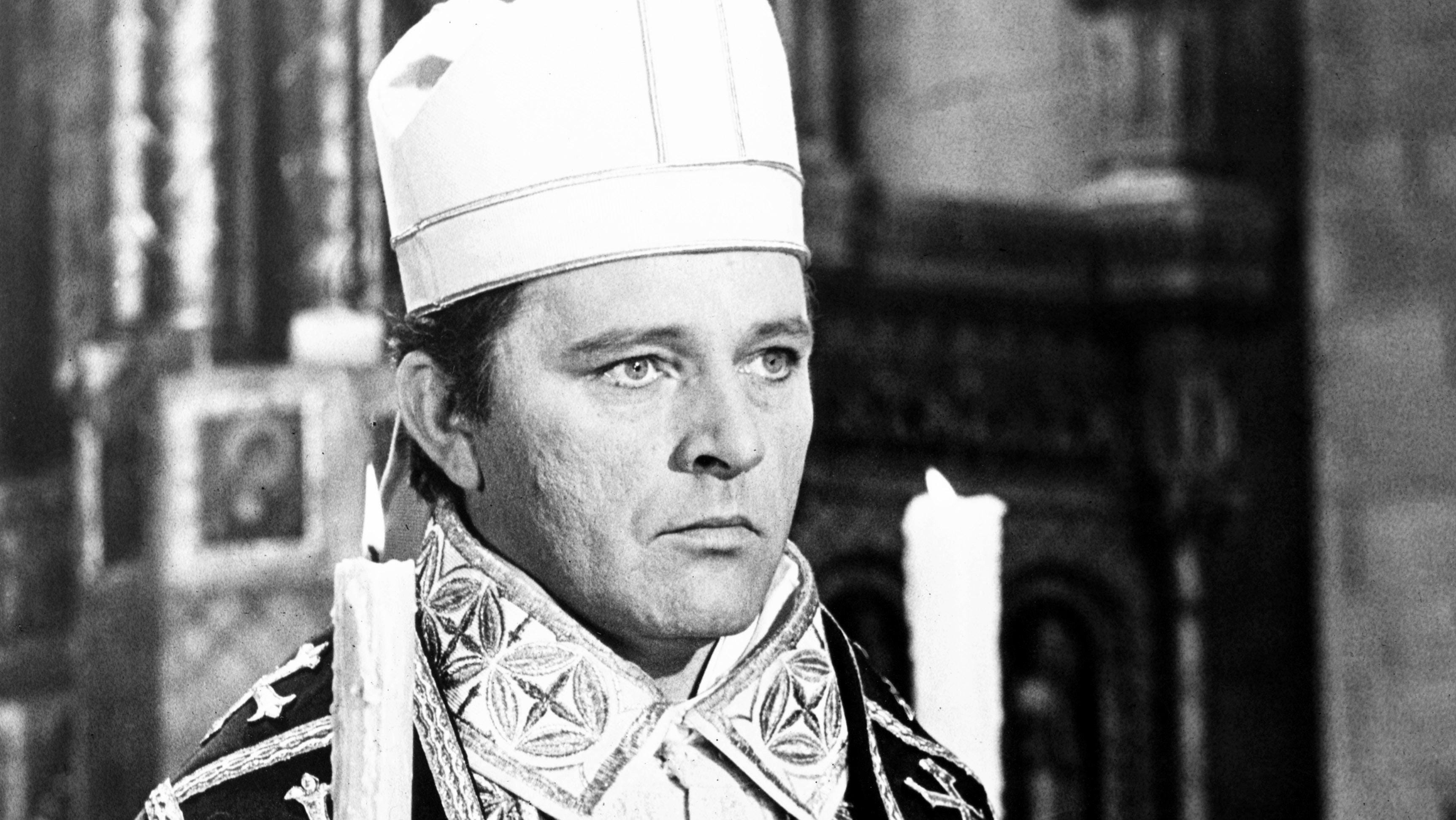
It is impossible to defend the liberty of the Church and the Kingship of Christ whilst simultaneously holding to the modern conception of religious liberty.
Editors’ Notes
In honour of the feast of St Thomas Becket of Canterbury, we are reproducing these reflections on his martyrdom for the liberty of the Church, as explained by Dom Prosper Guéranger.
Following Guéranger’s extract, I will explain how these great truths about the liberty of the Church are fundamentally denied by the concept of “religious liberty,” which has itself been condemned on multiple occasions by the popes and great Catholic authorities.
In addition, it should be clear that the liberty of the Church explained by Guéranger is in many ways equivalent to what we today call “the social reign of Christ the King.”
But as we shall see—even from Guéranger alone—it is absolutely impossible to hold to the traditional and orthodox ideas about the liberty of the Church and the social Kingship of Christ, whilst simultaneously holding to the modern conception of the liberty of religions or religious liberty.
This is explained in greater detail following Guéranger’s article.


St Thomas Becket, Archbishop of Canterbury
Martyr for the Liberty of the Church—December 29
Dom Prosper Guéranger
The Liturgical Year: Christmastide Vol. I
James Duffy, London, 1868, 339-350.
A new martyr at the crib
Another Martyr comes in today to take his place round the Crib of our Jesus. He does not belong to the first ages of the church: his name is not written in the Books of the New Testament, like those of Stephen, John, and the Innocents of Bethlehem.
Yet does he stand most prominent in the ranks of that Martyr-Host, which has been receiving fresh recruits in every age, and is one of those visible abiding proofs of the vitality of the Church, and of the undecaying energy infused into her by her divine Founder.
This glorious Martyr did not shed his blood for the faith; he was not dragged before the tribunals of Pagans or Heretics, there to confess the Truths revealed by Christ and taught by the Church. He was slain by Christian hands; it was a Catholic King that condemned him to death; it was by the majority of his own Brethren, and they his countrymen, that he was abandoned and blamed.
How, then, could he be a Martyr? How did he gain a Palm like Stephen’s? He was the Martyr for the Liberty of the Church.
The universal duty to defend the Faith
Every Christian is obliged to lay down his life rather than deny any of the Articles of our holy Faith: it was the debt we contracted with Jesus Christ when he adopted us, in Baptism, as his Brethren.
All are not called to the honour of Martyrdom, that is, all are not required to bear that testimony to the Truth, which consists in shedding one’s blood for it: but all must so love their Faith as to be ready to die rather than deny it, under pain of incurring the eternal death from which the grace of our Redeemer has already delivered us.
The same obligation lies still more heavily on the Pastors of the Church. It is the pledge of the truth of their teachings. Hence we find, in almost every page of the History of the Church, the glorious names of saintly Bishops who laid down their lives for the Faith they had delivered to their people.
It was the last and dearest pledge they could give of their devotedness to the Vineyard entrusted to them, and in which they had spent years of care and toil. The blood of their Martyrdom was more than a fertilizing element—it was a guarantee, the highest that man can give, that the seed they had sown in the hearts of men was, in very truth, the revealed Word of God.
Pastors and the liberty of the Church
But beyond the debt which every Christian has of shedding his blood rather than deny his Faith, that is, of allowing no threats or dangers to make him disown the sacred ties which unite him to the Church, and, through her, to Jesus Christ—beyond this, Pastors have another debt to pay, which is that of defending the Liberty of the Church.
To Kings and Rulers and, in general, to all Diplomatists and Politicians, there are few expressions so unwelcome as this of the Liberty of the Church; with them, it means a sort of conspiracy. The world talks of it as being an unfortunate scandal, originating in priestly ambition. Timid temporising Catholics regret that it can elicit anyone’s zeal, and will endeavour to persuade us that we have no need to fear anything, so long as our Faith is not attacked.
Notwithstanding all this, the Church has put upon her altars and associated with St. Stephen, St. John, and the Holy Innocents, this our Archbishop, who was slain in his Cathedral of Canterbury, in the 12th century, because he resisted a King’s infringements on the extrinsic Rights of the Church. She sanctions the noble maxim of St. Anselm, one of St. Thomas’ predecessors in the See of Canterbury: Nothing does God love so much in this world, as the Liberty of his Church; and the Apostolic See declares by the mouth of Pius the 8th, in the 19th century, the very same doctrine she would have taught by St. Gregory the 7th, in the 11th century:
The Church, the spotless Spouse of Jesus Christ the immaculate Lamb is, by God’s appointment, Free, and subject to no earthly power.1
What is the liberty of the Church?
But in what does this sacred Liberty consist?
It consists in the Church’s absolute independence of every secular power…
In the ministry of the Word of God, which she is bound to preach in season and out of season, as St. Paul says, to all mankind, without distinction of nation, or race, or age, or sex
In the administration of the Sacraments, to which she must invite all men, without exception, in order to the world’s salvation
In the practice, free from all human control, of the Counsels, as well as of the Precepts, of the Gospel
In the unobstructed intercommunication of the several degrees of her sacred hierarchy
In the publication and application of her decrees and ordinances in matters of discipline
In the maintenance and development of the Institutions she has founded
In the holding and governing her temporal patrimony
And lastly, in the defense of those privileges which have been adjudged to her by the civil authority itself, in order that her ministry of peace and charity might be unembarrassed and respected.
Such is the Liberty of the Church. It is the bulwark of the Sanctuary. Every breach there imperils the Hierarchy, and even the very Faith.
A Bishop may not flee, as the hireling, nor hold his peace, like those of dumb dogs, of which the Prophet Isaias speaks, and which are not able to bark.2 He is the Watchman of Israel: he is a traitor if he first lets the enemy enter the citadel and then, but only then, gives the alarm and risks his person and his life.
The obligation of laying down his life for his flock begins to be in force at the enemy’s first attack upon the very outposts of the City, which is only safe when they are strongly guarded.
Martyrdom as the Church’s guarantee
The consequences of the Pastor’s resistance may be of the most serious nature; in which event, we must remember a truth, which has been admirably expressed by Bossuet, in his magnificent Panegyric on St. Thomas of Canterbury, which we regret not being able to give from beginning to end:
“It is an established law,” he says, “that every success the Church acquires costs her the life of some of her children, and that in order to secure her rights, she must shed her own blood. Her Divine Spouse redeemed her by the Blood he shed for her; and he wishes that she should purchase, on the same terms, the graces he bestows upon her.
“It was by the blood of the Martyrs that she extended her conquests far beyond the limits of the Roman Empire. It was her blood that procured her both the peace she enjoyed under the Christian, and the victory she gained over the Pagan, Emperors. So that, as she had to shed her blood for the propagation of her teaching, she had also to bleed for the making her authority accepted.
“The Discipline, therefore, as well as the Faith, of the Church, was to have its Martyrs.”
Hence it was that St. Thomas, and the rest of the Martyrs for Ecclesiastical Liberty, never once stopped to consider how it was possible, with such weak means as were at their disposal, to oppose the invaders of the rights of the Church.
One great element of Martyrdom is simplicity united with courage; and this explains how there have been Martyrs amongst the lowest classes of the Faithful, and that young girls, and even children, can show their rich Palm-branch. God has put into the heart of a Christian a capability of humble and inflexible resistance, which makes every opposition give way. What, then, must that fidelity be, which the Holy Ghost has put into the souls of Bishops, whom he has constituted the Spouses of his Church, and the defenders of his beloved Jerusalem?
“St. Thomas,” says Bossuet, “yields not to injustice, under the pretext that it is armed with the sword, and that it is a King who commits it; on the contrary, seeing that its source is high up, he feels his obligation of resisting it to be the greater, just as men throw the embankments higher when the torrent swells.”
The blood of martyrs and the Church’s strength
But the Pastor may lose his life in the contest! Yes, it may be so—he may possibly have this glorious privilege. Our Lord came into this world to fight against it and conquer it—but he shed his blood in the contest, he died on a Cross. So likewise were the Martyrs put to death.
Can the Church, then, that was founded by the Precious Blood of her Divine Master, and was established by the blood of the Martyrs—can she ever do without the saving laver of blood, which reanimates her with vigor, and vests her with the rich crimson of her royalty?
St. Thomas understood this: and when we remember how he labored to mortify his flesh by a life of penance, and how every sort of privation and adversity had taught him to crucify to this world every affection of his heart, we cannot be surprised at his possessing, within his soul, the qualities which fit a man for martyrdom—calmness of courage, and a patience proof against every trial. In other words, he had received from God the Spirit of Fortitude, and he faithfully corresponded to it.
“In the language of the Church,” continues Bossuet, “Fortitude has not the meaning it has in the language of the world. Fortitude, as the world understands it, is the undertaking great things; according to the Church, it goes not beyond the suffering every sort of trial, and there it stops.
“Listen to the words of St. Paul: Ye have not yet resisted unto blood; as though he would say: ‘You have not resisted your enemies unto blood.’ He does not say, ‘You have not attacked your enemies and shed their blood;’ but, ‘Your resistance to your enemies has not yet cost you your blood.’
“These are the high principles of St. Thomas; but see how he makes use of them. He arms himself with this sword of the Apostle’s teaching, not to make a parade of courage, and gain a name for heroism, but simply because the Church is threatened, and he must hold over her the shield of his resistance.
“The strength of the holy Archbishop lies not, in any way, either in the interference of sympathizers, or in a plot ably conducted. He has but to publish the sufferings he has to patiently borne, and odium will fall upon his persecutor: certain secret springs need only to be touched by such a man as this, and the people would be roused to indignation against the King! but the Saint scorns both plans.
“All he has on his side is the prayer of the poor, and the sighs of the widow and the orphan: these, as St. Ambrose would say, these are the Bishop’s defenders, these his guard, these his army! He is powerful, because he has a soul that knows not either how to fear or how to murmur. He can, in all truth, say to Henry, King of England, what Tertullian said, in the name of the whole Church, to a magistrate of the Roman Empire, who was a cruel persecutor of the Church: We neither frighten thee, nor fear thee:3 we Christians are neither dangerous men, nor cowards; not dangerous, because we cannot cabal, and not coward, because we fear not the sword.”
A sacrifice for the Church’s liberty
Our Panegyrist proceeds to describe the victory won for the Church by her intrepid Martyr of Canterbury. We can scarcely be surprised when we are told that during the very year in which he preached this eloquent Sermon, Bossuet was raised to the episcopal dignity. We need offer no apology for giving the following fine passage.
“Christians! give me your attention. If there ever were a Martyrdom which bore the resemblance to a Sacrifice, it was the one I have to describe to you. First of all, there is the preparation: the Bishop is in the Church with his Ministers, and all are robed in the sacred Vestments.
“And the Victim? The Victim is near at hand—the Bishop is the Victim chosen by God, and he is ready. So that all is prepared for the Sacrifice, and they that are to strike the blow enter the Church.
“The holy man walks before them, as Jesus did before his enemies. He forbids his Clergy to make the slightest resistance, and all he asks of his enemies is that they injure none of them that are present: it is the close imitation of his Divine Master, who said to them that apprehended them: If it be I whom ye seek, suffer these to go their way.
“And when all this had been done, and the moment for the sacrifice was come, St. Thomas begins the ceremony. He is both Victim and Priest—he bows down his head, and offers the prayer. Listen to the solemn prayer, and the mystical words, of the sacrifice:
And I am ready to die for God, and for the claims of justice, and for the Liberty of the Church, if only she may gain peace and Liberty by this shedding of my blood!4
“He prostrates himself before God: and as in the Holy Sacrifice there is the invocation of the Saints our Intercessors, Thomas omits not so important a ceremony; he beseeches the Holy Martyrs and the Blessed Mary ever a Virgin to deliver the Church from oppression.
“He can pray for nothing but the Church; his heart beats but for the Church; his lips can speak nothing but the Church; and when the blow has been struck, his cold and lifeless tongue seems still to be saying: The Church!”
The fruits of his martyrdom
Thus did our glorious Martyr, the type of a Bishop of the Church, consummate his sacrifice, thus did he gain his victory; and his victory will produce the total abolition of the sinful laws which would have made the Church the creature of the State, and an object of contempt to the people.
The tomb of the Saint will become an Altar; and at the foot of that Altar there will one day kneel a penitent King, humbly praying for pardon and blessing. What has wrought this change? Has the death of Thomas of Canterbury stirred up the people to revolt? Has his Martyrdom found its avengers?
No. It is the blood of one, who died for Christ, producing its fruit. The world is hard to teach, else it would have long since learned this truth—that a Christian people can never see with indifference a Pastor put to death for fidelity to his charge; and that a Government that dares to make a Martyr will pay dearly for the crime.
Modern diplomacy has learned the secret; experience has given it the instinctive craft of waging war against the Liberty of the Church with less violence and more intrigue—the intrigue of enslaving her by political administration. It was this crafty diplomacy which forged the chains wherewith so many Churches are now shackled, and which, be they ever so gilded, are insupportable.
There is but one way to unlink such fetters—to break them. He that breaks them will be great in the Church of heaven and earth, for he must be a Martyr: he will not have to fight with the sword, or be a political agitator, but simply, to resist the plotters against the Liberty of the Spouse of Christ, and suffer patiently whatever may be said or done against him.
The power of the Church in weakness
Let us give ear once more to the sublime Panegyrist of our St. Thomas: he is alluding to this patient resistance, which made the Archbishop triumph over tyranny.
“My Brethren, see what manner of men the Church finds rising up to defend her in her weakness, and how truly she may say with the Apostle: When I am weak, then am I powerful.5 It is this blessed weakness which provides her with invincible power, and which enlists in her cause the bravest soldiers and the mightiest conquerors this world has ever seen—I mean, the Martyrs.
“He that infringes on the authority of the Church, let him dread that precious blood of the Martyrs, which consecrates and protects it.”
Strength drawn from the crib
Now, all this Fortitude, and the whole of this Victory, come from the Crib of the Infant Jesus: therefore it is that we find St. Thomas standing near it, in company with the Protomartyr Stephen.
Any example of humility, and of what the world calls poverty and weakness, which had been less eloquent than this of the mystery of God made a Little Child, would have been insufficient to teach man what real Power is.
Up to that time, man had no other idea of power than that which the sword can give, or of greatness than that which comes of riches, or of joy than such as triumph brings: but when God came into this world and showed himself weak and poor and persecuted—everything was changed.
Men were found who loved the lowly Crib of Jesus, with all its humiliations, better than the whole world besides: and from this mystery of the weakness of an Infant God they imbibed a greatness of soul which even the world could not help admiring.
The legacy of St. Thomas’ martyrdom
It is most just, therefore, that the two laurel-wreaths of St. Thomas and St. Stephen should intertwine round the Crib of the Babe of Bethlehem, for they are the two trophies of his two dear Martyrs.
As regards St. Thomas, divine Providence marked out most clearly the place he was to occupy in the Cycle of the Christian Year by permitting his martyrdom to happen on the day following the Feast of the Holy Innocents; so that the Church could have no hesitation in assigning the 29th of December as the day for celebrating the memory of the saintly Archbishop of Canterbury.
As long as the world lasts, this day will be a Feast of dearest interest to the whole Church of God; and the name of Thomas of Canterbury will be, to the day of judgment, terrible to the enemies of the Liberty of the Church, and music breathing hope and consolation to hearts that love that Liberty, which Jesus bought at the price of his Precious Blood.
The account given by the Divine Office
We will now listen to this dear Mother of ours, the Church, who gives us, in her Divine Office, a short history of the life and sufferings of St. Thomas.
“Thomas was born in England, in the city of London. He succeeded Theobald as Bishop of Canterbury. He had previously acquitted himself with much honor as Chancellor, and was strenuous and unflinching in his duty as Bishop; for when Henry 2nd, King of England, in an assembly of the Bishops and Nobles of the realm, passed certain laws inconsistent with the interests and the honor of the Church, the Bishop withstood the King’s avarice so courageously, that neither fair promises nor threats could draw him over to the King’s side, and, being in danger of imprisonment, he privately withdrew.
“Not long after, all his relatives young and old, all his friends, and household, were banished, and such of them, as had attained the age of discretion, were made to promise on oath that they would go to Thomas, as perhaps he, who could not be made to swerve from his holy purpose, by any personal consideration, might relent at the heart-rending spectacle of the sufferings of them who were dear to him.
“But he regarded not the demands of flesh and blood, neither did he permit the feelings of natural affection to weaken the firmness required of him as Bishop.
“He, therefore, repaired to Pope Alexander 3rd, from whom he met with a kind reception, and who commended him, on his departure, to the Cistercian Monks of Pontigny. As soon as Henry came to know this, he strove to have Thomas expelled from Pontigny, and, for this purpose, sent threatening letters to the General Chapter of Citeaux.
“Whereupon, the holy man, fearing lest the Cistercian Order should be made to suffer on his account, left the Monastery of his own accord, and betook himself to the hospitable shelter to which he had been invited by Louis, King of France. There he remained, until, by the intervention of the Pope and Louis the King, he was called home from his banishment, to the joy of the whole kingdom.
“While resuming the intrepid discharge of the duty of a good Shepherd, certain calumniators denounced him to King Henry as one that was plotting sundry things against the country and the public peace. Wherefore, the King was heard frequently complaining, that there was only one Priest in his kingdom with whom he could not be in peace.
“Certain wicked satellites excluded from this expression of the King, that he would be pleased at their ridding him of Thomas. Accordingly, they stealthily enter Canterbury, and finding the Bishop was in the Church, officiating at Vespers, they began their attack.
“The Clergy were using means to prevent them from entering the Church, when the Saint, coming to them, forbade their opposition, and, opening the door, thus spoke to them: The Church is not to be guarded like a citadel, and I am glad to die for God’s Church. Then turning to the soldiers, he said: I command you, in the name of God, that you hurt not any of them that are with me.
“After this, he knelt down, and commending his Church and himself to God, to the Blessed Mary, to St. Denis, and to the other Patron Saints of his Cathedral, with the same courage that he had shown in resisting the King’s execrable laws, he bowed down his head to the impious murderers, on the Fourth of the Calends of January (December 29th), in the Year of our Lord 1171.
“His brains were scattered on the floor of the entire Church. God having shown the holiness of his servant by many miracles, he was canonized by the same Pope, Alexander III.”
From The Catholic Encyclopaedia
An immense number of miracles were worked, and for the rest of the Middle Ages the shrine of St. Thomas of Canterbury was one of the wealthiest and most famous in Europe.
The martyr's holy remains are believed to have been destroyed in September, 1538, when nearly all the other shrines in England were dismantled; but the matter is by no means clear, and, although the weight of learned opinion is adverse, there are still those who believe that a skeleton found in the crypt in January, 1888, is the body of St. Thomas.6
Collect
O God, in defence of whose Church the glorious Pontiff Thomas fell by the swords of wicked men: grant, we beseech thee, that all who implore his assistance, may find comfort in the grant of their petition.
From Dom Prosper Guéranger’s The Liturgical Year.
Afterword:
Why the modern doctrine of religious liberty is a betrayal of Becket’s legacy
The below was originally for WM+ subscribers. We are making it available for all readers in honour of this feast.
Vatican II's infamous Dignitatis Humanae claimed, contrary to the teaching of various popes:
“2. This Vatican Council declares that the human person has a right to religious freedom. This freedom means that all men are to be immune from coercion on the part of individuals or of social groups and of any human power, in such wise that no one is to be forced to act in a manner contrary to his own beliefs, whether privately or publicly, whether alone or in association with others...”
But there is a caveat which comes immediately after that ellipsis:
“… within due limits.”
The text continues:
“2. […] The council further declares that the right to religious freedom has its foundation in the very dignity of the human person as this dignity is known through the revealed word of God and by reason itself.
“This right of the human person to religious freedom is to be recognized in the constitutional law whereby society is governed and thus it is to become a civil right.”
As noted, these ideas contradict Catholic teaching. But this is not the point at present. Let’s continue with the text
“2. […] The exercise of this right is not to be impeded, provided that just public order be observed."
“3. […] Injury therefore is done to the human person and to the very order established by God for human life, if the free exercise of religion is denied in society, provided just public order is observed.”
“4. […] Provided the just demands of public order are observed, religious communities rightfully claim freedom in order that they may govern themselves according to their own norms, honor the Supreme Being in public worship, assist their members in the practice of the religious life, strengthen them by instruction, and promote institutions in which they may join together for the purpose of ordering their own lives in accordance with their religious principles.”
Conservative defenders of Dignitatis Humanae may point to phrases such as the following:
“1. […] Therefore [This Vatican Council] leaves untouched traditional Catholic doctrine on the moral duty of men and societies toward the true religion and toward the one Church of Christ.”
“3. […] it would clearly transgress the limits set to its power, were it to presume to command or inhibit acts that are religious.”
But we must be clear. All the ideas expressed in the above text by Guéranger—that the Church is immune from interference by the civil power; that she is sovereign in her sphere and exercise of her mission; that civil society must conform itself to the law of Gospel—all these ideas are tacitly abandoned, at least in practice or by implication.
In effect, the liberty of the Church—which English law enshrined as the first principle of Magna Carta; for which St Thomas Becket, along with Ss Thomas More, John Fisher and the Cristeros all died; which was taught by the popes; and which is a certain doctrine of the faith—this liberty of the Church is abandoned for a mess of pottage: the liberty of religions in general.
Once this exchange has taken place, and the Church’s activity is conceded to be subject to “just limits of public order” along with that of all other religions, who do we seriously think is going to judge what the “just limits of public order” are?
Who exactly is going to judge what the limits of just public order require in a concrete event, except politicians and policemen?
The lockdowns and the liberty of the Church
Consider the situation in the years 2020-22, when at various times the civil authorities of the world lumped the Church of Christ together with all the false sects, and claimed the right and power to limit her activity along with theirs.

For example, on 23 March 2020, UK Prime Minister Boris Johnson made the following remarks during his statement announcing the coronavirus lockdown:
To ensure compliance with the Government’s instruction to stay at home, we will immediately:
close all shops selling non-essential goods, including clothing and electronic stores and other premises including libraries, playgrounds and outdoor gyms, and places of worship;
we will stop all gatherings of more than two people in public – excluding people you live with;
and we’ll stop all social events, including weddings, baptisms and other ceremonies, but excluding funerals.
The response of the alleged diocesan bishops and the Catholic Bishops Conference of England and Wales (CBCEW) of the United Kingdom was a shocking acquiescence.
It is one thing to obey an unjust law under protest. It is another thing to consent to it.
Similarly it is one thing for the Church herself to suspend her own public worship. It is another thing for the state to do so.
It is yet another thing for the Church to meet this interference with silence, or with protests that are so inadequate as to be, in fact, concessions of the basic principle. For example, the various public statements of Cardinal Nichols and Archbishop McMahon (President and Vice-President of the CBCEW) were worse than silence, as they accepted principles that contradicted the doctrine of the liberty of the Church.
For example:
They argued that “Faith communities have played a vital role” in this period7—and thus allowed the Church of Christ to be “placed ignominiously on the same level” with false religions (Pius XI – Encyclical Quas Primas 24)
They asked the Government to provide “evidence that justifies the cessation of acts of public worship”—and in asking for this evidence without protest, they thus implicitly conceded the civil authority’s right to legislate such matters
Philip Egan of Portsmouth Diocese wrote a letter to the Prime Minister, asking that services be allowed to continue—and while his letter includes some Catholic elements, it was ultimately also a request, based on man’s need for spiritual things and the nourishment from God8
Mark Davies of Shrewsbury Diocese gave a statement to his own flock, talking of “the vital role which public worship has for the well-being of hundreds of thousands of people in this Shrewsbury Diocese.” He emphasised how public worship is the source of “support for the most vulnerable and countless charitable activities in the service of the common good”—and grouped the Sacrifice of the Mass “together with faith communities across the nation”.9
Examples of such concessions could be multiplied, and they occurred across the whole world.
This period also saw many die without the possibility of the sacraments, due to priests being barred or obstructed from visiting the dying in hospital and at home.
The coronavirus period was very strange for everyone, but it was still possible to express at least verbal dissent and to profess the relevant principles without being killed or imprisoned.
As such, the maxim silence implies consent definitely applied, especially as time went on.
Thankfully, while it was the responsibility of the alleged diocesan bishops to speak out against this travesty, some bishops and priests still had a sense of the supernatural during this period.
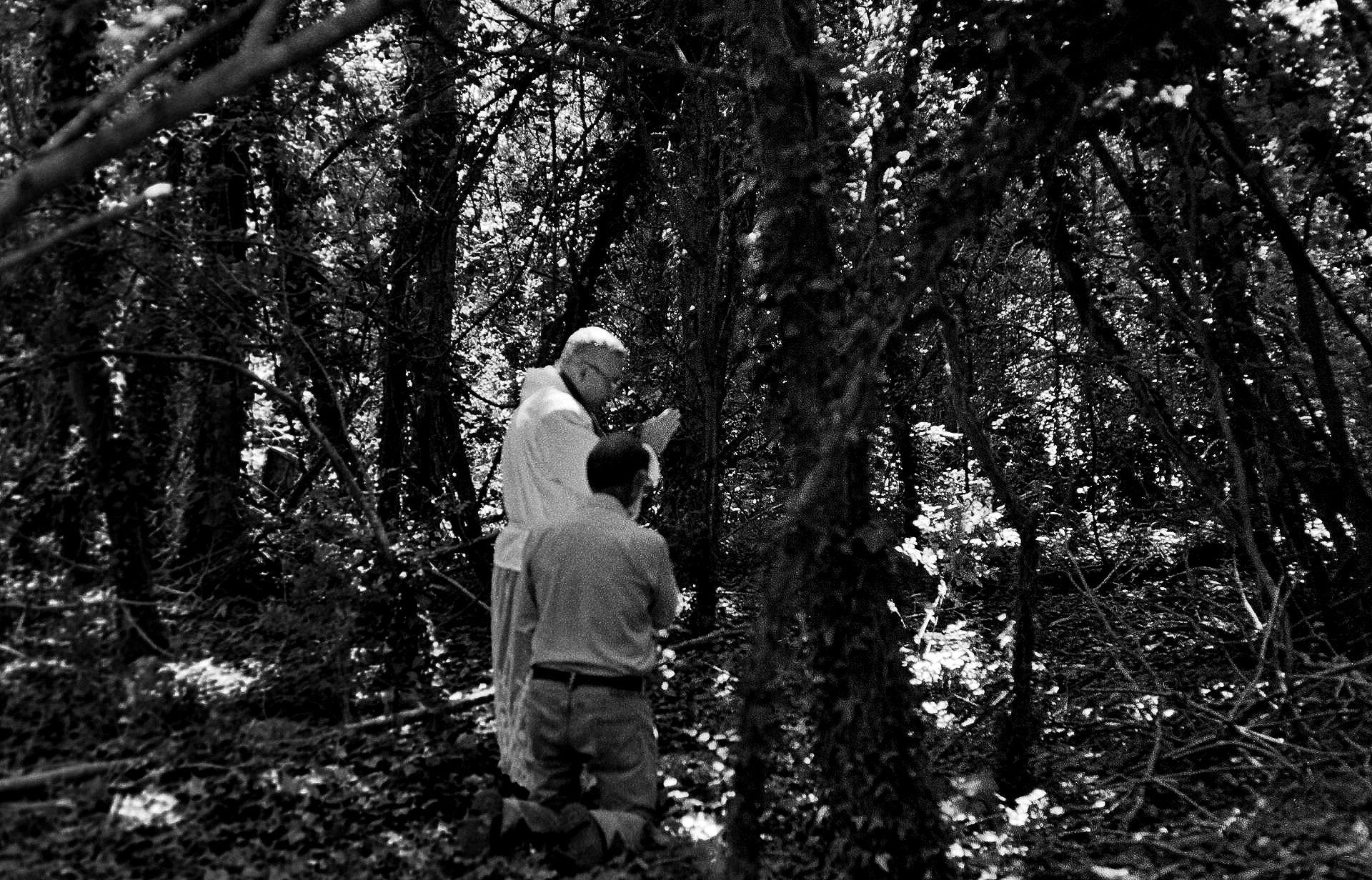
Last rites—the last priority
In 2021, Catholic politician Sir David Amess MP was murdered by Ali Harbi Ali, in Leigh-on-Sea, Essex. Fr Jeffrey Woolnough, a priest of the Anglican Ordinariate, arrived on the scene to administer the last rites. Woolnough told LifeSiteNews:
“I told one police officer ‘if he is dying, I need to anoint him,’” said Woolnough, recounting that the same police officer did in fact radio his team to ask whether the priest could be allowed in, and waited for a reply which unfortunately came back negative: “I’m really sorry Father, but they can’t let you in,” the police officer said.
Woolnough speculated that the police may have had safety concerns for him in the midst of an ongoing terrorist attack, or that Amess was already dead and that forensics teams were already present when the request was made.
In a society built on naturalism, it is entirely predictable that the supernatural will be treated as optional, non-essential and something which can be accommodated as the last possible priority.
It is no good saying that politicians or policemen are unjust, inhumane or wrong for all this if one has already conceded that the Church’s life and mission are subject to the limits of just public order. Those limits will necessarily be decided by politicians in principle and policemen in practice.
Conclusion
This is precisely what Pope Pius XI warned about in his encyclical Quas Primas. This encyclical was on the Kingship of Christ, and it should be clear that this “social reign of Christ the King” is in many ways equivalent to the liberty of the Church.
In this encyclical, Pius XI noted the following trajectory towards ruin:
The rejection of Christ’s Kingship itself, “the empire of Christ over all nations,” which leads to…
The rejection of the liberty of the Church, “the right which the Church has from Christ himself, to teach mankind, to make laws, to govern peoples in all that pertains to their eternal salvation,” which leads to…
The imposition of religious liberty and indifferentism, namely, the process by which “the religion of Christ came to be likened to false religions and to be placed ignominiously on the same level with them,” which leads to…
The subjection of the Church to “the power of the state [leaving her] tolerated more or less at the whim of princes and rulers,” which leads to…
The promotion of naturalism, “a natural religion consisting in some instinctive affection of the heart”. Which ultimately leads to…
Atheism and atheistic states, which hold that they “could dispense with God, and that their religion should consist in impiety and the neglect of God.”
This is why St Thomas Becket cannot possibly be said to have died for religious liberty.
When the liberty of the Church and Christ’s Kingship over society are abandoned, it should not be surprising that the State encroaches into the power vacuum which appears. If those purporting to be our shepherds do not defend the immunity and liberty of the Church, we cannot be surprised to find that the state subjects her to its power, interferes with her life and even suppresses her altogether.
For this reason, we should be clear. Churches closed due to a health crisis; grandparents and parents dying alone, surrounded by strangers and without a priest; policemen preventing us from receiving the last rites after having been fatally stabbed; and who knows what else… Together, these abominations constitute the true face of Vatican II and its false doctrine of religious liberty.
Let those who want to defend Vatican II or attack traditionalists look that squarely in the face.
S.D. Wright
Read next:

See also: Religious Liberty – The Failed Attempts To Defend Vatican II
HELP KEEP THE WM REVIEW ONLINE!
As we expand The WM Review we would like to keep providing free articles for everyone.
Our work takes a lot of time and effort to produce. If you have benefitted from it please do consider supporting us financially.
A subscription gets you access to our exclusive WM+ material, and helps ensure that we can keep writing and sharing free material for all.
You can see what readers are saying over at our Testimonials page.
(We make our WM+ material freely available to clergy, priests and seminarians upon request. Please subscribe and reply to the email if this applies to you.)
Subscribe to WM+ now to make sure you always receive our material. Thank you!
Follow on Twitter, YouTube and Telegram:
Libera est institutioue divina, nullique obnoxia terrense potestati Ecclesia intemerata sponsa immaculati Agni Christi Jesu. Litterae Apostolicae ad Episcopos Provinciae Rhenanae, 30 Junii 1830.
Isaiah 56:10
Non te terremus, qui nec timemus.
Et ego pro Deo mori paratus sum, et pro assertione justititae, et pro Ecclesiae Libertate; dummodo effusione sanguinis mei pacem et Libertatem consequatur
2 Corinthians 12:10
Thurston, H., ‘St. Thomas Becket.’ In The Catholic Encyclopedia (1912), New York: Robert Appleton Company.
https://www.cbcew.org.uk/wp-content/uploads/sites/3/2020/11/faith-leaders-letter-pm-places-worship-covid-secure-031120.pdf
https://www.portsmouthdiocese.org.uk/coronavirus
https://icksp.org.uk/shrewsbury/second-lockdown-a-statement-from-the-rt-rev-mark-davies-the-bishop-of-shrewsbury/
The analysis at the end is insightful. Most critiques of the Vatican 2 concept of religious liberty have rightfully focused on the granting of a "right" to believe, practice, and preach false religious doctrines. But by flipping the perspective and focusing on the "within due limits" and "just public order" clauses, you demonstrate that these principles are also opposed to the true liberty of the Church, because they grant the implicit right of civil authority to restrict the Church's activity in the interest of maintaining "just public order." Well done!