
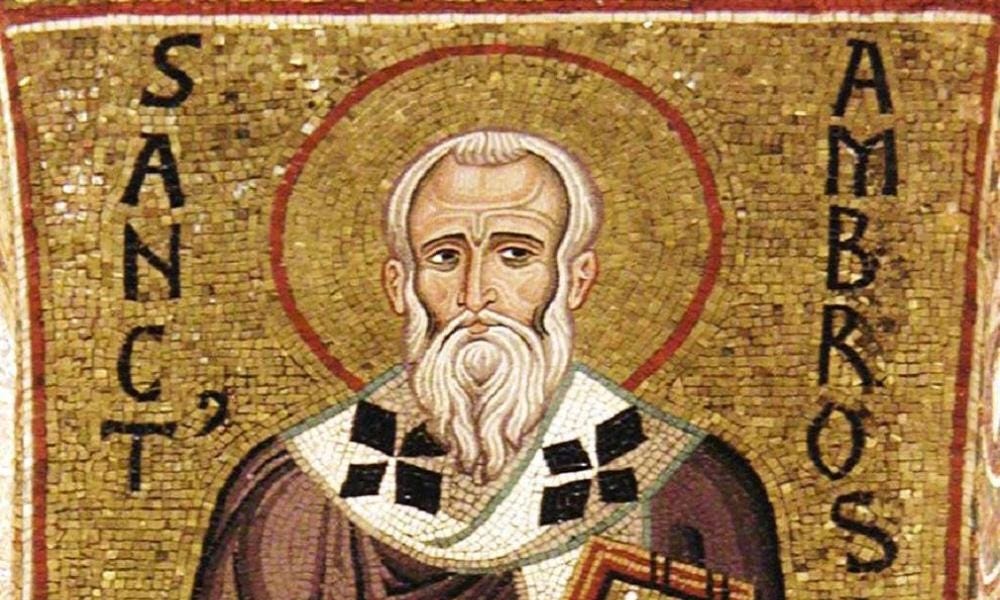
Did you know that the Quartodecimans did not celebrate what we call Easter on the day of the Jewish Passover? But what they did do is very revealing.
Editor’s Notes
We continue here our translation of Fr Gabriel Daniel SJ’s treatment of the practice of the Quartodecimans – a group which fell out of the Church following the Council of Nicaea. (For more information about the Quartodecimans, and Fr Daniel, see Part I.)
This treatment was originally published by Fr Daniel as a companion piece to his translation of Fray Luis de León’s “system” for calculating the dates of Holy Week, and harmonising the four Gospels with each other and with the Roman liturgy.
In this part, we reproduce Fr Daniel’s Fourth Proposition – which runs contrary to how this early controversy is reported in history books:
“The Quartodecimans celebrated the Resurrection on the third day after the fourteenth of the moon.”
Although they were wrong to persist in their practice after the Church had adopted a uniform method of dating Easter, their tradition and its apostolic roots helps resolve an apparent difficulty in the Gospels.
While an extended essay on a very early group of heretics may seem like a strange choice for Holy Week reading, it is directly related to the Church’s celebration of the Passion and Resurrection of Christ – and, if Fr Daniel is correct, it not only makes sense of some apparent discrepancies in the Gospels, but also sheds further light on how the Resurrection fulfils the Mosaic Law, as we shall see in due course.
This is an important text – but it is long and theological, rather than devotional. For a more devotional piece about Maundy Thursday, see the below:

Note on the text
The text contains a number of marginal notes, which I have omitted.
Fr Daniel’s argument is that confusion has arisen through the use of terms for various feasts. In French, he uses Pâques to denote the Passover, Easter and the Quartodeciman observation of the Passion on the 14th day of the Jewish month of Nissan. As such, the author’s own usage can be quite confusing itself. In order to bring more clarity, I have used Passover to denote the Jewish festival, Easter to denote the celebration of the Resurrection, and Pascha to indicate either the period of the Triduum or earlier uses in which the meaning was less clear.
The Discipline of the Quartodecimans for the Celebration of Pascha
Fr Gabriel Daniel SJ
Articles VI-VII
Taken from Recueil de divers ouvrages philosophiques, théologiques, historiques, Apologetiques et de Critique, Vol. III, MDCCXXIV, pp 473-508
The real timeline of the Last Supper and the Crucifixion (Fray Luis de León)
How an ancient controversy unlocks the Gospels’ Holy Week timeline (Fr Gabriel Daniel SJ)
How the Quartodecimans celebrated ‘Pascha’ (Fr Gabriel Daniel SJ)
How the early Easter disputes are misunderstood by historians (Fr Gabriel Daniel SJ)
Article VI
Fourth Proposition: The Quartodecimans celebrated the Resurrection on the third day after the fourteenth of the moon
This proposition is a conclusion of all that I have said so far. According to the protest of Bishop Polycarp on behalf of the bishops of Asia, the discipline of the Quartodecimans in this matter followed exactly the order of the evangelical history for the ceremonies of the Paschal period and the celebration of the mysteries. However, the Resurrection of the Savior occurred on the third day after the fourteenth of the moon, and therefore, they celebrated the Resurrection on the third day after the fourteenth; unless it is said that they did not observe this feast at all – of which they were never accused, and would never have failed to be accused, considering that the mystery of the Resurrection was always celebrated everywhere, since the birth of the Church.
But I prove this conclusion not only by such an evident reasoning as that which I have just made; I also have two proofs taken from history. The first is what Saint Epiphanius says in the tenth chapter on the heresy of the Audians, of which I spoke of in the previous article. He says that the so-called Apostolic Constitutions followed by these heretics ordained that Christians keep a vigil in the middle of the days of unleavened bread. We know that Christians held these vigils in the Church on the nights of great feasts, and they are still held today in the Churches of the East. None of those ancient writers who spoke of the devotions practiced by Christians to prepare for the day of the Resurrection failed to mention this; it is unnecessary to bring in testimonies, as it is so well established. Now, what was this vigil that the Apostolic Constitutions ordained Christians to observe in the middle of the days of unleavened bread, if not the one by which the Quartodeciman Christians prepared for the feast of the Resurrection, according to the ceremonies used for this occasion by all Christians?
The days of unleavened bread began on the fourteenth of the moon and ended on the twenty-first. This vigil of the feast of the Resurrection was held on the third day after the fourteenth [viz., the evening before by our reckoning]; hence it was the vigil of the Resurrection.
My other proof is taken from the decree of Pope Victor, along with all the particular Councils that were convened at that time on the celebration of Easter, which were later confirmed by the Council of Nicaea. It was resolved, Eusebius says, that the feast of the Resurrection was not solemnized on any day other than Sunday. Therefore, the Quartodecimans, against whom the decree was directed, were in fact celebrating this feast on days other than Sunday. This often happened, because they based the feast of the Resurrection on the day of their Pascha, which varied every year and sometimes fell on a Monday, other times on a Tuesday, etc.; and therefore, on this basis, they celebrated the feast of the Resurrection sometimes on Thursday, sometimes on Friday, etc. The reason for that decree and the custom of the Churches was that Our Lord rose on the day after the Sabbath, that is, Sunday. The reason for the Quartodecimans and their custom was that Our Lord rose on the third day after Pascha, that is, after the fourteenth of the moon. Thus, each had, in the Gospel, the foundation of tradition and their custom, and that was what always made concord on this subject difficult until the Council of Nicaea.
What I am about to add concerning the practices of the Novatians and of certain others in this regard will shed further light on all that I have said up to now.
Article VII
On the customs of the Novatians and some other sects, regarding the celebration of Pascha and the Resurrection of Our Lord
Since the Quartodeciman practice had something plausible about it, and seemed founded on good tradition and the Gospel, a part of the Novatian sect judged it appropriate to accommodate themselves to it. Recounting how Socrates and Sozomen narrate the subject, I will interpret the Greek text in my own way, and I believe in accordance with the truth; then I shall make some reflections on that to which other interpreters have deemed necessary to attend.
When Novatian separated from the Roman Church, he did not fail to follow the rite of this church in the celebration of Pascha, and his followers imitated him until the time of Emperor Valentinian I. Under this emperor, some Novatian bishops from Phrygia, who held a council in a village called Pazo near the source of the Sangarius River, met and decided that the time when the Jews celebrated their unleavened bread should be considered, and Pascha should be celebrated at the same time as them. The bishops who made this decree were few and not very notable.
Some years later, a certain Sabbatius, who had converted from Judaism to Christianity and then to Novatianism, and who had been elevated to priesthood, desired to become a bishop. A continuing inclination towards Jewish ceremonies, combined with his ambition, made him consider renewing the canon of the Synod of Pazo, and he made petitions to that effect. When the Novatian bishops learned of his intentions, they gathered a council in Angar in Bithynia and summoned him there. They asked him what kind of displeasure he had against the Novatian church and what he intended by a kind of faction he seemed to be forming. He replied that he was scandalized by the diversity he saw among them regarding the celebration of Pascha and that it should be observed as the Jews did and as resolved in the Synod of Pazo.
The bishops of the council presumed, regardless of what he said, that he aimed for the Episcopate, and proposed that he take an oath never to aspire to this dignity; he did not dare refuse this oath and took it immediately. At the same time, the bishops issued a decree which they called the decree of indifference, declaring that observing the feast of Pascha at one time or another was indifferent; that this diversity was not a sufficient reason to cause a schism in the Church; and that everyone could, without prejudice to concord, act as they saw fit.
From that moment, Sabbatius followed a completely unique method for celebrating the Easter feasts.
“In truth, he continued to follow the Jews regarding the timing of Pascha, and therefore always anticipated the time of the Paschal fast, except when the Jews and Christians celebrated Passover and Pascha at the same time. Thus, he fasted and secretly celebrated Pascha according to the Law, but on Saturday, when the common faithful were preparing for the feast of the Resurrection, he kept vigil and engaged in other pious exercises from the night, and the next day he attended church along with the others and participated in the holy mysteries. At first, no one noticed everything he was doing, but over time it became known, and he had several imitators, especially in Phrygia and Galatia, who maintained this custom from then on. Finally, despite his oath, he consented to be elected Bishop by those who had followed his example.”
Mr. Vallois, in his notes on this passage, draws this conclusion:
“It follows from all this,” he says, “that Sabbatius celebrated two Paschas each year: one with the Jews, and another with the Christians.”
The conclusion is evident, but not in the sense that this learned critic understands it, for he did not celebrate twice the feast we now call Easter or the Resurrection, but performed twice and at two different times what the other Quartodecimans did all at once. First, he observed the Paschal fast, and ended it by celebrating Pascha, that is, holding the Paschal feast on the night of the fourteenth of the moon. This is what Socrates and Sozomen explicitly point out. Then, finally, on Saturday night of the week when the other Novatians who followed the custom of the Roman Church, he began to solemnize the feast of the Resurrection; and, as I said, he attended the services with them, and the next day participated in the sacred mysteries. This was the strange way he devised to somehow conform to both parties, and this was Sabbatius’ unique method mentioned by Socrates and Sozomen.
Anyone who reads the above-cited texts of Socrates, Nicephorus Callistus, and the Epiphanius the Scholastic with this idea in mind will see that all three agree perfectly with Sozomen, and that the corrections Mr. Vallois wants to make to the text of these three authors are not only unnecessary but even contrary to their intent. They say very clearly what they mean, and the difficulties he raises come only from ordinary prejudice.
Let us continue reading the texts of Socrates and Sozomen:
“Some, in Asia Minor,” says Socrates, “observe Pascha on the fourteenth; others, further east, observe it on the Sabbath of the feast.”
That is to say, those opposed to the Quartodecimans wanted the Sabbath to be part of the days that made up the Paschal feast, according to the style of the Roman Church and most other churches. For, as Saint Augustine says in his letter to Januarius:
“Pay attention to this sacred interval of three days in which the Lord was crucified, buried, and resurrected; this is what the authority of the divine Scriptures and the consensus of the Church dispersed throughout the earth teach us; this is what we celebrate every year at the Paschal feast. And see, there is a great mystery in it. It is true that in the Old Testament Scriptures, the precept of Pascha specifies only the month of the first fruits from the fourteenth of the moon to the twenty-first; however, since we know from the Gospel the days on which the Lord was crucified, remained in the tomb, and rose again, the Councils of the Fathers ordered that those days also be taken into account, and all agreed that this is how the Paschal feast should be solemnized.”
We can observe the same in the epistle that Saint Ambrose wrote to the bishops of Emilia about the celebration of Easter. The essential difference between the Quartodecimans and the other Christians was this: the latter celebrated Pascha on Friday, Saturday, and Sunday, culminating this feast with the joy of the Resurrection; the former only considered the fourteenth of the moon, regardless of the day it fell on, and used the name Pascha only to signify the fourteenth of the moon, linking this name exclusively to that day. This is what Saint Epiphanius says of the Quartodeciman Cataphrygians:
“They celebrate Pascha on one day.”
And, he says that the Catholics, on the contrary, celebrated this feast for seven days, that is, all of Holy Week.
“Except for them (the followers of Sabbatius),” says Sozomen, “as well as the Asians called Quartodecimans, all other sects celebrate Pascha like Rome and Alexandria. But regarding the Novatians, they observe Resurrection Sunday, but still follow the Jews and fall into the same practice as the Quartodecimans unless Sunday is the fourteenth of the moon.”
“The Montanists,” he continues “who are called Pepuzians and Phrygians, have another very extraordinary way of celebrating Pascha. They count the days of the first month designated by Scripture for observing the Passover from March 23, the day they believe the sun and moon were created, and fix the fourteenth on April 5, always celebrating Pascha on that day. If the fourteenth falls on a Sunday, then they celebrate this feast the following Sunday, because they say it is written that Passover is to be observed from the fourteenth to the twenty-first.”
Mr. Vallois, after using Sozomen’s text, made some changes to this passage without making it much more intelligible. But no changes were necessary, and this is Sozomen’s thought:
That the Novatians he speaks of followed the Jews and observed their Pascha on the fourteenth of the moon, celebrating the Passion of Christ [Good Friday] at that time, thus falling into the same practice as the Quartodecimans; but they also observed Resurrection Sunday – that is, they only celebrated the Resurrection on Sunday, the day the Lord rose, in agreement with other Christians.
That if the fourteenth of the moon fell on a Sunday, they did not observe Pascha that day, even though the Jews did, but postponed it; the reason they gave was that the fourteenth of the moon was one of fasting until nightfall, in all churches; but that Christians were prohibited from fasting on Sunday. Thus, they celebrated Pascha, that is, the Resurrection, the following Sunday, and the Pascha of the Passion accordingly, undoubtedly on Friday.
“In this way,” says Sozomen, “there was as much difference between their Pascha and the one the Jews had celebrated the previous Sunday, as there was between the fourteenth of the moon and the following Sunday.”
The difficulty of this passage is that Sozomen sometimes uses the name Pascha to signify the day of the Passion [Good Friday], and other times the day of the Resurrection, speaking sometimes according to the use of the Quartodecimans and other times according to the use of other churches.
The Montanists, according to the same Sozomen, postponed their Pascha in the same way and for the same reason. The right they claimed to postpone it was based on these words of Scripture (“From the fourteenth day until the twenty-first”), taking these two days as the terms within which they could vary for the celebration of Pascha.
All this is confirmed by a very similar reasoning made by Saint Ambrose in his letter to the Bishops of Emilia, about the celebration of Pacha, where, following the doctrine and customs of the Catholics, he reasons entirely like the heretics:
“We must follow this rule,” he said, “that the fourteenth day should not be the day of the Resurrection but rather the day of the Passion or one of the preceding days, because the solemnity of the Resurrection must be observed on Sunday; but we cannot fast on Sunday, as we condemn the Manicheans who fast on that day.
“To fast on the day of the Resurrection implies not believing in the Resurrection of Jesus Christ. As the Law says, the Passover must be eaten with bitterness, meaning with sorrow – due to the sacrilege committed in the death of the Author of Salvation. Conversely, the prophet teaches us that we must rejoice on Sunday when he says: ‘This is the day that the Lord has made; let us rejoice and be glad in it’ (Psalm 118:24). Therefore, we must observe both the day of the Passion and the day of the Resurrection; let one be a day of bitterness and the other a day of joy; let us fast on one and regain our strength on the other. So that if it happens, as it sometimes will, that the fourteenth day of the moon falls on a Sunday – a day on which it is not permitted either to fast or to break one’s fast – when the thirteenth day of the moon falls on a Saturday (for one must fast throughout the whole day of the Passion), then, I say, the solemnity of Easter must be deferred to the following week.”
And further down:
“It was declared… that the Passion could not be observed on Sunday, and that if the fourteenth of the moon fell on that day, it was necessary to let a week pass, etc.; thus we celebrate Pascha on the twenty-first of the moon – that is, the day to which it is permitted to defer it.”
It seems to me that this passage from Saint Ambrose helps us greatly to understand the discipline of the Novatians and Montanists, who, concerning Pascha, partly followed the Quartodecimans and the Jews, and partly the Catholics. Sozomen distinguishes them from the Quartodecimans in that they celebrated the Resurrection on Sunday, and says that they fall into the same practice as those schismatics because they followed the Jews by maintaining the fourteenth of the moon – which they nevertheless disregarded if the fourteenth fell on a Sunday, and postponed the feast of the Resurrection to the following Sunday. The Chronicle of Alexandria expresses itself in the same manner as Saint Ambrose and the Novatians I have just mentioned:
“If the fourteenth of the moon,” says the author of the Chronicle, “falls on a Sunday, then we, disciples of the Catholic Church, postpone the feast to the following Sunday.”
Now I will make a reflection on the translation Mr. Vallois and the other interpreters made of this passage. They translate the Greek as “Novatiani celebrant diem Resurrectionis” and then “si in eundem diem inciderit Resurrectionis dies.” My reflection is that in both passages they translated diem Resurrectionis instead of translating as they should: Diem Dominicam, as every Sunday was called the “day of the Resurrection” – because Our Lord rose on that day. Hence, Epiphanius the Scholastic, who translated Sozomen into Latin eleven centuries ago at the request of Cassiodorus, translated the second passage with the words Dies Resurrectionis, adding as an explanation Dominicam Diem.
What I am saying, then, is that the circumstances of the matter should have led modern translators to use the word Dies Dominica, for in the first passage, Sozomen contrasts the Novatians with the Quartodecimans in that they always included a Sunday in the Easter celebration, which the Quartodecimans did not do; just as Socrates told us earlier, opposing the Asians to Christians further east, that the latter always included a Saturday in the Paschal solemnity (and the Saturday and Sunday are the same here, as Saint Augustine, Saint Ambrose, and Saint Epiphanius have told us); while the Quartodecimans celebrated Pascha on any day upon which the fourteenth of the moon fell; and while they had only one day of Pascha, the rest of the Church always included Friday, Saturday, and Sunday in Pascha.
The same applies to the second passage of Sozomen. The Montanists of which he spoke celebrated the Resurrection on Sunday like the Novatians, although they had fixed their Pascha, that is, the feast of the Passion [Good Friday], on April 5 – which was, according to them, the fourteenth of the first month. They always celebrated it on that day, except when it fell on Sunday, and not only when it fell on the day of the Resurrection, as the new interpreters of Sozomen translate. They had no special reason not to celebrate their Pascha on the day other Christians celebrated the Resurrection, but they had a reason common to all Sundays; namely that they fasted on that day until nightfall, like the Quartodecimans, which was not permitted on Sunday. Therefore, it should not have been translated: “if it falls on the day of the Resurrection”, which distorts the meaning, but “on Sunday,” which is the true meaning.
To be continued.
Read Next:
The real timeline of the Last Supper and the Crucifixion (Fray Luis de León)
How an ancient controversy unlocks the Gospels’ Holy Week timeline (Fr Gabriel Daniel SJ)
How the Quartodecimans celebrated ‘Pascha’ (Fr Gabriel Daniel SJ)
How the early Easter disputes are misunderstood by historians (Fr Gabriel Daniel SJ)


HELP KEEP THE WM REVIEW ONLINE WITH WM+!
As we expand The WM Review we would like to keep providing free articles for everyone.
Our work takes a lot of time and effort to produce. If you have benefitted from it please do consider supporting us financially.
A subscription gets you access to our exclusive WM+ material, and helps ensure that we can keep writing and sharing free material for all.
You can see what readers are saying over at our Testimonials page.
And you can visit The WM Review Shop for our ‘Lovely Mugs’ and more.
(We make our WM+ material freely available to clergy, priests and seminarians upon request. Please subscribe and reply to the email if this applies to you.)
Subscribe to WM+ now to make sure you always receive our material. Thank you!
Follow on Twitter, YouTube and Telegram:
Twitter (The WM Review)
Based text of translation made with the assistance of AI and each line scrutinised and checked against the French text.
Is it Fr Daniel Gabriel or Fr Gabriel Daniel? You seem to have it both ways in this series!