

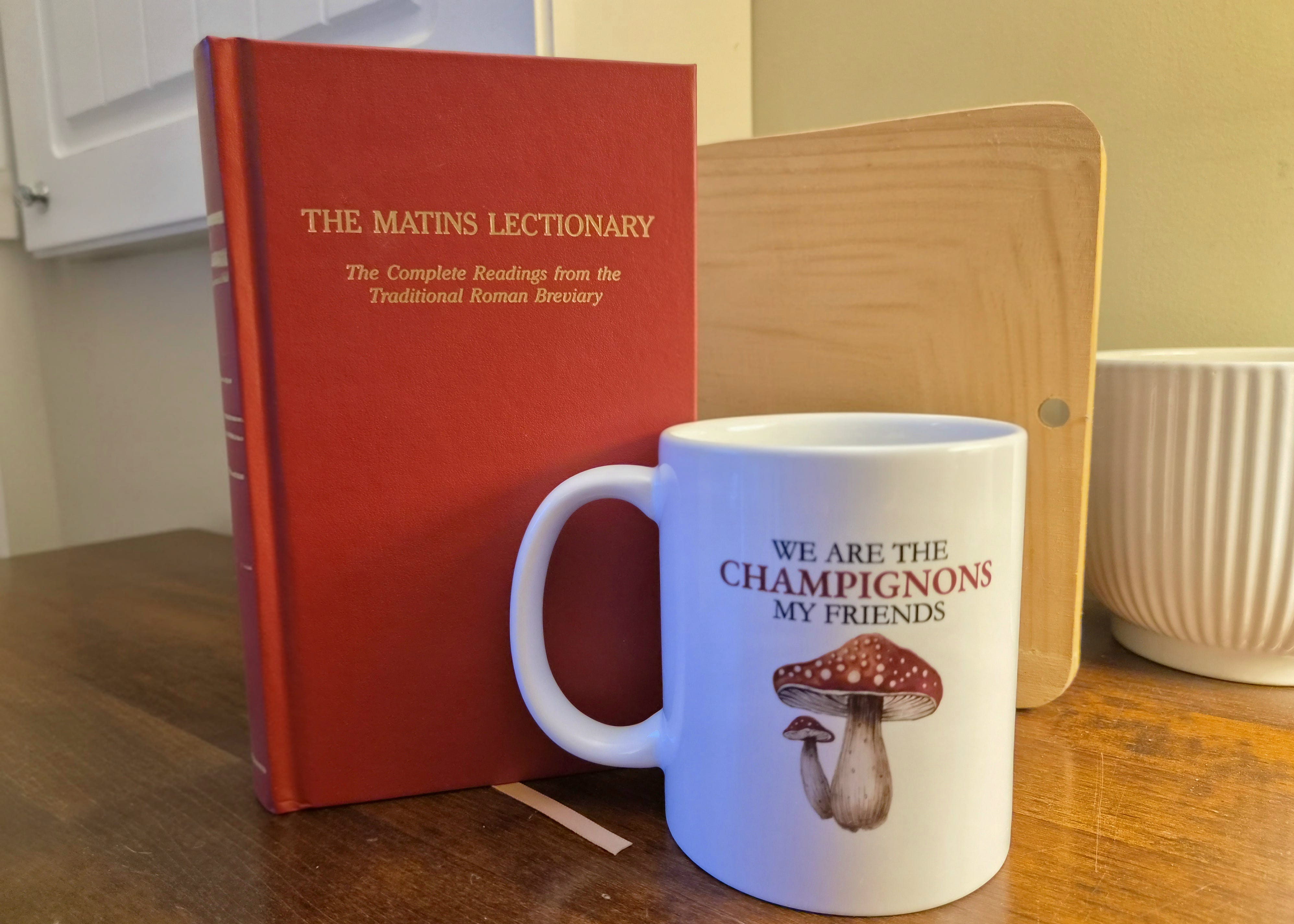
The Matin Lectionary from Tan offers ‘the Church’s spiritual reading’ in full, in a single handy little volume.
(WM Round-Up) – Earlier in the week, I published the following article about the preparation for Christmas which The WM Review is currently running:
If you want to join with this, the best way to do so is by joining The WM Review’s Telegram Channel:
I am also pleased to announce the “relaunch” of Father Coleridge Reader, after a brief hiatus. We will be focusing on Fr Coleridge’s Preparation of the Incarnation over the next few weeks of Advent. Here’s the first part of the new series:
Make sure you subscribe to Father Coleridge Reader in order to receive these short posts – which we aim to keep at around 1,200–1,500 words a piece:
Not to overload you with too many devotions and ideas… I’d also like to present the following book, published this year, as a companion for Advent and the whole liturgical year.
The Matins Lectionary
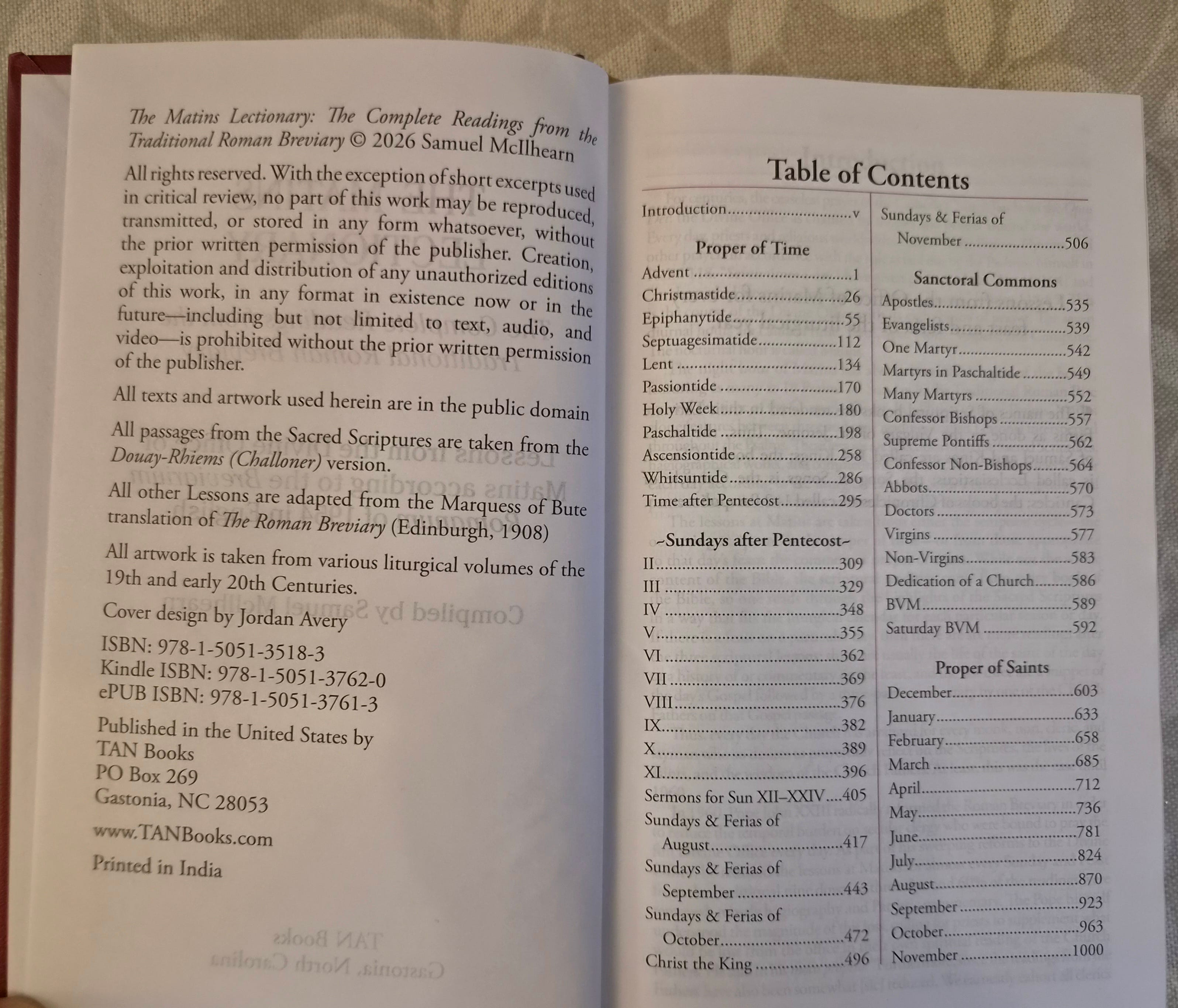
Compiled by Samuel McIlhearn, and published by TAN Books, The Matins Lectionary: The Complete Readings from the Traditional Roman Breviary brings together every lesson from the Office of Matins into one volume.
You can get it here:
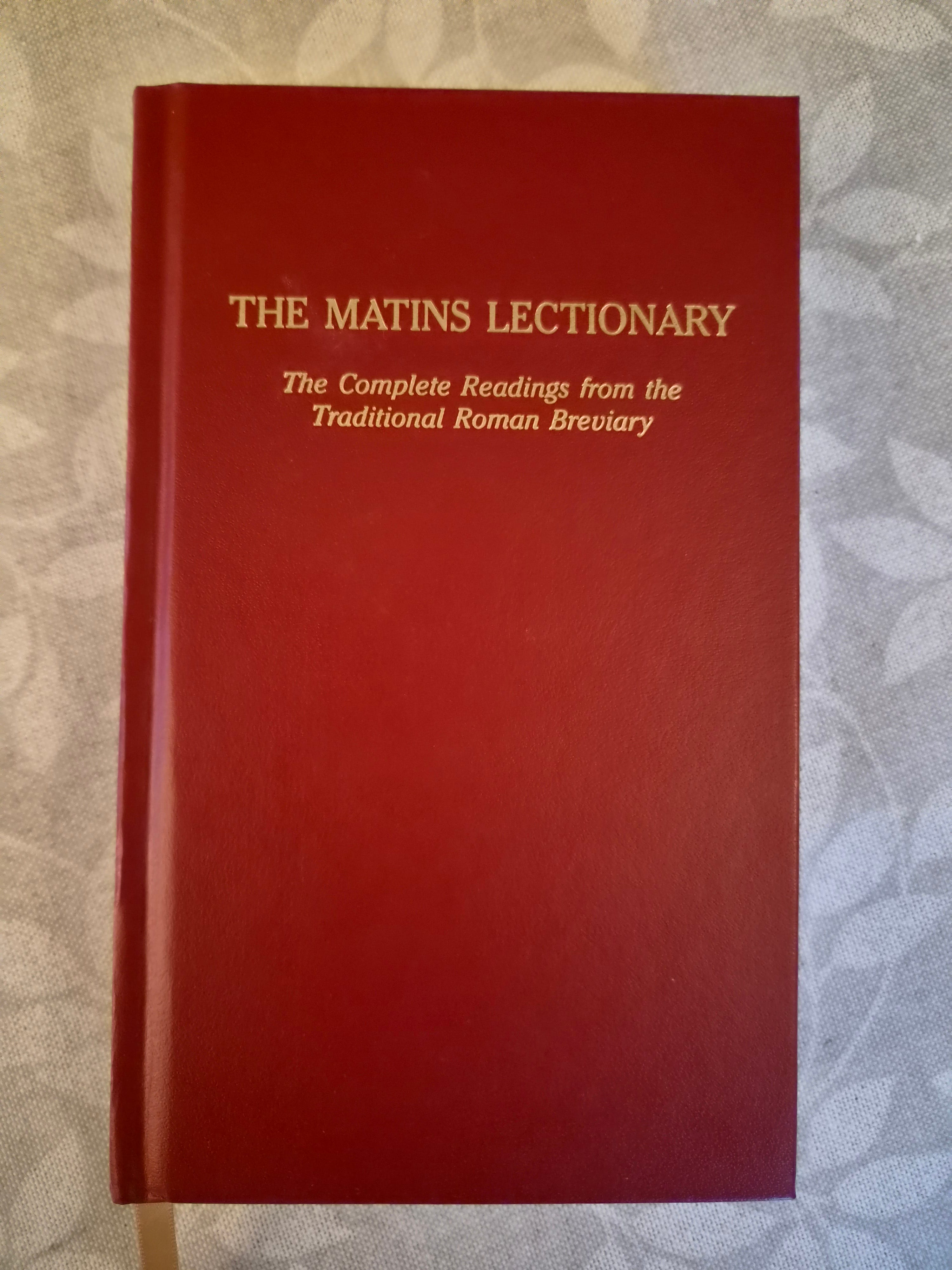
Matins is the vigil part of the Divine Office, containing more psalms than any of the other hours, and between three and nine readings or “lessons”.
The lessons in the book are as they stood in 1954. Let me give you an idea of how this works for the first few weeks of Advent.
On Sundays, you have nine (three sets of three) readings: three sections from Isaias, and six readings making up two Patristic sermons.
On weekdays, you have three readings from Isaias, which is read semi-continuously throughout the season (and other books of Holy Scripture are reading a similar way throughout the year)
On saints days, you will have between one or more readings on the life of the saint, as well as references to readings in the Common of the Saints.
During the octaves, there are continuing readings on the feasts in question.
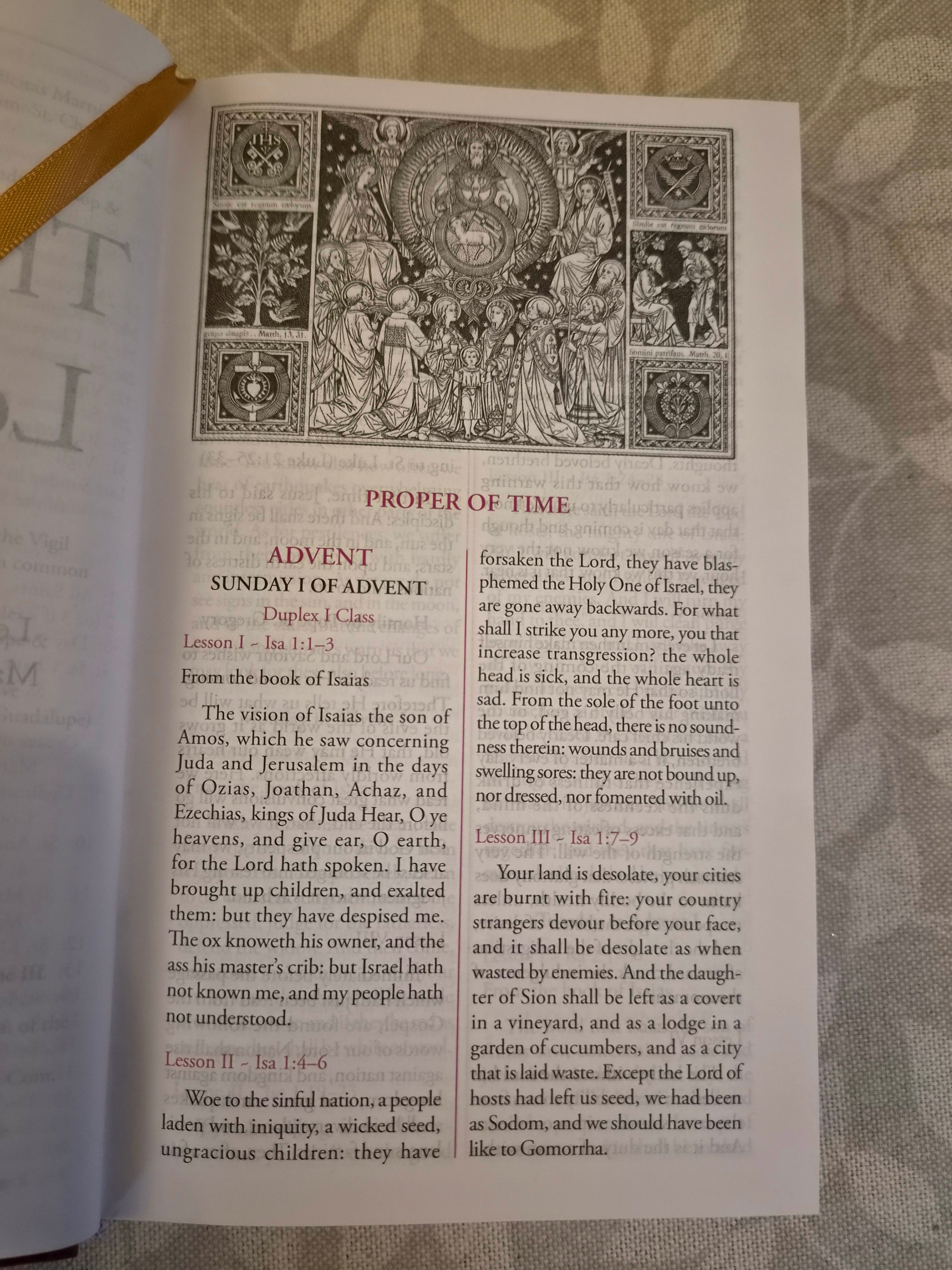
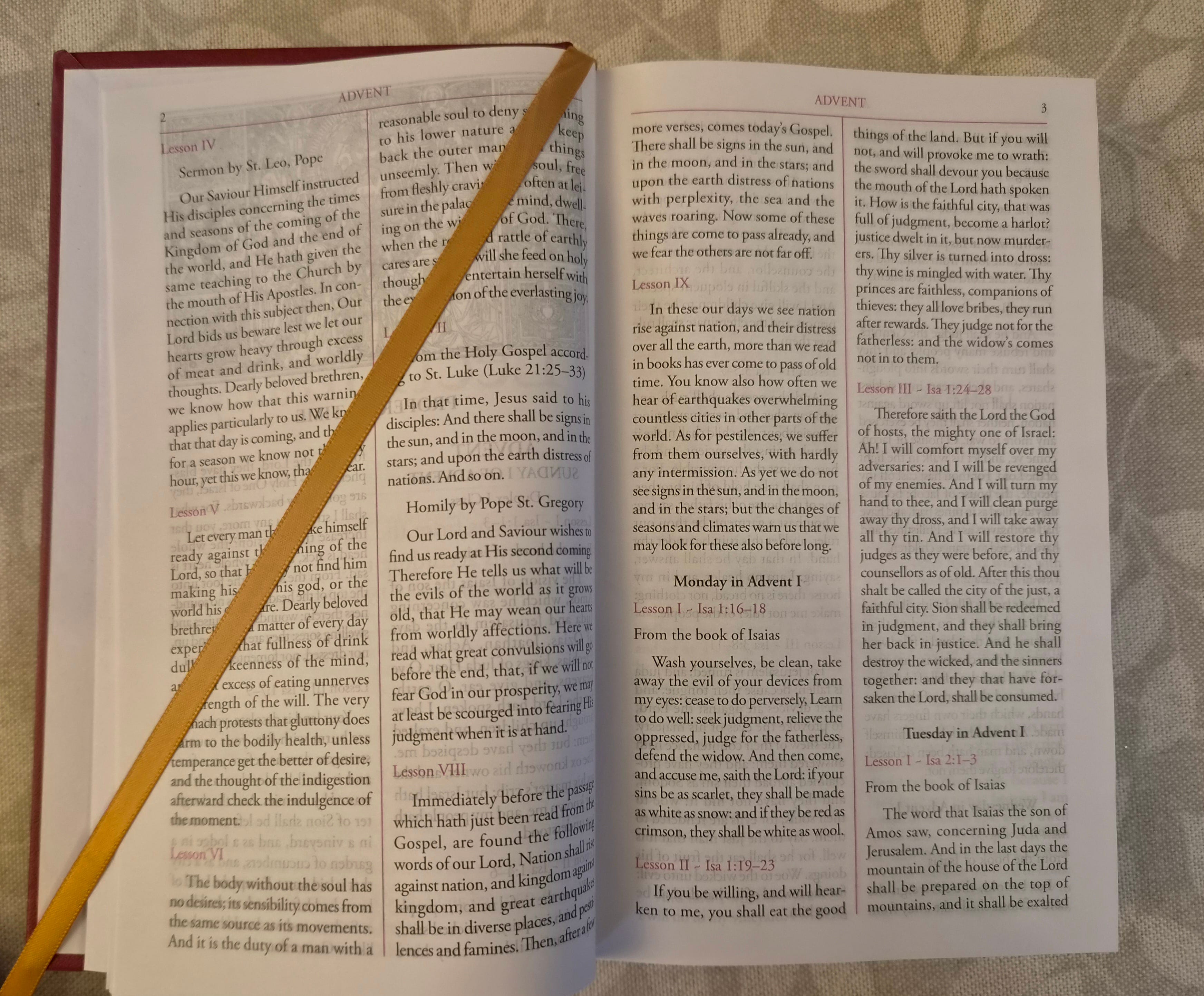
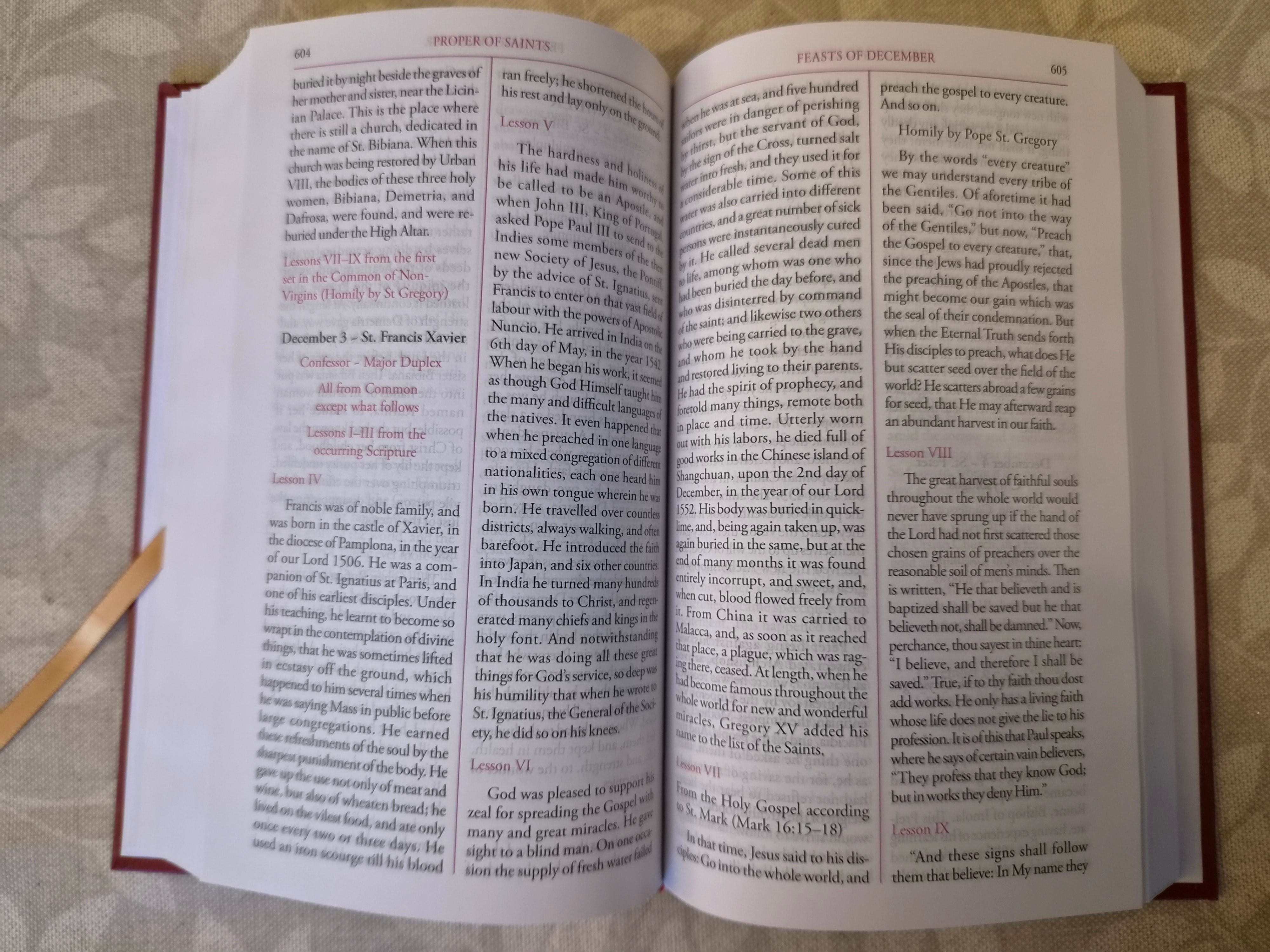
Basically, you have a lot of options here – and, if you’re not a subdeacon, no obligation to do any particular amount of them. For example, you may decide to follow the Temporal calendar one year, and follow the Sanctoral calendar the next. McIlhearn sees this as “the Church’s daily spiritual reading” and offers it as such to the laity and those clerics who do not say the pre-1954 Office.
As for the texts:
The scriptural lessons are taken from the Douay-Rheims translation – the classic English translation used by most traditionalists.
The lives of the saints and the patristic commentaries are a revised version of the Marquess of Bute’s English Breviary – a major four-volume work from the nineteenth century.
Extracts from encyclicals are revised from the Vatican's official translations.
John XXIII's reform of 1960 cut most Sundays and feasts from nine lessons to three, removing around 60% of the readings. The casualties were generally the lives of the saints and the Fathers’ sermons for the Gospel of the day on a Sunday. The lives of the saints were basically dropped altogether in the Novus Ordo reform. There are English versions of the pre-conciliar Divine Office available – notably Baronius Press’ version, with which I helped several years ago. However, that is a 1961 edition, and so the readings that are available in it are those of the reform.
Even John XXIII acknowledged that his reform was reducing the readings available for those bound to say the Divine Office, and said:
“We earnestly exhort all clerics to secure the writings of the Fathers, so rich in wisdom and piety, and to read and meditate on them constantly.”
To such clerics, who may feel themselves bound to follow Roncalli’s reforms, this book offers the perfect supplement to the reduced Office.
McIlhearn has also added a few things to his edition. For example, he includes both the pre-1950 and post-1950 lessons for the Assumption, and a lesson for Our Lady of Guadalupe.
As you can see from the pictures, the text has been completely re-typeset, and is printed on thin bible paper, with a proper sewn binding. The book itself is a convenient size, as you can see from the picture below:
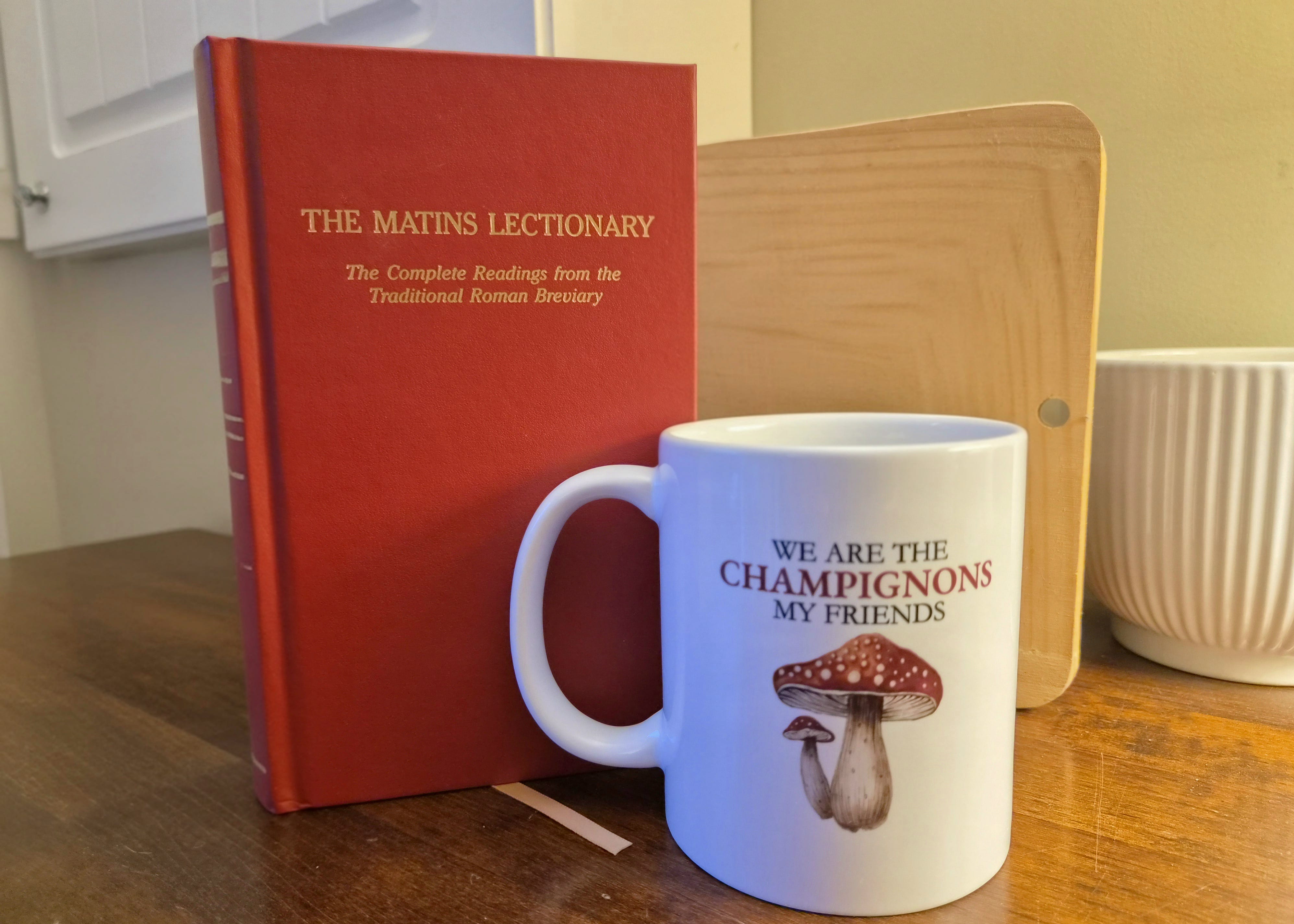
Once again, it is not a good idea to overload oneself with devotions – it is better to do one thing consistently well, than to take up lots of devotions and then fail to persevere with them. But for those who are interested, this little book could be a great option for Advent, as well as the whole year around – and make a great addition to any library.
And at $25, it’s a steal!
HELP KEEP THE WM REVIEW ONLINE WITH WM+!
As we expand The WM Review we would like to keep providing free articles for everyone.
Our work takes a lot of time and effort to produce. If you have benefitted from it please do consider supporting us financially.
A subscription gets you access to our exclusive WM+ material, and helps ensure that we can keep writing and sharing free material for all.
You can see what readers are saying over at our Testimonials page.
And you can visit The WM Review Shop for our ‘Lovely Mugs’ and more.
(We make our WM+ material freely available to clergy, priests and seminarians upon request. Please subscribe and reply to the email if this applies to you.)
Subscribe to WM+ now to make sure you always receive our material. Thank you!
Read Next:
The Matins Lectionary: The Complete Readings from the Traditional Roman Breviary
Start preparing for Christmas NOW with The WM Review’s special series
Why the whole Old Testament was waiting for Christ (Father Coleridge Reader)
Follow on Twitter, YouTube and Telegram:
Twitter (The WM Review)